



Red Light Therapy in Southlake, TX — Professional Full-Body Photobiomodulation
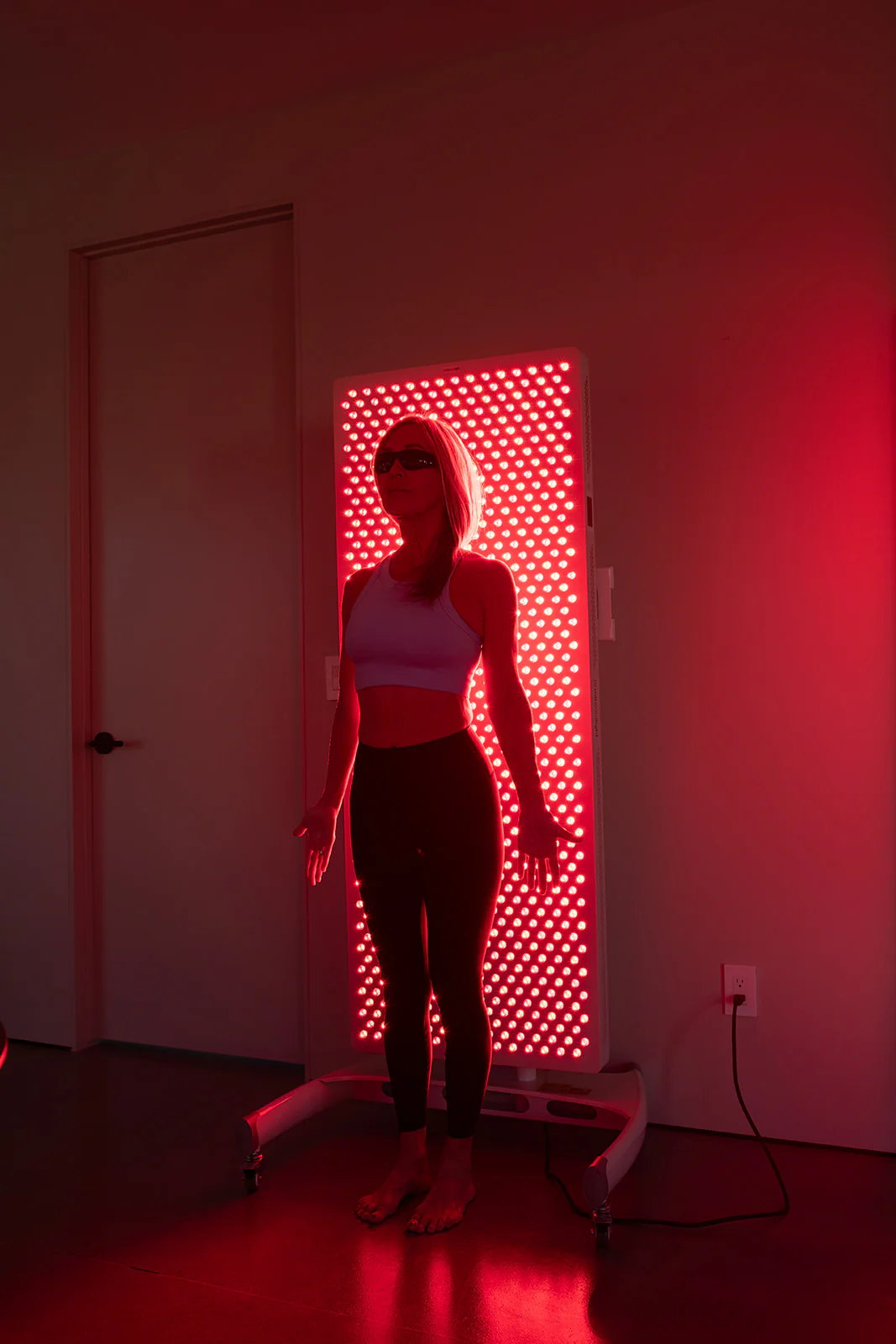
Red light therapy — or photobiomodulation — is one of the most extensively researched non-invasive therapies in modern medicine, with thousands of peer-reviewed studies documenting its effects on cellular energy production, inflammation, skin health, muscle recovery, and tissue repair. At Magnolia Functional Wellness, Dr. Farhan Abdullah offers clinical-grade full-body red light therapy using a professional 1,650W panel with 1,152 dual-chip LEDs delivering eight therapeutic wavelengths — 630, 650, 660, 670, 810, 830, 850, and 1060nm — with individual wavelength dimming and programmable pulsing from 1 to 10,000Hz. It produces irradiance exceeding 1,400W/m² at six inches. That's not a consumer device dressed up in clinical language — it's equipment built for serious clinical use, and the difference shows in outcomes.
Learn More About
Red Light Therapy
.svg)
What is
Red Light Therapy
Red light therapy — technically called photobiomodulation (PBM) or low-level laser therapy (LLLT) when delivered by laser rather than LED — works through a mechanism that's genuinely well-understood at the cellular level. Specific wavelengths of red and near-infrared light penetrate tissue and are absorbed by chromophores within the mitochondrial respiratory chain — primarily cytochrome c oxidase (Complex IV), the terminal enzyme in the electron transport chain. This light absorption triggers a cascade of downstream effects: increased ATP production, modulation of reactive oxygen species signaling, enhanced nitric oxide release, and upregulation of cellular repair pathways. None of this requires heat — it's a photochemical process driven by light absorption at specific wavelengths, not thermal energy.
What makes wavelength selection critical is the optical window of tissue — the range of electromagnetic frequencies where light penetrates tissue meaningfully rather than being absorbed at the surface. Red wavelengths in the 630–680nm range have established effects on superficial tissue and skin cells. Near-infrared wavelengths from 810–850nm penetrate significantly deeper — reaching muscle, joint tissue, and deeper structures that surface red light doesn't access. These are the wavelengths with the most robust clinical evidence base in photobiomodulation research.
At Magnolia Functional Wellness, our clinical-grade full-body panel delivers eight precisely selected therapeutic wavelengths: four red wavelengths at 630, 650, 660, and 670nm targeting superficial tissue, skin, and collagen-producing dermal cells, and four near-infrared wavelengths at 810, 830, 850, and 1060nm addressing deeper tissue, muscle, joint structures, and cellular energy systems. The panel houses 1,152 dual-chip LEDs producing 1,650W of actual power output — verified irradiance exceeding 1,400W/m² at six inches, with the NIR component alone exceeding 1,200W/m² at the same distance. These are clinical irradiance figures, not marketing estimates.
Unlike fixed-ratio panels that run all wavelengths simultaneously at preset intensities, our system allows individual wavelength dimming from 1–100% per wavelength independently — meaning each wavelength can be adjusted precisely to match the clinical goal of the session. Pulsing frequency is fully programmable from 1 to 10,000Hz, covering every frequency range being actively investigated in the photobiomodulation literature. Combined, these capabilities enable clinically targeted protocols that general-purpose panels simply can't replicate.
A note on 1060nm: Extended near-infrared at 1060nm has specific applications in deep tissue penetration and body composition contexts, but it's deliberately excluded from facial anti-aging protocols. Fat cells respond to 1060nm in ways that are therapeutically useful for body treatments but counterproductive when applied to the face, where preservation of facial fat volume is a meaningful component of maintaining a youthful appearance. Dr. Abdullah's protocols use wavelength selection intentionally — not every wavelength at every session for every application. That kind of clinical judgment is exactly what separates a supervised physician-run practice from a self-serve red light lounge.

Why do We Use
Red Light Therapy
The clinical evidence base for photobiomodulation is substantial and continues to expand. It's not a fringe therapy with anecdotal support — it's a field with thousands of peer-reviewed studies, multiple systematic reviews and meta-analyses, and established mechanisms at the cellular and molecular level. What separates meaningful clinical application from the consumer wellness version of red light therapy comes down to two things: dose and wavelength precision.
Dose in photobiomodulation is measured as energy density (joules per cm²) delivered to the target tissue. This requires knowing the irradiance of the device, the treatment distance, and the treatment duration. Consumer panels running at low power output at casual distances frequently deliver subtherapeutic doses — enough to produce some response but not enough to achieve the outcomes the clinical literature demonstrates. Our panel delivers verified irradiance exceeding 1,400W/m² at six inches — a figure that puts it firmly in clinical-grade territory and well above what most commercial and even professional panels achieve. At that irradiance, therapeutic energy doses are delivered in session durations that actually fit a clinic schedule.
Wavelength precision matters because different cellular targets respond to different wavelengths, and the tissue depth you're trying to reach determines which frequencies are relevant. The four red wavelengths — 630, 650, 660, and 670nm — address skin-level applications: collagen synthesis, wound healing, acne reduction, and superficial anti-inflammatory effects. The near-infrared wavelengths at 810, 830, and 850nm penetrate significantly deeper — reaching muscle, joint tissue, and structures 3–5cm beneath the skin surface that surface red light simply doesn't access. Running all eight wavelengths simultaneously at fixed ratios delivers a compromise for every application rather than optimized delivery for any specific one. Individual dimming from 1–100% per wavelength solves this — it lets you run the wavelengths relevant to today's clinical goal at appropriate intensities without diluting the dose with irrelevant frequencies.
Pulsing frequency control from 1 to 10,000Hz adds a dimension that essentially no other clinical panel in this category offers. Continuous wave and pulsed photobiomodulation at different frequencies produce distinct biological effects — 40Hz pulsing has demonstrated effects in neurological applications, specific frequencies appear to influence cellular signaling patterns in ways continuous wave doesn't replicate, and the research on frequency-dependent effects is actively evolving. The ability to program pulsing frequency across the full 1–10,000Hz range means protocol updates based on emerging evidence don't require new equipment — the capability is already built in.

Key Benefits of
Red Light Therapy
Eight Therapeutic Wavelengths with Individual Dimming: Most professional panels run a fixed mix of wavelengths at preset ratios — a compromise calibrated for general use rather than optimized for any specific application. Our panel delivers eight distinct wavelengths across the red and near-infrared spectrum with individual dimming control, enabling precisely targeted protocols that match the clinical goal rather than applying a one-size-fits-all output to every patient and every indication.
1,650W Professional-Grade Power — Clinically Relevant Dose Delivery: Photobiomodulation dose is a function of irradiance and treatment time. Underpowered panels require impractically long sessions to deliver therapeutic doses — or simply don't achieve them. The 1,650W output of our system delivers high irradiance at appropriate treatment distances, achieving the energy densities the clinical literature demonstrates as effective in treatment sessions that fit a realistic clinic schedule.
Full-Body Coverage in a Single Session: Comprehensive full-body photobiomodulation — addressing skin health, systemic inflammation, mitochondrial function, and recovery simultaneously — requires a panel with full-body coverage. Small panels treating localized areas miss the systemic metabolic and anti-inflammatory benefits that full-body protocols produce. Our panel covers the complete body in a single session without repositioning.
Programmable Pulsing Frequency Control: Continuous wave and pulsed photobiomodulation at different frequencies produce distinct cellular effects — an area of active research with emerging evidence for specific neurological and recovery applications. The ability to program pulsing frequency precisely rather than using a manufacturer's fixed preset is a clinical capability that separates our system from the overwhelming majority of panels on the market.
Synergistic with Your Complete Treatment Protocol: Red light therapy amplifies the results of virtually every other service Dr. Abdullah offers — supporting collagen synthesis post-microneedling, enhancing the cellular repair environment following PRP, reducing inflammatory tone in joints being treated with orthobiologics, and providing mitochondrial support that complements NAD+ and longevity medicine protocols. It's designed to integrate into a comprehensive treatment approach, not exist as a standalone wellness add-on.
No Downtime, No UV, No Recovery: Standard sessions produce no adverse effects in the overwhelming majority of patients. No UV exposure, no pain, no recovery period, no activity restrictions. It's one of the only clinical therapies where "come in during your lunch break" is a completely accurate description of the treatment experience.
Who Benefits Most From
Red Light Therapy
Patients Pursuing Skin Health and Anti-Aging: Red and near-infrared light stimulate fibroblast activity and collagen synthesis — the mechanisms underlying skin texture improvement, fine line reduction, and wound healing. Multiple randomized controlled trials have demonstrated statistically significant improvements in skin roughness, wrinkling, and collagen density with consistent red light therapy protocols. Combined with the Glo2Facial, microneedling, or PRP facial treatments Dr. Abdullah offers, photobiomodulation amplifies and extends the results of those procedures by supporting the cellular repair process they initiate.
Athletes and Active Patients Seeking Recovery Optimization: The evidence for photobiomodulation in muscle recovery and sports performance is among the strongest in the field. A 2016 meta-analysis in the Journal of Athletic Training pooling data from multiple RCTs found significant improvements in muscle performance, delayed onset muscle soreness (DOMS) reduction, and accelerated recovery with pre- and post-exercise PBM. The mechanism is well-characterized — near-infrared light reduces exercise-induced oxidative stress, supports mitochondrial recovery in muscle tissue, and reduces inflammatory cytokine expression that drives post-exercise soreness and functional impairment.
Pre-exercise treatment (photobiomodulation conditioning) has demonstrated improvements in performance metrics, endurance, and reduced fatigue during subsequent exercise. Post-exercise treatment accelerates recovery and reduces the functional impairment window. For competitive athletes, serious recreational athletes, or anyone whose physical performance affects quality of life, this is a therapy with a meaningful evidence base behind it.
Patients with Musculoskeletal Pain and Inflammation: Near-infrared photobiomodulation has well-documented anti-inflammatory effects — reducing pro-inflammatory cytokines (TNF-α, IL-1β, IL-6) and NF-κB pathway activation while upregulating anti-inflammatory mediators. In joint and musculoskeletal applications, multiple systematic reviews and meta-analyses have demonstrated clinically meaningful pain reduction and functional improvement for knee osteoarthritis, neck pain, low back pain, and tendinopathy. Dr. Abdullah's near-infrared protocols targeting inflamed joints and tissues deliver the penetration depth necessary to reach intra-articular and peri-articular structures that surface-level treatments don't access.
For patients receiving orthobiologics, PRP, or stem cell therapy at Magnolia, photobiomodulation functions as a powerful adjunct — creating an optimal cellular environment for the biologics to work in by reducing inflammatory tone and supporting tissue repair signaling.
Patients Focused on Longevity and Cellular Health: Mitochondrial function is central to virtually every aging mechanism — cellular energy production, reactive oxygen species regulation, DNA repair capacity, and apoptotic signaling all depend on healthy mitochondria. The well-established primary mechanism of photobiomodulation is mitochondrial — cytochrome c oxidase activation, increased ATP synthesis, and modulation of ROS signaling. For patients pursuing comprehensive longevity protocols that include rapamycin, metformin, NAD+ IV therapy, or peptide optimization, red light therapy addresses the mitochondrial dimension of cellular aging through a non-pharmacological mechanism.
The combination of NAD+ precursor supplementation and photobiomodulation is particularly logical — NAD+ is an essential cofactor for the mitochondrial processes that photobiomodulation upregulates, and the two approaches work through complementary mechanisms on the same cellular systems.
Post-Procedure Recovery Acceleration: Photobiomodulation is one of the most useful adjuncts for accelerating recovery after aesthetic and regenerative procedures. Dr. Abdullah uses targeted PBM protocols following microneedling, PRP treatments, and other procedures that involve controlled tissue disruption — because the cellular repair mechanisms that red and near-infrared light upregulate are precisely the mechanisms those procedures are designed to activate. Supporting that repair response with photobiomodulation in the days following a procedure produces faster, more complete results.
Hair Loss Adjunct Therapy: Red light therapy has FDA clearance for hair growth applications — 650–660nm wavelengths stimulate follicle activity and extend the anagen (active growth) phase in miniaturizing follicles. Used alongside finasteride, dutasteride, or PRP hair restoration, photobiomodulation adds a non-pharmacological growth stimulus that complements the hormonal and biologic approaches. Dr. Abdullah incorporates targeted scalp protocols for appropriate hair restoration patients as part of a comprehensive treatment plan.
What To Expect From
Red Light Therapy
Step 1 — Consultation and Protocol Design: Dr. Abdullah reviews your health history, current medications, and treatment goals before designing your photobiomodulation protocol. The wavelength selection, treatment duration, and pulsing parameters for a patient using red light therapy primarily for skin anti-aging look different from protocols targeting joint inflammation, muscle recovery, or hair growth. This isn't a step we skip — protocol precision is what produces clinical results.
Step 2 — Session Setup: You'll be positioned in front of or underneath our full-body panel at the appropriate treatment distance for your protocol. Protective eyewear is provided and recommended for all sessions, particularly for near-infrared wavelengths which are invisible and don't trigger a blink reflex.
Step 3 — Treatment Session: Standard sessions run 10–20 minutes depending on your protocol and the treatment area. The experience is comfortable — most patients describe a gentle warmth, with some wavelengths essentially imperceptible at skin level. There's no pain, no UV exposure, no downtime, and no recovery period. You can come in on a lunch break and return to normal activity immediately.
Step 4 — Post-Session: No restrictions following a standard photobiomodulation session. For sessions following aesthetic procedures, Dr. Abdullah will advise on any specific post-procedure considerations that apply. Most patients find that consistent sessions — two to three times per week — produce the most meaningful results for ongoing health and wellness goals.
Step 5 — Progress Evaluation: Dr. Abdullah evaluates your response periodically, adjusting wavelength protocols and treatment parameters as your goals evolve or as you progress through a treatment course. The individual wavelength dimming capability of our panel makes protocol adjustments precise rather than approximate.

Is
Red Light Therapy
right for me?
Red light therapy is appropriate for essentially any patient interested in skin health optimization, recovery acceleration, pain management, or longevity support — it's one of the safest therapeutic modalities in clinical use with an excellent safety profile across thousands of studies and decades of research. There are a small number of clinical situations that require physician consideration before treatment. Patients with active malignancy should not receive photobiomodulation over tumor sites or areas of known metastasis. Patients on photosensitizing medications — certain antibiotics, retinoids, and others — require consideration of the specific medication and treatment area. Patients with active herpes outbreaks should avoid treatment over the affected area during active lesions. Pregnancy is a standard precaution for abdominal treatment.
For the overwhelming majority of patients, red light therapy is straightforward and well-tolerated. Dr. Abdullah reviews your health history before beginning treatments specifically to identify any clinical considerations that warrant attention. One honest expectation note: photobiomodulation is not a single-session intervention for most applications. The clinical evidence showing meaningful outcomes in skin health, pain management, and recovery optimization was generated with consistent treatment protocols — typically multiple sessions per week over weeks to months. Occasional sessions provide benefit but the most clinically significant outcomes come from building an ongoing protocol into your wellness routine.
Red Light Therapy at Magnolia Functional Wellness in Southlake, TX
Photobiomodulation has the unusual distinction of being simultaneously one of the most extensively studied non-invasive therapies in medicine and one of the most poorly implemented in practice. The science is solid — tens of thousands of studies, well-characterized mechanisms, multiple systematic reviews documenting clinical outcomes across a wide range of applications. The implementation at most facilities is not. Consumer-grade panels running at insufficient power, fixed wavelength mixes that can't be tailored to clinical goals, and no meaningful protocol design are the norm in the medspa world. The result is a therapy that works well when done right and produces modest results when done casually.
Magnolia Functional Wellness approaches red light therapy the way Dr. Farhan Abdullah approaches every service — with attention to the clinical variables that actually determine outcomes.
The Mechanism — Why This Works
Photobiomodulation's primary cellular target is cytochrome c oxidase, the terminal enzyme in the mitochondrial electron transport chain that catalyzes the reduction of oxygen to water in cellular respiration. When photons at specific wavelengths are absorbed by cytochrome c oxidase, the enzyme's activity increases, producing measurable downstream effects: elevated ATP synthesis, modulation of reactive oxygen species signaling, increased nitric oxide bioavailability, and upregulation of gene expression pathways associated with cellular repair, anti-inflammation, and proliferation.
The wavelength specificity matters because cytochrome c oxidase has distinct absorption peaks in the red (around 630–680nm) and near-infrared (around 810–850nm) ranges. Wavelengths outside these absorption peaks don't drive the same photochemical responses — they produce heat or don't penetrate tissue meaningfully. This is why the photobiomodulation literature is clustered around specific wavelengths that have been demonstrated to activate these mechanisms, and why a panel delivering only those wavelengths at therapeutic doses produces fundamentally different clinical results than a panel emitting broad-spectrum red light at insufficient power.
Tissue penetration depth is the other critical physical variable. Red wavelengths in the 630–660nm range penetrate to roughly 5–10mm beneath the skin surface — appropriate for dermal applications, skin health, wound healing, and superficial tissue. Near-infrared wavelengths in the 810–850nm range penetrate significantly deeper — reaching muscle tissue, joints, and structures 3–5cm beneath the skin surface. This depth separation is why meaningful musculoskeletal and recovery applications require near-infrared specifically, and why skin-only panels don't produce the systemic effects that full-spectrum clinical protocols generate.
What Our Panel Does Differently
The standard professional red light therapy panel delivers a fixed mix of wavelengths — typically 660nm and 850nm, sometimes with 630nm and 810nm added — at a single output ratio that doesn't change between patients or applications. It's a reasonable general-purpose tool, but it's a compromise calibrated for the broadest possible utility rather than optimized for any specific clinical outcome.
Our full-body clinical panel delivers eight precisely selected therapeutic wavelengths — 630, 650, 660, and 670nm in the red range, and 810, 830, 850, and 1060nm in the near-infrared range — through 1,152 dual-chip LEDs at 1,650W actual power output. Verified irradiance exceeds 1,400W/m² at six inches, with the near-infrared component alone exceeding 1,200W/m² at that distance. To put that in context: many consumer panels advertised at similar wattages measure actual irradiance at a fraction of these figures. Power draw and light output aren't the same thing, and irradiance at treatment distance is the variable that actually determines dose delivery.
The four red wavelengths cover the superficial therapeutic window comprehensively — 630nm at the lower absorption peak of cytochrome c oxidase, 660nm which has the deepest and most extensive evidence base in the dermal and wound healing literature, 650nm and 670nm filling the photon density across the red absorption window. The near-infrared wavelengths at 810, 830, and 850nm hit the NIR absorption peaks with overlapping penetration depth, ensuring therapeutic photon delivery to muscle tissue, joint structures, and deeper cellular targets. Each of these wavelengths can be dimmed independently from 1–100%, enabling the kind of protocol precision that clinical application requires.
Pulsing frequency control from 1 to 10,000Hz covers every range being actively investigated in photobiomodulation research — including the 40Hz frequency range showing neurological effects in emerging human studies, lower frequencies being explored for cellular signaling applications, and the full spectrum between. Most panels that offer pulsing at all provide a narrow preset range at fixed frequencies the manufacturer chose. The 1–10,000Hz programmable range means Dr. Abdullah can update protocols as evidence matures without replacing equipment.
The 1060nm extended near-infrared wavelength deserves specific mention because it requires clinical judgment rather than reflexive inclusion. At 1060nm, light penetrates deeply and has demonstrated effects on adipose tissue — which is exactly why it's used therapeutically in body contouring contexts. For full-body treatment protocols where body composition effects are desirable, it's a useful addition. For facial anti-aging applications, where preservation of facial fat volume is a significant component of maintaining a youthful appearance, 1060nm is deliberately excluded from the protocol. This kind of wavelength-specific clinical decision-making is only possible with individual dimming control — and it's the reason protocol design matters more than raw wavelength count.
Programmable pulsing frequency adds a further dimension. Continuous wave photobiomodulation and pulsed photobiomodulation at specific frequencies produce distinct biological effects through different proposed mechanisms — pulse frequency appears to influence the temporal pattern of cellular signaling, with certain frequencies showing preferential effects in neural tissue applications and specific recovery contexts. This remains an area of active investigation, but the clinical capability to control pulsing frequency precisely is what allows evidence-based protocol evolution as the research matures.
Photobiomodulation as an Integrative Component
Red light therapy at Magnolia isn't positioned as a standalone modality — it's integrated into a comprehensive treatment approach that amplifies the results of other services.
For patients undergoing microneedling, the controlled dermal injury that microneedling produces activates the same cellular repair pathways that photobiomodulation upregulates. Running a red light protocol in the days following microneedling supports collagen synthesis and accelerates the repair response, producing more durable results from the procedure. The same logic applies to PRP facial treatments — PBM creates a favorable cellular environment for the growth factors to act in.
For patients receiving orthobiologic treatments — PRP joint injections, stem cell therapy, or exosome treatments for musculoskeletal conditions — near-infrared photobiomodulation reduces the inflammatory tone in the treatment area and supports the tissue repair environment that determines how effectively those biologics work. The combination addresses tissue healing from complementary mechanisms simultaneously.
For patients on longevity protocols — NAD+ IV therapy, rapamycin, or peptide optimization — photobiomodulation provides mitochondrial support through a non-pharmacological mechanism that complements rather than duplicates the pharmacologic interventions. The convergence point is mitochondrial function: every one of these interventions supports it through different pathways, and their combined effect is greater than any single approach alone.
We serve patients from Southlake, Westlake, Colleyville, Keller, Trophy Club, Grapevine, Flower Mound, and throughout the Dallas-Fort Worth Metroplex who want red light therapy delivered with the clinical precision and protocol design that actually produces the outcomes the research demonstrates.
How Process Works at
Magnolia Functional Wellness
Assess
We begin with a comprehensive evaluation of your health, goals, and medical background to understand the root causes, not just the symptoms.
Personalize
Based on your results, we create a tailored functional wellness plan using evidence-based therapies designed specifically for your body and needs.
Optimize
Through ongoing care, monitoring, and adjustments, we help you achieve sustainable improvements in performance, vitality, and long-term health.
Eight Therapeutic Wavelengths — 630, 650, 660, 670, 810, 830, 850, and 1060nm — Individually Dimmable
Four red wavelengths covering the complete superficial therapeutic window, three core near-infrared wavelengths for deep tissue penetration, and 1060nm extended NIR for body applications — each independently adjustable from 1–100%. Skin anti-aging, joint recovery, muscle performance, and hair restoration each get a protocol built around the wavelengths actually relevant to that application, not a fixed-ratio compromise across all of them simultaneously.
1,650W Clinical-Grade Output — Verified Irradiance Over 1,400W/m² at 6 Inches
Actual power output and actual irradiance at treatment distance are the variables that determine photobiomodulation dose. Our panel delivers verified irradiance exceeding 1,400W/m² at six inches — with the NIR component alone exceeding 1,200W/m². These are clinical-grade figures that most professional panels don't achieve, and consumer panels don't come close to. Therapeutic outcomes require therapeutic doses, and the equipment has to be capable of delivering them.
1–10,000Hz Programmable Pulsing — Full Frequency Range, Not a Manufacturer Preset
Pulsed photobiomodulation at specific frequencies produces distinct cellular effects that continuous wave doesn't replicate. Our 1–10,000Hz programmable range covers every frequency being actively investigated in PBM research — including the 40Hz range showing neurological effects in emerging human studies. As the evidence on frequency-specific effects matures, Dr. Abdullah's protocols can evolve without replacing equipment.
Full-Body Clinical Coverage — 1,152 Dual-Chip LEDs, No Repositioning Required
Complete body coverage in a single session with 1,152 dual-chip LEDs spanning a full-body panel. Full-body photobiomodulation produces systemic anti-inflammatory, mitochondrial, and recovery effects that partial-coverage panels targeting only the face or a single body region don't generate. One session, complete coverage, no repositioning.
Synergistic with Every Other Service We Offer
Photobiomodulation amplifies microneedling and PRP results by supporting cellular repair. It reduces inflammatory tone around joints receiving orthobiologic treatment. It provides mitochondrial support that complements NAD+ therapy and longevity medicine protocols. It accelerates post-procedure recovery. Dr. Abdullah integrates PBM into your overall treatment plan where it adds the most clinical value, not as a standalone add-on.
No Downtime — Clinical Results Without Recovery Time
Standard sessions require no recovery period, produce no UV exposure, and impose no activity restrictions. Meaningful photobiomodulation can happen during a lunch break and fit into any schedule. It's one of the few clinical therapies where the absence of downtime isn't a compromise — it's simply how the treatment works.
Your Questions Answered
Led by trained medical professionals delivering safe, effective, and scientifically backed aesthetic and wellness treatments.
What does red light therapy actually feel like?
Most patients describe a gentle warmth during the session, with the near-infrared wavelengths producing more noticeable warmth than the red wavelengths. Some wavelengths are essentially imperceptible at skin level. It's comfortable, non-painful, and relaxing — most patients find themselves wanting to fall asleep during sessions, which is entirely fine.
How often do I need sessions to see results?
The clinical evidence for most applications was generated with two to three sessions per week over sustained periods. Skin health improvements in anti-aging studies are typically documented at 8–12 weeks of consistent treatment. Recovery and performance applications show effects within days of sessions but the cumulative benefit builds with regular treatment. Single sessions provide benefit — particularly for acute recovery after intense exercise or a procedure — but ongoing protocols produce the most clinically meaningful results.
Is red light therapy safe? Are there risks?
The safety profile of photobiomodulation in the clinical literature is excellent. The main precautions are: avoiding treatment over active tumor sites, considering photosensitizing medications before treatment, and using appropriate eye protection. It produces no UV exposure, no ionizing radiation, and no thermal injury at appropriate treatment distances and durations. Dr. Abdullah reviews your health history before beginning treatment to identify any relevant clinical considerations.
I've seen red light panels online for $500. How is this different?
Consumer panels in the $300–$800 range vary dramatically in actual irradiance output and frequently don't deliver what their marketing materials claim — power draw and light output at treatment distance aren't the same number. More fundamentally, they run fixed wavelength ratios with no ability to adjust output based on clinical goals, and they typically offer two to four wavelengths rather than eight. Our clinical-grade panel delivers verified irradiance exceeding 1,400W/m² at six inches across eight individually dimmable wavelengths with 1–10,000Hz programmable pulsing. The gap between a consumer panel and this equipment isn't primarily aesthetic — it's dose delivery, wavelength precision, and protocol capability, which are the variables that determine clinical outcomes.
Can I combine red light therapy with my other treatments at Magnolia?
Yes — and in many cases, combining PBM with other treatments produces better results than either alone. Dr. Abdullah designs integrated protocols that sequence red light therapy appropriately with microneedling, PRP, orthobiologics, and other services. The specific timing and protocol depends on what you're combining it with and what clinical outcome you're optimizing for.
Does it work for hair loss?
Red light therapy at 650–660nm has FDA clearance for hair growth applications and demonstrated effects on follicle stimulation and the hair growth cycle. Dr. Abdullah uses targeted scalp protocols for hair restoration patients as an adjunct to finasteride, dutasteride, or PRP hair restoration — not as a standalone treatment for significant androgenetic alopecia, but as a complementary approach that adds a non-pharmacological growth stimulus to the medical foundation.
How much does a session cost?
Single session and package pricing is available at the front desk. We don't bill insurance for photobiomodulation. HSA and FSA cards are accepted.
Need More Information?
Our team is ready to answer your specific questions and concerns.
Redefine Your Glow. Reimagine Your Life.
Led by trained medical professionals delivering safe, effective, and scientifically backed aesthetic and wellness treatments.
Not what you were looking
for? Explore More.
At Magnolia Functional Wellness, every treatment is guided by medical science, regenerative principles, and individualized care. We focus on restoring physiology at its source, enhancing vitality, and supporting long term health with evidence based interventions that go beyond traditional aesthetics.