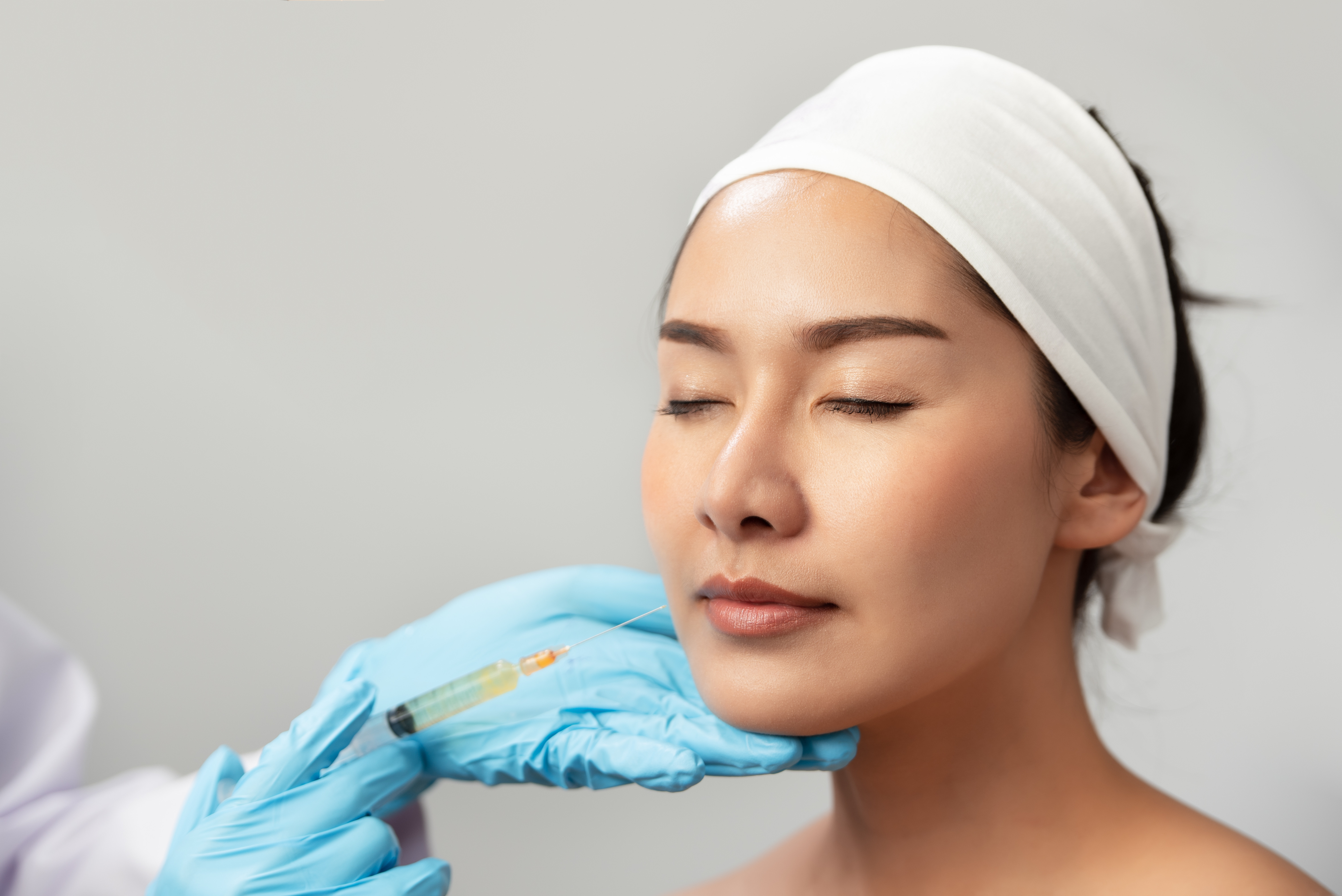




Microneedling in Southlake, TX — SkinPen Precision
Microneedling is one of the most consistently evidence-backed skin improvement procedures in aesthetic medicine — and the device doing the needling matters more than most patients realize. SkinPen is the first and only FDA-cleared microneedling device in the United States, with clinical trial data establishing its efficacy and safety for facial acne scars across all six Fitzpatrick skin types. At Magnolia Functional Wellness, we use SkinPen specifically because the regulatory standard it's held to, the sterility validation it undergoes, and the clinical consistency it delivers are not matched by the uncleared devices used at many practices that offer "microneedling."
Learn More About
Microneedling
.svg)
What is
Microneedling
Microneedling — also called collagen induction therapy — is a minimally invasive procedure in which a device containing precisely controlled micro-needles creates thousands of tiny puncture wounds in the skin, triggering the body's wound healing cascade in the upper dermis without producing the visible surface injury that ablative treatments require.
The biological sequence that follows these microinjuries is what produces the clinical results. Immediately after needle penetration, platelets aggregate and begin releasing growth factors — PDGF, TGF-beta, and VEGF — that initiate the inflammatory phase of wound healing. Fibroblasts are recruited to the injury site over the following days and begin synthesizing new Type I collagen and elastin fibers. This neocollagenesis — new collagen formation — is the mechanism behind microneedling's skin quality improvement: thicker dermis, better skin firmness, smoother texture, and reduced scar depth. The process continues for weeks to months after treatment, which is why results develop progressively rather than appearing immediately and why a series of sessions produces cumulative improvement beyond what any single treatment achieves.
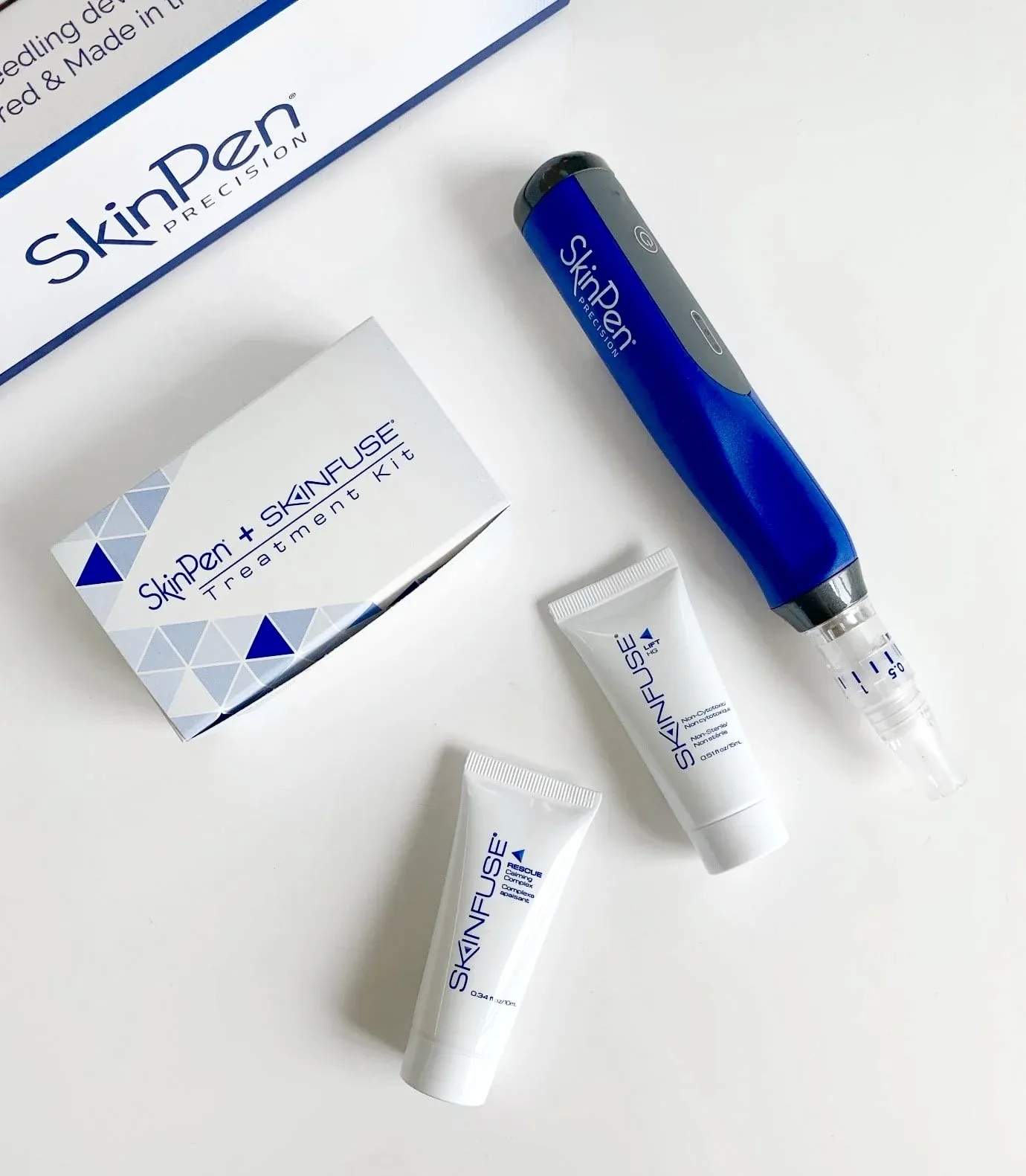
The SkinPen Precision achieves this through a single-use sterile cartridge containing 14 precisely manufactured needles that penetrate to adjustable depth settings from 0.25mm to 2.5mm. The needles oscillate at high speed — creating clean, precise puncture wounds in a consistent pattern across the treatment area. SkinPen's FDA clearance was granted under De Novo Classification DEN160029 as a Class II device for improving the appearance of facial acne scars in adults with all Fitzpatrick skin types, and under 510(k) K202243 for improving the appearance of neck wrinkles in Fitzpatrick types II–IV. This regulatory standing required clinical trial evidence of both safety and effectiveness — a standard that generic and uncleared microneedling devices haven't met.

Why do We Use
Microneedling
SkinPen is the microneedling device at Magnolia specifically because the clinical standards it's been held to — by an actual regulatory agency, through actual clinical trials — are the ones that establish confidence in its consistency and safety. The generic devices on the market haven't been through that process. Some of them work adequately; others have documented quality issues that produce inferior results or safety concerns. Choosing SkinPen means choosing the device whose clinical profile has been validated, whose needle cartridges have undergone sterility testing, and whose depth settings deliver what they're set to deliver consistently.
The collagen induction mechanism is also genuinely effective — the wound healing biology behind microneedling is well-established, the clinical evidence for acne scar improvement is real, and the results accumulate across a series of sessions in a way that justifies the treatment program. For patients with acne scarring, textural concerns, or collagen loss who either can't tolerate the downtime of more aggressive laser treatment or prefer a non-heat-based approach that's appropriate year-round and across all skin tones, SkinPen microneedling is the evidence-based standard.

Key Benefits of
Microneedling
FDA-Cleared Device — The Clinical Standard That Generic Devices Haven't Met: The proliferation of microneedling devices in the aesthetic market has created a situation where virtually every medspa offers "microneedling" while using devices whose sterility, needle quality, depth consistency, and safety profile haven't been validated to any regulatory standard. The clinical trials that supported SkinPen's FDA clearance required demonstration that the device produces consistent, measurable improvement in acne scars — 90% of clinical trial patients reported they would recommend the treatment — and that its needle cartridges maintain sterility without cross-contamination between patients. Investigations of non-cleared microneedling devices have found hooked and jagged needles that create tearing injury rather than clean punctures, inconsistent depth delivery that produces uneven results, and sterility concerns that no regulatory body has evaluated. At Magnolia, the device used for microneedling has been validated to produce what it claims to produce, with the safety profile it claims to have.
Collagen Induction at Every Depth From Surface to Deep Dermis: SkinPen's adjustable depth from 0.25mm to 2.5mm allows treatment depth to be matched to the specific tissue being targeted. Superficial settings (0.25–0.5mm) address the epidermis and papillary dermis — appropriate for fine surface lines, overall radiance, and product penetration enhancement. Mid-depth settings (0.5–1.5mm) reach the reticular dermis where most acne scarring, textural irregularity, and collagen loss reside — the target depth for the majority of clinical applications. Deep settings (1.5–2.5mm) are appropriate for deeper atrophic acne scars and more established textural damage. The ability to vary depth within a single treatment session — shallower in delicate periocular areas, deeper over textured scar tissue — is a clinical advantage that rollers and fixed-depth devices can't provide.
Acne Scar Improvement With Clinical Evidence: The FDA's acceptance of SkinPen's acne scar indication was based on controlled clinical trial data showing meaningful improvement in Acne Scar Assessment Scale scores at one month and six months post-treatment in patients across all Fitzpatrick skin types. At six months, 55% of treated subjects showed clinically meaningful improvement. In clinical satisfaction surveys, 90% of patients reported they would recommend the treatment. This is the level of evidence that characterizes SkinPen's acne scar application — and it distinguishes it from devices whose acne scar marketing hasn't been supported by controlled trials. For patients whose acne scars are a significant source of self-consciousness and who've been told that laser or more invasive procedures are their only effective options, SkinPen's evidence-based clinical outcomes make it a genuinely viable alternative with a more accessible downtime profile.
Safe Across All Fitzpatrick Skin Types — Year-Round Treatment: Unlike laser resurfacing and IPL, which have meaningful melanin-related safety considerations for darker skin tones, microneedling creates mechanical injury without heat or selective melanin absorption — making it safe for Fitzpatrick I through VI without the post-inflammatory hyperpigmentation risk that light-based treatments carry for darker-skinned patients. SkinPen's FDA clearance specifically for all Fitzpatrick skin types for the acne scar indication reflects this genuine broad-applicability. It's also appropriate year-round — the absence of photosensitization means patients don't need to time their treatment around sun exposure avoidance the way they do with laser or chemical peel treatment.
Serum and Growth Factor Delivery — Penetration Into Open Microchannels: The microchannels created by SkinPen needles provide a transient window of significantly increased skin permeability — applied serums, hyaluronic acid, growth factors, and peptides penetrate the dermis through open channels at concentrations that surface application on intact skin can't approach. At Magnolia, treatment serums are applied at appropriate stages of the procedure to maximize dermal delivery during this window. Hyaluronic acid applied during microneedling reaches dermal depth for genuine dermal hydration. Peptide serums deliver growth signaling directly to fibroblasts. This delivery enhancement extends the biological effect of the treatment beyond mechanical collagen induction alone.
Minimal Downtime for Meaningful Collagen Stimulation: The balance of clinical benefit to downtime that microneedling produces is one of its most practically important properties. Treatment produces redness and mild swelling for 24–72 hours — socially limiting for a day or two but not the week-plus recovery that laser resurfacing at aggressive settings requires. Most patients return to normal activities with light mineral makeup in 24–48 hours. The results aren't instant — the collagen remodeling continues for months — but the recovery period is short enough that monthly series treatments fit into the schedules of most working adults, parents, and professionals without requiring significant planned downtime.
Why Do We Use Microneedling:SkinPen is the microneedling device at Magnolia specifically because the clinical standards it's been held to — by an actual regulatory agency, through actual clinical trials — are the ones that establish confidence in its consistency and safety. The generic devices on the market haven't been through that process. Some of them work adequately; others have documented quality issues that produce inferior results or safety concerns. Choosing SkinPen means choosing the device whose clinical profile has been validated, whose needle cartridges have undergone sterility testing, and whose depth settings deliver what they're set to deliver consistently.
The collagen induction mechanism is also genuinely effective — the wound healing biology behind microneedling is well-established, the clinical evidence for acne scar improvement is real, and the results accumulate across a series of sessions in a way that justifies the treatment program. For patients with acne scarring, textural concerns, or collagen loss who either can't tolerate the downtime of more aggressive laser treatment or prefer a non-heat-based approach that's appropriate year-round and across all skin tones, SkinPen microneedling is the evidence-based standard.
Who Benefits Most From
Microneedling
Patients with Atrophic Acne Scars: Acne scarring — the rolling, boxcar, and icepick scar patterns that remain after inflammatory acne — is the primary clinical indication for which SkinPen received FDA clearance, with controlled trial evidence to support the claim. For patients with acne scars who've been managing the psychological impact of visible scarring on their confidence and haven't found an accessible treatment option, a series of SkinPen treatments produces measurable, clinically meaningful improvement. More severe scarring typically requires a combination approach — SkinPen plus BioRepeel, or SkinPen plus laser — that Dr. Abdullah's team structures based on scar type and severity.
Patients with Fitzpatrick IV–VI Skin Types Seeking Textural Improvement: The heat-free, mechanical mechanism of microneedling makes SkinPen one of the few professional skin improvement procedures that's genuinely safe and effective for darker-skinned patients year-round without the PIH risk that light-based treatments carry. For this patient population — significantly represented in the DFW Metroplex — SkinPen is frequently the most appropriate collagen-stimulation option available.
Patients Seeking Anti-Aging Collagen Maintenance Without Significant Downtime: The progressive collagen synthesis that a series of microneedling sessions stimulates produces genuine dermal thickening, improved skin firmness, and fine line reduction over three to six months following a treatment series. For patients in their 30s and 40s who want to maintain skin quality and address early aging changes without the more significant downtime or investment of laser resurfacing, a series of three SkinPen sessions spaced thirty days apart followed by annual maintenance represents a practical and evidence-based anti-aging program.
Patients Whose Skin Isn't Responding Adequately to Surface Treatments: When a consistent professional skin program of HydraFacials, peels, and at-home actives has improved surface quality but hasn't addressed the textural concerns or firmness loss the patient is most focused on, microneedling's dermal-depth collagen stimulation is the appropriate addition to the program. It addresses the tissue layer that surface treatments don't reach.
What To Expect From
Microneedling
Step 1 — Consultation and Skin Assessment: Skin type, Fitzpatrick phototype, active acne status, scar type and depth, current skincare regimen (particularly retinoids, which require a pause before treatment), and treatment goals are assessed. Active inflammatory acne is not treated with microneedling over affected areas — this is confirmed and noted in the treatment map.
Step 2 — Numbing: Topical anesthetic cream is applied generously to the entire treatment area and left in place for 30–45 minutes. Adequate numbing is important for both patient comfort and for allowing the provider to move at appropriate speed to deliver consistent treatment.
Step 3 — Treatment: After numbing cream is removed, the skin is prepped with antiseptic. Treatment serums are applied to small sections immediately before the SkinPen passes over them — ensuring the open microchannels receive the serum at peak permeability. The provider works systematically across the treatment area, adjusting depth by zone. The sensation under adequate numbing is pressure and vibration with minimal sharp sensation. Total treatment time 30–60 minutes depending on area size.
Step 4 — Post-Treatment Serum and Recovery Instructions: A calming, hydrating post-treatment serum is applied at treatment completion — hyaluronic acid is standard. Redness is expected and ranges from mild (like a sunburn) to more pronounced depending on treatment depth and density. Most patients are pink for 24 hours and noticeably improved by 48 hours. Gentle cleanser, fragrance-free moisturizer, and SPF for 72 hours. No active skincare products (retinoids, vitamin C, AHAs) for five to seven days.
Step 5 — Series and Results Timeline: Visible results begin appearing at two to four weeks as new collagen matures. Full results from a treatment session develop over three to six months. Standard protocol is three sessions spaced thirty days apart for acne scars and anti-aging applications. Maintenance one to two times annually sustains the collagen stimulation benefit.

Is
Microneedling
right for me?
SkinPen is appropriate for adults aged 22 and older across all Fitzpatrick skin types. Active inflammatory acne papules and pustules are avoided during treatment (microneedling is not performed directly over active inflamed lesions). Active skin infections, open wounds, rosacea flares, and current isotretinoin use are contraindications. Patients on blood thinners have higher bruising potential. Pregnancy is a contraindication.
Patients with a history of keloid formation require individual discussion — the wound healing response that microneedling stimulates could potentially trigger keloid formation in susceptible patients, though this risk at microneedling depths is considered low. Patients with implanted metal devices (pacemakers, metal pins) in the treatment area require evaluation.
Microneedling at Magnolia Functional Wellness — Southlake, TX
"Microneedling" has become one of those aesthetic treatment terms where the name refers to a concept rather than a specific clinical standard. Many practices offer it, using dozens of different devices, some of which have been validated to deliver what they claim and some of which haven't. The device that created the FDA clearance pathway for the category, the one whose clinical trials established the evidence that microneedling produces meaningful improvement in acne scars, the one whose needle cartridges have undergone sterility validation — that's SkinPen. It's the device at Magnolia, and the distinction matters.
Why the Device Matters
Non-cleared microneedling devices haven't been through the clinical trial and regulatory process that SkinPen has. That means their needle quality, depth consistency, sterility protocols, and outcome predictability are manufacturer claims without independent validation. Investigations of non-cleared devices have found needle geometry problems — hooked or imprecise needle tips — that create tearing rather than clean puncture wounds, uneven depth delivery, and sterility standards that no regulatory body has reviewed. None of this means every non-cleared device produces poor results. Some are adequate. What it means is that you have no independent standard to evaluate the claim.
SkinPen's 90-plus validation studies, its FDA De Novo classification for acne scars across all skin types, its 510(k) clearance for neck wrinkles, and the clinical trial data showing 90% patient recommendation rate — these are the independent standards that establish confidence in what you're actually receiving. At Magnolia, when we say microneedling, we mean the device whose claims have been independently verified.
The Collagen Biology — Why a Series Works Better Than a Single Session
The wound healing response that SkinPen's microinjuries trigger unfolds over weeks. The inflammatory phase peaks in days 1–3. Fibroblast recruitment and initial collagen synthesis are most active in weeks 2–4. Collagen maturation continues for three to six months. A single treatment session initiates this cascade once. Three sessions spaced thirty days apart initiate it three times, with each session's stimulus overlapping with the ongoing remodeling from the previous one — cumulative collagen deposition that exceeds what any single treatment produces by a significant margin. This is why the standard protocol is a series rather than a single treatment, and why patients who complete the series consistently describe results at month four to six that they didn't anticipate from what they experienced at month one.
Combination Protocols for Specific Concerns
Acne scars of different types respond optimally to different approaches. Rolling and boxcar scars — the most common types — respond well to SkinPen series treatment as a standalone protocol. Deeper icepick scars may benefit from SkinPen combined with a chemical peel like BioRepeel applied immediately after treatment, taking advantage of the open microchannels for enhanced peel penetration into the scar tissue. Patients with concurrent pigmentation concerns sometimes benefit from sequencing microneedling with the LaseMD Ultra in the same treatment program. Dr. Abdullah's team builds these protocols based on your specific scar type, your skin's response, and what combination delivers the most meaningful improvement within your schedule and budget.
Magnolia serves patients from Southlake, Westlake, Colleyville, Grapevine, Keller, Trophy Club, Flower Mound, and across the DFW Metroplex.
How Process Works at
Magnolia Functional Wellness
Assess
We begin with a comprehensive evaluation of your health, goals, and medical background to understand the root causes, not just the symptoms.
Personalize
Based on your results, we create a tailored functional wellness plan using evidence-based therapies designed specifically for your body and needs.
Optimize
Through ongoing care, monitoring, and adjustments, we help you achieve sustainable improvements in performance, vitality, and long-term health.
First FDA-Cleared Microneedling Device — Not Just Any Microneedling
SkinPen is the first device to receive FDA clearance for microneedling — a regulatory standard that required clinical trial evidence of safety and effectiveness for facial acne scars across all Fitzpatrick skin types. Generic uncleared devices in wide use haven't met this standard. The difference isn't subtle.
Clinical Trial Evidence — 90% Patient Recommendation Rate for Acne Scars
SkinPen's FDA clearance was supported by clinical trial data showing meaningful improvement in Acne Scar Assessment Scale scores at one month and six months post-treatment, with 90% of patients reporting they would recommend the treatment. This is not marketing — it's regulatory evidence. The outcomes the treatment claims to produce have been independently validated.
Safe for All Fitzpatrick Skin Types, Year-Round — No PIH Risk
The mechanical wound healing mechanism creates no heat and no selective melanin absorption — eliminating the post-inflammatory hyperpigmentation risk that light-based treatments carry for darker skin tones. FDA-cleared for all six Fitzpatrick types for acne scars. Appropriate any time of year without the sun exposure restrictions that laser treatment requires.
Adjustable Depth for Targeted Treatment by Zone and Tissue Type
0.25mm to 2.5mm depth adjustment allows the treatment to be calibrated by zone — shallower over delicate periocular skin, deeper over established scar tissue. Depth matched to the tissue being treated produces better outcomes than fixed-depth devices that apply the same penetration everywhere regardless of what's there.
Single-Use Sterile Cartridges — Cross-Contamination Eliminated by Design
SkinPen's 14-needle cartridges are single-use, sterile, and disposed after each patient. The sterility validation that supports SkinPen's FDA clearance specifically addresses cross-contamination prevention — an issue that reusable or improperly validated cartridges in generic devices present and that SkinPen's design eliminates by architecture.
Combination Protocols Available — SkinPen Plus BioRepeel or Laser
BioRepeel applied immediately after SkinPen treatment penetrates open microchannels at significantly elevated concentrations, enhancing both treatments' effects on scar tissue. LaseMD Ultra in the same program addresses concurrent pigmentation. Dr. Abdullah's team structures combination protocols based on scar type, skin type, and clinical goals.
Your Questions Answered
Led by trained medical professionals delivering safe, effective, and scientifically backed aesthetic and wellness treatments.
Why does the microneedling device matter?
Because "microneedling" describes a concept, not a specific clinical standard. SkinPen is the first and only FDA-cleared microneedling device — its needle quality, depth consistency, sterility, and clinical outcomes have been validated through the regulatory process. Generic uncleared devices are manufacturer claims without independent validation. Investigations have found quality issues in non-cleared devices that SkinPen's 90-plus validation studies have specifically addressed.
How many sessions do I need?
Three sessions spaced thirty days apart is the standard initial protocol for acne scars and anti-aging applications. Results continue improving for three to six months after completing the series as collagen matures. Maintenance one to two times annually sustains the benefit.
Is it safe for darker skin tones?
Yes — SkinPen's FDA clearance for acne scars covers all six Fitzpatrick skin types specifically. The mechanical wound healing mechanism doesn't involve heat or selective melanin absorption, eliminating the post-inflammatory hyperpigmentation risk that laser treatments carry for darker skin. It's appropriate year-round for Fitzpatrick I–VI.
Can it be combined with BioRepeel or other treatments?
Yes — and for certain acne scar types, the combination is more effective than either treatment alone. BioRepeel applied immediately after microneedling penetrates the open microchannels at significantly higher concentrations than surface application achieves, enhancing both the peel's exfoliation and its biostimulation in the scar tissue. Dr. Abdullah's team recommends specific combinations based on your scar type and goals.
How long is recovery?
24–72 hours of redness and mild swelling — the intensity depends on treatment depth. Most patients return to normal activities with light coverage in 24–48 hours. Active skincare products are paused for 5–7 days. No specific sun avoidance beyond normal SPF use is required since the treatment doesn't involve photosensitization.
Can microneedling treat active acne?
SkinPen is not performed over actively inflamed acne papules or pustules — the risk of spreading bacteria and worsening inflammation makes active lesion treatment inappropriate. Microneedling is most appropriate for the textural scarring left after acne has resolved, or for patients whose active acne is being managed concurrently through medical treatment. For active acne, the acne treatment program at Magnolia addresses the active disease while microneedling addresses the scarring sequentially.
Need More Information?
Our team is ready to answer your specific questions and concerns.
Redefine Your Glow. Reimagine Your Life.
Led by trained medical professionals delivering safe, effective, and scientifically backed aesthetic and wellness treatments.
Not what you were looking
for? Explore More.
At Magnolia Functional Wellness, every treatment is guided by medical science, regenerative principles, and individualized care. We focus on restoring physiology at its source, enhancing vitality, and supporting long term health with evidence based interventions that go beyond traditional aesthetics.