



Keralase Laser Hair Restoration in Southlake, TX
Keralase combines LaseMD Ultra fractional laser energy with KeraFactor growth factor peptides to stimulate follicle activity at the cellular level. The laser creates microchannels in the scalp that dramatically increase absorption of the KeraFactor serum — a concentrated blend of growth factor peptides specifically formulated to support the follicular microenvironment. No surgery, no downtime, no plugs. A physician-supervised protocol targeting the biological mechanisms behind hair thinning, before the follicles that are still present are lost permanently.
Learn More About
Keralase Laser Hair Restoration
.svg)
What is
Keralase Laser Hair Restoration
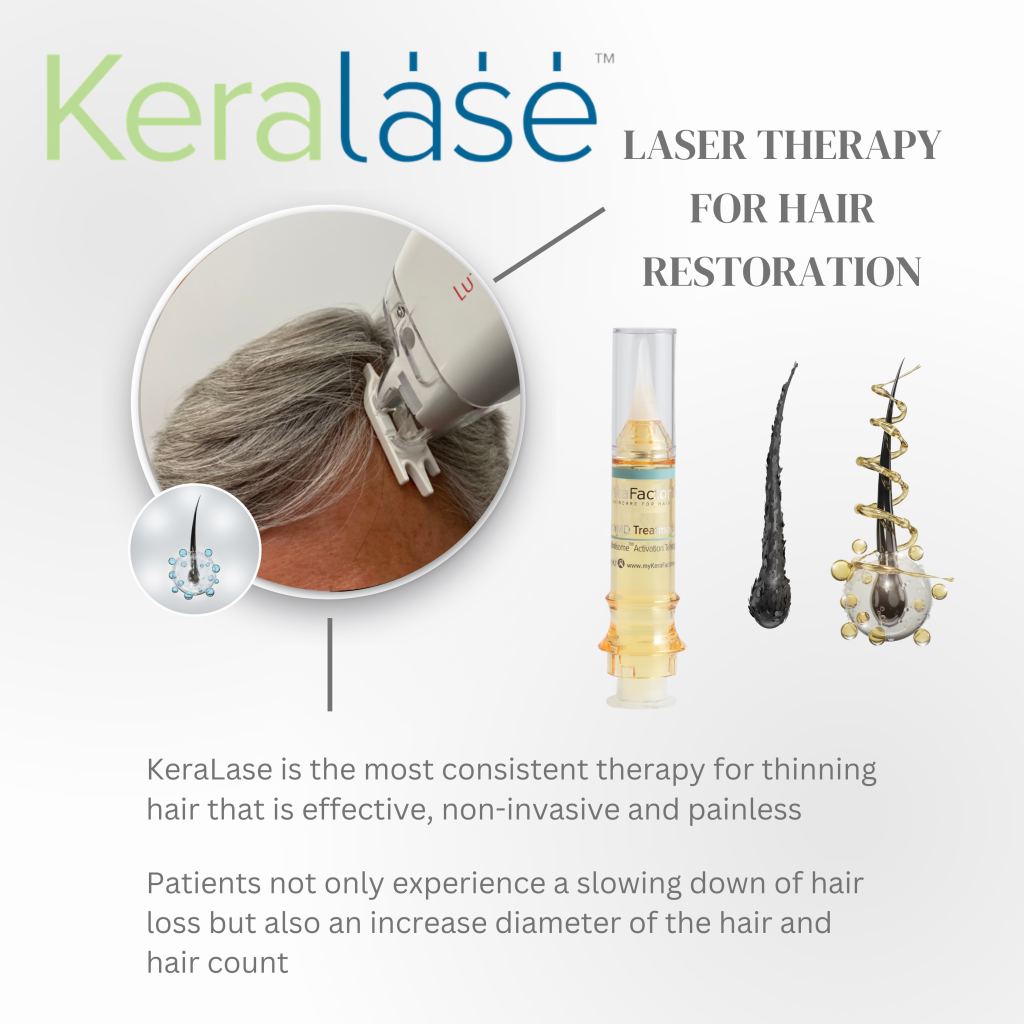
Keralase is a two-component treatment system combining the LaseMD Ultra thulium fiber fractional laser with KeraFactor, a proprietary growth factor peptide serum developed specifically for scalp and follicle applications. It's FDA-cleared for the treatment of alopecia and represents one of the most clinically sophisticated non-surgical hair restoration options available.
The LaseMD Ultra laser operates at 1927nm — a thulium fiber wavelength that creates precise non-ablative fractional microchannels in the scalp skin. These microchannels penetrate the stratum corneum and upper dermis without producing visible surface wounds, dramatically increasing the permeability of the scalp to topically applied actives. The clinical significance of this is substantial: the scalp's dense keratin layer makes it one of the most absorption-resistant skin surfaces on the body — topical minoxidil, for instance, achieves only 1–2% dermal penetration under standard application conditions. Laser microchanneling has been shown to increase topical absorption by up to 100-fold in the minutes following treatment, creating a delivery window that conventional topical application can't access.
KeraFactor is the active ingredient delivered through those microchannels. It's a peptide complex containing growth factors and peptides relevant to follicular biology: KGF-1 (keratinocyte growth factor), KGF-2, VEGF (vascular endothelial growth factor), PDGF-AA, FGF-10, IGF-1, KAP (keratinocyte-associated protein), and copper peptides. These growth factors support dermal papilla cell activity, extend the anagen (growth) phase of the hair cycle, improve follicular vascularization through VEGF, and create a scalp microenvironment more conducive to healthy follicle function. The serum continues to absorb and act in the days following treatment.

Why do We Use
Keralase Laser Hair Restoration
Hair restoration medicine operates on a biological clock — follicles that are miniaturizing are recoverable; follicles that have been permanently destroyed are not. This timeline makes early and comprehensive intervention the clinical priority, because the treatment window is not indefinite. Patients who wait until the thinning is visually obvious have often already lost a meaningful proportion of their follicular density irreversibly.
Keralase addresses the follicular microenvironment — the vascular support, growth factor signaling, and cellular activity that determine whether miniaturizing follicles recover or continue their progression toward permanent loss. It doesn't override genetics, and it works best when started before advanced miniaturization has occurred. But for patients in the active thinning phase with follicles still present, it delivers growth factors to the target cells at concentrations that no topical product achieves without the laser delivery mechanism.
At Magnolia, Keralase is part of a comprehensive hair restoration approach that considers the full clinical picture — DHT levels, thyroid function, ferritin, nutritional status, and whether pharmacologic DHT suppression is appropriate — because growth factor delivery to follicles that are being actively destroyed by DHT without DHT blockade in place produces limited results.

Key Benefits of
Keralase Laser Hair Restoration
Up to 100-Fold Increased Growth Factor Absorption: KeraFactor applied to untreated scalp achieves minimal dermal penetration through the dense keratinized scalp surface. The LaseMD Ultra microchannels created immediately before serum application dramatically increase permeability — delivering growth factors to the dermal papilla and follicular stem cells at concentrations that topical application alone can't approach. The laser isn't a standalone treatment; it's a precision delivery mechanism for the actives that do the biological work.
Multi-Growth-Factor Support for Follicular Biology: KeraFactor's peptide complex addresses multiple dimensions of follicle health simultaneously — vascularization through VEGF, dermal papilla activity through KGF and FGF, stem cell signaling through KAP, and anti-inflammatory effects through the copper peptide components. Single-factor approaches address one part of a complex biological system; KeraFactor's formulation addresses the follicular microenvironment comprehensively.
No Downtime — Scalp Microchannels Heal Rapidly: LaseMD Ultra's non-ablative fractional approach creates microchannels without producing visible surface wounds or the prolonged erythema associated with ablative laser treatments. Most patients have mild redness for 12–24 hours following treatment, with no restrictions on hair washing, styling, or activity after the first day. The treatment fits into a regular schedule without the extended downtime that more aggressive scalp procedures require.
Synergistic with DHT Blockers and PRP: Keralase addresses the follicular microenvironment and growth factor signaling. DHT blockers (finasteride, dutasteride) address the hormonal driver of miniaturization. PRP delivers concentrated autologous growth factors with established follicular stimulation evidence. The three approaches target different mechanisms — patients using Keralase alongside their DHT blocker regimen and periodic PRP treatments are addressing hair loss from more angles than any single intervention covers.
Appropriate for Both Men and Women: Unlike DHT blockers — which carry side effect concerns in men and are inappropriate for premenopausal women without contraception — Keralase has no hormonal mechanism and no sex-specific contraindications. It's appropriate for androgenetic alopecia in both sexes, for women with diffuse thinning, and for patients where hormonal approaches either aren't appropriate or haven't been fully effective.
Who Benefits Most From
Keralase Laser Hair Restoration
Patients with Early to Moderate Androgenetic Alopecia: The patients who benefit most from Keralase are those with active miniaturization and thinning but significant remaining follicular density — the population where growth factor stimulation has viable targets to work with. Early to moderate androgenetic alopecia (Norwood II–IV in men, Ludwig I–II in women) in the active thinning phase is the primary indication. Advanced alopecia with extensive follicular loss is better addressed by surgical restoration; Keralase is most effective when there are follicles worth supporting.
Women with Diffuse Hair Thinning: Women with diffuse thinning — particularly those with hormonal-pattern loss not amenable to DHT blockers, postpartum telogen effluvium with incomplete recovery, or chronic diffuse loss from nutritional or inflammatory causes — are excellent Keralase candidates because the treatment has no hormonal mechanism, no sex-specific contraindications, and the scalp-wide delivery of KeraFactor is well-suited to diffuse presentations.
Patients Who Want to Reduce Reliance on Medications Alone: Patients on finasteride or dutasteride who want to add a biological stimulation layer alongside their hormonal suppression — and patients who can't or don't want to use DHT blockers — find Keralase provides meaningful adjunctive intervention. The growth factor delivery mechanism is entirely distinct from the hormonal pathway, making it genuinely additive rather than overlapping with pharmacologic treatment.
Patients Preparing for or Recovering from Other Hair Restoration Procedures: Keralase's scalp health optimization effects make it a logical complement to hair transplant preparation and recovery — improving the recipient site environment before transplantation and supporting graft integration and surrounding native follicle health after. For patients who've had hair transplants and want to maintain and improve the surrounding non-transplanted hair, Keralase's ongoing follicular stimulation addresses the progressive native hair loss that continues after transplantation.
What To Expect From
Keralase Laser Hair Restoration
Step 1 — Hair and Scalp Evaluation: Your hair loss pattern, progression timeline, and hair health are reviewed before recommending Keralase — typically with Dr. Abdullah at your initial consultation. Lab review — ferritin, thyroid, hormones — ensures no correctable nutritional or hormonal contributors are driving loss that needs to be addressed first. Trichoscopy or scalp examination assesses follicular density and miniaturization pattern.
Step 2 — Treatment Session: The scalp area being treated is cleansed, and a topical numbing agent may be applied for comfort. The LaseMD Ultra laser pass creates microchannels across the treatment zone — typically 10–15 minutes for the scalp depending on the area size. The KeraFactor serum is then applied immediately, penetrating through the microchannels into the dermis. Total treatment time is approximately 30–45 minutes.
Step 3 — Immediate Post-Treatment: Mild erythema (redness) is typical for 12–24 hours. Hair should not be washed for 24 hours following treatment. Activity restrictions beyond hair care in the first day are minimal.
Step 4 — Treatment Series: Initial treatment series is typically 3 sessions spaced 4 weeks apart. Hair cycle biology means results develop gradually — reduced shedding is often the first change patients notice at 6–8 weeks, with visible density improvement developing over 3–6 months as treated follicles produce thicker, longer hairs through successive cycles. Maintenance sessions every 3–6 months sustain the microenvironment optimization and growth factor delivery.

Is
Keralase Laser Hair Restoration
right for me?
Keralase is appropriate for most patients with androgenetic alopecia or diffuse thinning who have remaining follicular density worth supporting. It's not a substitute for DHT blockade in patients with active androgenetic alopecia — the growth factor stimulation produces limited sustained results if the hormonal miniaturization process isn't also addressed. Dr. Abdullah evaluates whether pharmacologic DHT suppression is appropriate and recommended alongside Keralase based on your pattern and history.
Active scalp infections, open wounds, or recent scalp procedures require clearance before treatment. Patients with a history of keloid scarring are evaluated individually.
Keralase Laser Hair Restoration at Magnolia Functional Wellness — Southlake, TX
Hair restoration medicine has a fundamental delivery problem. The biologics that support follicle activity — growth factors, peptides, stem cell-derived molecules — work well when they reach the dermal papilla and follicular stem cells they're targeting. Getting them there is the challenge. The scalp's dense keratinized surface is one of the most absorption-resistant skin surfaces in the body. Topical minoxidil, the most widely prescribed hair loss treatment in the world, achieves roughly 1–2% dermal penetration under standard application conditions. Any growth factor serum applied directly to an untreated scalp faces the same barrier.
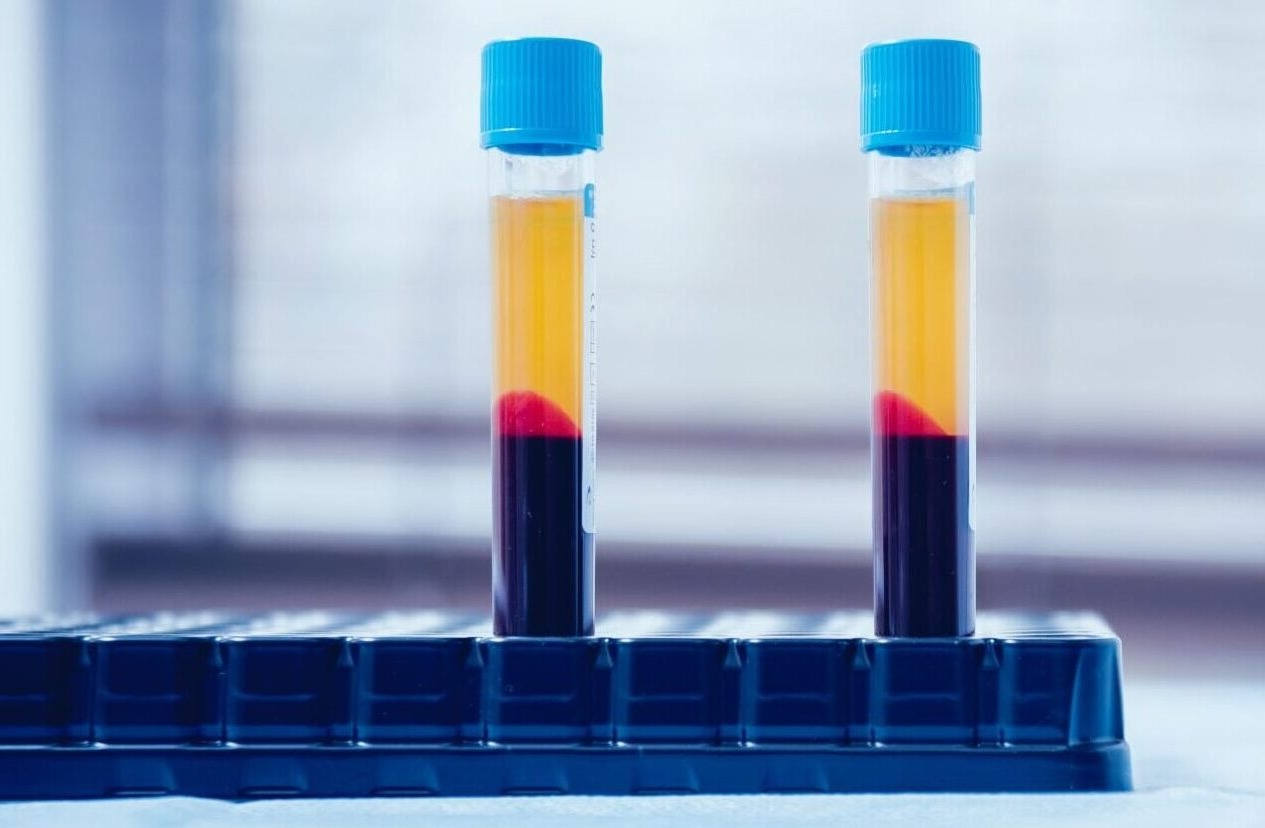
Keralase solves this. The LaseMD Ultra 1927nm thulium fiber fractional laser creates precise non-ablative microchannels through the stratum corneum into the upper dermis immediately before the KeraFactor serum is applied. Published data on laser-assisted topical delivery has documented up to 100-fold increases in absorption through laser-preconditioned skin compared to standard topical application. That's not a marginal improvement. It's the difference between a trace amount of growth factor reaching the follicular target and a therapeutically meaningful concentration arriving where the biology needs it.
The KeraFactor Difference
KeraFactor isn't a generalized growth serum adapted for scalp use. Its formulation — KGF-1, KGF-2, VEGF, PDGF-AA, FGF-10, IGF-1, KAP, and copper peptides — was developed specifically for follicular biology, addressing multiple dimensions of follicle health simultaneously. VEGF for vascularization of the follicular papilla. KGF and FGF for keratinocyte and dermal papilla activity. KAP for follicular stem cell signaling. Copper peptides for the anti-inflammatory environment that miniaturizing follicles need. This is a multi-target formulation addressing the follicular microenvironment comprehensively, not a single growth factor with a narrow mechanism.
The Magnolia Approach: Treat the Follicle and the Factors Threatening It
Delivering growth factors to follicles that are being actively miniaturized by DHT produces limited sustained results if the hormonal driver isn't simultaneously addressed. Delivering growth factors to follicles compromised by iron deficiency or thyroid dysfunction produces limited results if those deficiencies remain uncorrected. At Magnolia, Keralase is recommended within a clinical evaluation that reviews ferritin, thyroid function, hormone levels, and hair loss pattern — because the treatment plan that produces meaningful long-term results treats the whole picture, not just the surface.
Dr. Abdullah structures every hair restoration protocol this way. Keralase is the biological stimulation layer. DHT blockade — finasteride or dutasteride — is the hormonal suppression layer when appropriate. PRP is the autologous growth factor layer for patients who want both standardized and autologous delivery. HydraFacial Keravive is the scalp maintenance layer. The combination is more than the sum of its parts; the part that matters is making sure each component is actually indicated for the patient in front of us.
No Downtime — Results That Build Over Months
The LaseMD Ultra's non-ablative fractional approach produces mild redness for 12–24 hours without visible surface wounds or extended recovery. Normal activity resumes the next day. Results develop over months as treated follicles respond across successive hair growth cycles — reduced shedding typically at 6–8 weeks, visible density improvement at 3–6 months. The biology takes time; the treatment doesn't ask you to stop your life while it works.
Serving Southlake and Tarrant County
We serve patients from Southlake, Westlake, Colleyville, Grapevine, Keller, Hurst, Euless, Bedford, and across the DFW Metroplex. Initial consultation with Dr. Abdullah establishes whether Keralase is the right component of your specific hair restoration approach — and what else should be addressed alongside it.
How Process Works at
Magnolia Functional Wellness
Assess
We begin with a comprehensive evaluation of your health, goals, and medical background to understand the root causes, not just the symptoms.
Personalize
Based on your results, we create a tailored functional wellness plan using evidence-based therapies designed specifically for your body and needs.
Optimize
Through ongoing care, monitoring, and adjustments, we help you achieve sustainable improvements in performance, vitality, and long-term health.
Up to 100-Fold Increased Absorption Through Laser Microchanneling
The scalp's dense keratinized surface severely limits topical penetration — standard application delivers a fraction of active ingredients to dermal targets. LaseMD Ultra microchannels created immediately before KeraFactor application dramatically increase permeability, delivering growth factors to follicular targets at concentrations no conventional topical product achieves.
Pharmaceutical-Grade Multi-Growth-Factor Complex
KeraFactor contains KGF-1, KGF-2, VEGF, PDGF-AA, FGF-10, IGF-1, KAP, and copper peptides — a formulation specifically designed for follicular biology that addresses vascularization, dermal papilla activity, stem cell signaling, and the scalp microenvironment simultaneously. This is not a generalized growth serum; it's a targeted formulation for hair follicle support.
No Downtime — Back to Normal in 24 Hours
Non-ablative fractional microchanneling produces mild redness for 12–24 hours without visible surface wounds or the extended recovery that ablative scalp treatments require. No activity restrictions beyond avoiding hair washing on the day of treatment. Results build over months; downtime is measured in hours.
No Hormonal Mechanism — Appropriate for Men and Women
Keralase has no hormonal activity and no sex-specific contraindications. It's appropriate for androgenetic alopecia in both sexes, for women with diffuse thinning or postpartum hair loss, and for patients where DHT blockers aren't appropriate or preferred. The growth factor mechanism is entirely distinct from the hormonal pathway.
Physician-Supervised with Complete Hair Health Evaluation
Ferritin, thyroid, hormones, and hair loss pattern are reviewed before Keralase is recommended — because treating the scalp surface without addressing nutritional or hormonal drivers of loss produces limited results. The clinical picture determines the complete protocol, not just whether Keralase fits.
Synergistic with PRP, DHT Blockers, and Comprehensive Hair Protocols
Keralase delivers pharmaceutical growth factors. PRP delivers autologous growth factors. DHT blockers address the hormonal driver of miniaturization. The three approaches target different mechanisms and are additive — patients using all three comprehensively are addressing hair loss from more angles than any single intervention covers.
Your Questions Answered
Led by trained medical professionals delivering safe, effective, and scientifically backed aesthetic and wellness treatments.
How many sessions will I need?
An initial series of 3 sessions 4 weeks apart is standard. Hair cycle biology means results develop over months — reduced shedding typically at 6–8 weeks, visible density improvement at 3–6 months. Maintenance sessions every 3–6 months sustain the results. Most patients doing Keralase as part of a comprehensive hair restoration program continue maintenance alongside their DHT blocker regimen.
Does it hurt?
The LaseMD Ultra fractional laser produces a mild prickling or stinging sensation on the scalp. Topical numbing is applied before treatment for most patients and substantially reduces discomfort. Most patients find the session manageable and the post-treatment discomfort minimal.
How is Keralase different from PRP for hair?
Both deliver growth factors to follicles — they differ in source and delivery mechanism. PRP uses autologous growth factors concentrated from your own blood, injected directly into the scalp. Keralase uses a standardized pharmaceutical-grade peptide growth factor complex (KeraFactor) delivered transcutaneously via laser microchannels. PRP has a longer evidence base for androgenetic alopecia; Keralase has standardized and reproducible formulation. They're complementary rather than competing — Dr. Abdullah uses both in comprehensive protocols.
Will it work if I have significant thinning already?
Keralase works best when there are viable miniaturizing follicles to stimulate. Advanced alopecia with extensive permanent follicular loss has limited response to any biologic stimulation — the targets aren't there. Early to moderate thinning with remaining density is where Keralase produces meaningful results. If your thinning is advanced, Dr. Abdullah will give you an honest assessment of what's achievable with non-surgical approaches.
Do I still need finasteride or dutasteride?
For patients with androgenetic alopecia driven by DHT, yes — Keralase stimulates follicular activity but doesn't address the hormonal miniaturization process that's destroying follicles. Growth factor delivery to follicles being actively miniaturized by DHT without hormonal suppression in place produces limited sustained results. Dr. Abdullah discusses DHT blocker candidacy as part of every hair restoration evaluation.
Need More Information?
Our team is ready to answer your specific questions and concerns.
Redefine Your Glow. Reimagine Your Life.
Led by trained medical professionals delivering safe, effective, and scientifically backed aesthetic and wellness treatments.
Not what you were looking
for? Explore More.
At Magnolia Functional Wellness, every treatment is guided by medical science, regenerative principles, and individualized care. We focus on restoring physiology at its source, enhancing vitality, and supporting long term health with evidence based interventions that go beyond traditional aesthetics.