




Dermal Fillers in Southlake, TX
Not all fillers are the same product, and not all faces need the same solution. Sculptra rebuilds the collagen architecture that decades of aging have quietly dismantled. Restylane restores volume and softens lines with immediate, reversible precision. RHA moves with your face — engineered specifically for the dynamic areas where conventional fillers crease, ripple, or look wrong. At Magnolia Functional Wellness, the filler recommendation starts with your specific anatomy, your timeline, and what you're actually trying to accomplish — not a menu of options presented without clinical context.
Learn More About
Dermal Fillers
.svg)
What is
Dermal Fillers
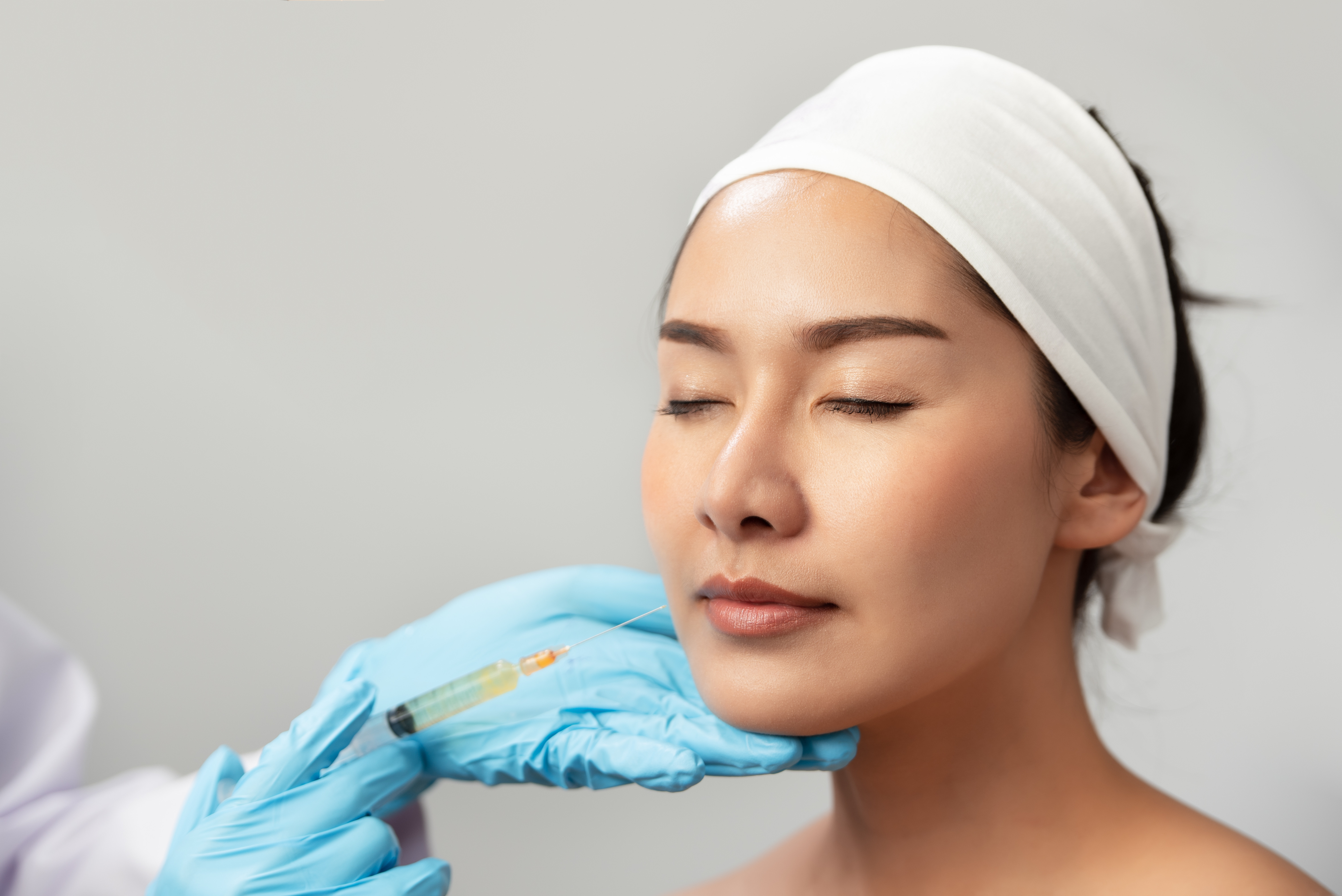
Dermal fillers are injectable substances placed into specific facial structures to restore volume, soften lines, enhance contour, or rebuild the tissue framework that supports the overlying skin. What most people don't know is how mechanistically different the three major categories are — and why that distinction determines which one belongs in which part of the face.
Hyaluronic acid fillers (Restylane, RHA Collection) work by placing a cross-linked gel into the target tissue where it binds water molecules, creating hydration and volume at the injection site. HA is a naturally occurring glycosaminoglycan already present throughout your dermis and connective tissue — these fillers supplement what's been lost to aging and metabolic changes. The results are immediate, the correction is precise, and HA fillers are uniquely reversible: hyaluronidase dissolves them within minutes if the result needs adjustment. The difference between the Restylane family and the RHA Collection lies in how the HA is cross-linked. Restylane uses a NASHA (Non-Animal Stabilized Hyaluronic Acid) technology producing a cohesive gel engineered for specific depths and tissue planes. RHA (Resilient Hyaluronic Acid, by Revance) uses a gentler cross-linking process that preserves more of the HA's natural chain structure, creating a gel that deforms and recovers with facial movement rather than resisting it — which is exactly why it performs differently in dynamic areas like the nasolabial folds, perioral region, and forehead.
Sculptra (poly-L-lactic acid) is a different category entirely. It's not a space-filling gel — it's a biostimulator. PLLA microparticles suspended in sterile water are injected into the deep dermis and subcutaneous tissue where they trigger a controlled inflammatory response that activates fibroblasts and drives collagen synthesis. The PLLA is gradually absorbed over weeks while the collagen that's been stimulated builds progressively, producing volume and structural improvement that develops over three to six months and can persist for two years or more. Sculptra doesn't restore volume directly — it rebuilds the biological infrastructure that used to produce it. That's a fundamentally different intervention with a fundamentally different timeline and outcome profile.

Why do We Use
Dermal Fillers
The specific product selection at Magnolia isn't arbitrary brand preference — it reflects the mechanical and biological properties that make each filler appropriate for the tissue environment it's entering.
Sculptra is selected specifically for patients with meaningful structural volume loss — temple hollowing, midface deflation, the skeletonized look that comes from fat pad atrophy and collagen loss in the deep layers. HA fillers placed in these areas require large volumes for modest effect and need regular retreatment because the underlying structural deficit hasn't been addressed. Sculptra rebuilds the collagen framework that makes the face structurally sound before surface corrections are layered on top. For patients starting a comprehensive facial rejuvenation program, it often comes first.
The Restylane family is selected when the goal is immediate, targeted correction in specific anatomical areas. Different Restylane products have different rheological properties — stiffness, cohesivity, lift capacity — that match different injection depths and tissue types. Using a high-lift product in a superficial plane or a soft product in a structural application produces suboptimal results regardless of technique. Product selection matched to anatomy is the clinical foundation of consistent outcomes.
RHA is selected specifically for dynamic areas — the nasolabial folds, perioral region, and forehead — where the goal is seamless natural movement rather than static volume. For patients who've noticed that conventional fillers in these areas look unnatural in motion even when they look fine at rest, RHA is the appropriate formulation.

Key Benefits of
Dermal Fillers
Sculptra — Collagen Rebuilding That Lasts, Not Filling That Fades: The most common complaint about conventional HA fillers isn't the results — it's the timeline. You return every year or eighteen months for the same treatment of the same areas because the filler has resorbed and the underlying deficit hasn't changed. Sculptra addresses a different problem: the progressive loss of the collagen framework that once gave your face structural support. The cheek hollowing, the temple deflation, the gradual shift from convex facial contours to concave ones — these reflect tissue architecture loss, not just surface-level volume loss. Sculptra stimulates fibroblast activity and new collagen synthesis in the deep dermis and subcutis, building a structural foundation rather than temporarily occupying space. The results develop gradually over three to six months as collagen production accumulates, last two years or longer, and don't require the maintenance cadence that HA fillers do. For patients looking at long-term facial rejuvenation rather than periodic correction, Sculptra changes the conversation.
Restylane — Immediate, Precise, Reversible Volume Correction: The Restylane family offers something no other injectable category provides: immediate correction with a known, reversible outcome. Whether you're addressing tear trough hollowing, lip volume and definition, cheek contour, nasolabial folds, or marionette lines, the right Restylane product delivers precise, predictable results the same day. Restylane Lyft handles structural cheek augmentation. Restylane Kysse delivers natural lip volume and movement. Restylane Defyne manages deep folds while maintaining flexibility. Restylane Refyne softens moderate lines with natural expression. Each is a distinct formulation engineered for specific tissue planes and mechanical requirements — not interchangeable products from the same shelf. The reversibility matters clinically: if anatomy, preference, or technique produces a result you don't want, hyaluronidase dissolves it within minutes. That safety net doesn't exist for any other injectable category, and it's the reason HA fillers remain the foundation of evidence-based aesthetic medicine.
RHA Collection — Built for a Face That Moves: Every conventional filler faces a challenge the RHA Collection was specifically engineered to solve: human faces spend most of their day in motion. Smiling, talking, chewing, raising eyebrows — the perioral area, nasolabial folds, and forehead are in near-constant dynamic activity, and a filler that resists movement rather than accommodating it creates visible problems. Rippling, creasing, bunching at expression peaks, and the subtle stiffness that makes treated areas look different when animated — these are failure modes of conventional fillers placed in the wrong areas. The RHA Collection's gentler cross-linking process preserves more of HA's natural flexible chain structure, producing a gel that deforms and recovers with facial movement rather than maintaining fixed resistance against it. The result looks and moves like untreated tissue. RHA 2 handles fine lines and the perioral area. RHA 3 addresses moderate-to-severe nasolabial folds and midface. RHA 4 provides structural support in deeper tissue planes. For patients whose aesthetic concern is specifically in these dynamic zones, RHA produces outcomes that conventional HA fillers in the same locations can't reliably match.
Comprehensive Facial Rejuvenation — Treating Structure, Volume, and Surface Simultaneously: The most sophisticated filler outcomes aren't achieved with a single product in a single area. Facial aging involves simultaneous changes at every tissue layer: skeletal remodeling beneath, fat compartment atrophy in the midface, skin laxity at the surface, and collagen loss throughout the dermis. Treating one layer while ignoring others produces partial results. At Magnolia, Dr. Abdullah evaluates the complete anatomical picture and recommends combinations that address what each layer actually needs — Sculptra for the structural collagen framework, a Restylane product for immediate volume correction, RHA for dynamic line treatment — in proportions that reflect your specific anatomy rather than a standardized protocol.
Natural Results from Anatomy-Based Injection Technique: The filler horror stories — the duck lips, the overfilled cheeks, the pillow face — are almost universally a product of overcorrection or poor anatomical understanding, not an inherent property of the products. Restoring facial balance means understanding what your face looked like before the changes that brought you in, knowing which tissue planes each product belongs in, and dosing conservatively with the option to add rather than starting aggressive and hoping patients are satisfied. The goal at Magnolia is a result that prompts "you look great" rather than "you've had work done." Getting there requires anatomy knowledge, restraint, and a treatment plan built around your face rather than a price list.
Who Benefits Most From
Dermal Fillers
Patients with Progressive Midface Volume Loss and Temple Hollowing: Midface descent and volume loss — the flattening of the cheeks, the deepening of the nasolabial folds, the hollowing of the temples — represent the most visually significant changes of facial aging and the ones that make faces look tired rather than just older. Sculptra's collagen biostimulation is specifically appropriate for this population because the volume loss reflects structural tissue deterioration that placing a gel in the space doesn't adequately address. Patients in their 40s and 50s with progressive midface changes who want durable structural improvement rather than periodic gel maintenance are the core Sculptra candidates.
Patients Seeking Lip Enhancement or Perioral Rejuvenation: Lip augmentation and perioral rejuvenation are among the most technically demanding filler applications — and among the most visible when done poorly. Restylane Kysse is specifically engineered for lip tissue: soft enough to move naturally with speech and expression, cross-linked for adequate duration, and formulated to enhance without producing the "filled" look that patients fear. Perioral lines — the vertical lip lines that deepen with age and sun exposure — respond to carefully placed superficial Restylane or RHA 2 for natural softening without stiffness.
Patients Who Want Immediate Results Before an Event or Commitment-Free Correction: The reversibility and immediacy of HA fillers make them the right recommendation for patients who want to see results before an event, who are uncertain about committing to longer-lasting options, or who are trying filler for the first time and want to evaluate the outcome before considering more durable approaches. A dissolving session with hyaluronidase returns you to baseline. That safety net makes HA fillers the appropriate starting point for most first-time filler patients regardless of their longer-term goals.
Patients Who Animate Prominently and Hate the Treated Look in Motion: Patients who smile broadly, express emotionally, and notice that fillers in their nasolabial folds or around their mouth look different — stiffer, more visible, occasionally rippled — when they're animating than when they're at rest are RHA Collection candidates. These are often patients who've had conventional fillers before and didn't love the dynamic result even when the static result looked good. RHA's flexible cross-linking accommodates the mechanical forces their facial expressions generate.
What To Expect From
Dermal Fillers
Step 1 — Facial Assessment and Treatment Planning: Dr. Abdullah evaluates your facial anatomy, volume distribution, skin quality, and the specific concerns you're addressing. Photographs from multiple angles document baseline before any injection. For new filler patients, the consultation identifies which products belong in which areas and establishes realistic expectations for timeline and result — including whether Sculptra's gradual collagen stimulation or immediate HA correction is appropriate for your situation.
Step 2 — Preparation: Topical numbing cream is applied to the treatment area 20–30 minutes before injection. Most Restylane and RHA products contain lidocaine in the formulation for additional in-tissue anesthetic effect. Ice application before injection further reduces discomfort. For lips specifically, a dental block is offered for patients who prefer it.
Step 3 — Injection: Technique varies by product and area — sharp needle for precise superficial placement, cannula or large-area volumization with reduced bruising risk. Sculptra is mixed 48–72 hours in advance for optimal reconstitution and injected in a fan pattern across the target region. Restylane and RHA are injected at the appropriate depth for each product — superficial dermal for fine lines, subdermal for volume, deep subcutaneous for structural support. Total treatment time is 20–60 minutes depending on areas treated.
Step 4 — Immediate Post-Treatment: Swelling, redness, and mild tenderness are expected for 24–72 hours. Bruising is possible and resolves within one to two weeks. For Sculptra, a firm massage protocol is given at treatment — the 5-5-5 rule (massage five minutes, five times daily, for five days) is important to ensure even distribution of the PLLA particles and prevent nodule formation. Avoid vigorous exercise, excessive heat, and alcohol for 24 hours.
Step 5 — Follow-Up and Results Timeline: HA filler results are immediate and evaluated at two weeks when initial swelling has resolved. Sculptra results develop progressively over three to six months as collagen synthesis accumulates — a follow-up at six to eight weeks assesses early collagen response and determines whether additional sessions are needed. Most Sculptra patients complete two to three treatment sessions spaced six to eight weeks apart for the initial collagen-building phase.

Is
Dermal Fillers
right for me?
Dermal fillers are appropriate for most adults seeking facial volume restoration, line softening, or contour enhancement without surgery. HA fillers are contraindicated in patients with known hypersensitivity to hyaluronic acid or gram-positive bacterial proteins. Sculptra is contraindicated in patients with autoimmune conditions, active skin infections in the treatment area, or those prone to hypertrophic scarring or keloids.
Pregnancy and active infection in the treatment area are contraindications for all injectable treatments. Patients on anticoagulants have higher bruising risk and should discuss timing relative to their medication. Patients with active herpes simplex outbreaks in the treatment area require antiviral prophylaxis before perioral filler.
The most important patient selection consideration is realistic expectations: fillers restore and rejuvenate, they don't surgically restructure. Significant skin laxity, heavy jowling, and platysmal banding benefit more from surgical consultation than from filler volume. Our injectors will tell you when surgery is a more appropriate answer than injectable correction.
Dermal Fillers at Magnolia Functional Wellness — Southlake, TX
The aesthetic consultation landscape in North Texas is full of practices that offer fillers as commodities — a price per syringe, a menu of areas, and whoever is available that day. What Magnolia offers is a clinical evaluation of your facial anatomy, an understanding of what each product category actually does biologically, and a recommendation that reflects your specific face rather than a standardized protocol applied to everyone who walks in.
Three Products. Three Mechanisms. One Treatment Plan.
Sculptra, Restylane, and the RHA Collection aren't variations on the same thing. They work through different mechanisms in different tissue planes at different timescales, and understanding what distinguishes them is what produces outcomes that look genuinely better rather than just different.
Sculptra's poly-L-lactic acid microparticles don't fill space — they trigger controlled fibroblast activation that drives new collagen synthesis in the deep dermis and subcutis. The PLLA is gradually absorbed while the collagen it stimulates accumulates over three to six months, building structural framework that wasn't there before. For patients with significant midface descent, temple hollowing, or the progressive structural changes of facial aging, Sculptra addresses the biological deficit rather than temporarily masking it. Results that last two years or more and improve progressively are what distinguish it from anything in the HA category.
Restylane's NASHA technology produces cohesive hyaluronic acid gels engineered for specific tissue planes and mechanical demands. Restylane Lyft handles structural cheek augmentation with a stiffer gel that provides lift. Restylane Kysse delivers soft, natural lip volume with flexibility for movement. Restylane Defyne manages deep folds in areas with significant motion. Restylane Refyne softens moderate lines with high flexibility. The clinical value of the Restylane family is precision — the right product in the right plane produces immediate, predictable, reversible results. If anything about the outcome needs adjustment, hyaluronidase dissolves it within minutes. No other injectable category offers that.
The RHA Collection exists because dynamic facial areas — nasolabial folds, perioral region, forehead — require a filler that moves with facial expression rather than resisting it. Revance's gentler cross-linking preserves more of the HA's natural flexible chain structure, producing a gel that deforms and recovers with the mechanical forces of smiling and talking rather than holding its shape against them. Patients who've noticed that conventional fillers in their nasolabial folds look fine at rest but look different when they smile are experiencing exactly the problem RHA was designed to solve.
What the Consultation Actually Looks Like
Our injectors evaluate facial anatomy across multiple dimensions before any product recommendation is made: the structural framework of cheekbones and mandible, the fat compartment distribution in the midface, the quality and laxity of the overlying skin, the specific lines and shadows that concern you, and where you are in the trajectory of facial aging. A 38-year-old with early midface descent and a 52-year-old with more significant structural changes may both benefit from fillers, but the product mix, the sequence, and the treatment priority are different.
New patients who haven't had fillers before receive a conservative initial treatment with a follow-up at two weeks to evaluate the result before adding. Patients who've been treated elsewhere and weren't satisfied get an evaluation of what was done, what the current state of their anatomy is, and what needs to be dissolved versus built on before moving forward. Patients transferring their care from another injector get the same honest assessment.
The Standard That Guides Outcomes
Natural-looking results don't happen by accident. They require anatomy knowledge, product selection matched to tissue environment, injection technique appropriate for the depth and area, conservative dosing with the ability to add, and a patient who understands what they're treating and what realistic outcomes look like. Dr. Abdullah's standard is results that prompt "you look great" from people who don't know you've had anything done — not results that prompt "what have you had done?" Getting there requires restraint as much as skill.
Magnolia serves patients from Southlake, Westlake, Colleyville, Grapevine, Keller, Trophy Club, Flower Mound, and across the DFW Metroplex.
How Process Works at
Magnolia Functional Wellness
Assess
We begin with a comprehensive evaluation of your health, goals, and medical background to understand the root causes, not just the symptoms.
Personalize
Based on your results, we create a tailored functional wellness plan using evidence-based therapies designed specifically for your body and needs.
Optimize
Through ongoing care, monitoring, and adjustments, we help you achieve sustainable improvements in performance, vitality, and long-term health.
Three Products, Three Mechanisms — Selected for Your Anatomy
Sculptra rebuilds collagen framework. Restylane delivers immediate, reversible volume correction. RHA moves with dynamic facial expression. The product recommendation at Magnolia is based on what each tissue environment actually needs — not a preference for one brand or a one-size approach to every face that walks in.
Sculptra — Two-Year Results Without Annual Maintenance
Sculptra's poly-L-lactic acid biostimulation produces progressive collagen synthesis that builds over months and lasts years — not a gel that resorbs and requires re-treatment. For patients with meaningful structural volume loss who want durable improvement rather than periodic correction, Sculptra changes the economics and the outcome profile of facial rejuvenation.
HA Filler Reversibility — The Safety Net No Other Injectable Offers
If the result isn't what you wanted, hyaluronidase dissolves all HA fillers within minutes. No other injectable category provides this correction pathway. It's the reason HA fillers are the appropriate starting point for most new filler patients and the appropriate choice when immediate, adjustable results matter.
RHA for Dynamic Areas — Natural Results in Motion, Not Just at Rest
Conventional fillers in the nasolabial folds and perioral region can look natural at rest and different in expression. RHA's flexible cross-linking accommodates the mechanical forces of facial movement, producing outcomes that look like untreated tissue whether you're smiling, talking, or expressionless.
Anatomy-Based Injection Technique — Conservative Dosing with Room to Add
Overcorrection is how natural results become unnatural ones. Dr. Abdullah treats conservatively with a two-week follow-up to evaluate and add if needed — because starting cautious and building is the approach that consistently produces results patients are satisfied with for years rather than months.
Your Questions Answered
Led by trained medical professionals delivering safe, effective, and scientifically backed aesthetic and wellness treatments.
What's the difference between Sculptra and regular fillers?
Sculptra is a biostimulator, not a volumizing gel. It contains poly-L-lactic acid microparticles that trigger collagen synthesis in your own tissue — the PLLA is absorbed over weeks while the new collagen builds progressively, producing results that develop over three to six months and last two years or more. Conventional HA fillers (Restylane, RHA) place a gel that immediately creates volume and softens lines, with results lasting 12–18 months. Sculptra treats the structural collagen deficit; HA fillers replace volume and correct surface changes. Many patients benefit from both.
What's RHA and how is it different from regular Restylane?
RHA (Resilient Hyaluronic Acid) uses a gentler cross-linking process that preserves more of the HA's natural flexible chain structure. The result is a gel that moves with facial expression rather than resisting it — important in dynamic areas like the nasolabial folds and perioral region where conventional fillers can look different in motion than at rest. Standard Restylane products are engineered for stiffness, cohesivity, and lift in areas where movement is less of a factor. The right product depends on where you're treating and what the tissue environment requires.
How long do fillers last?
It depends on the product and the area. Restylane products typically last 12–18 months depending on location — areas with more movement (lips, around the mouth) metabolize filler faster than static areas (under-eye, cheeks). RHA lasts similarly. Sculptra results develop over three to six months and can persist for two years or more because the collagen it stimulates is your own tissue, not a foreign material being resorbed. All HA fillers are reversible with hyaluronidase at any point.
Does it hurt?
Topical numbing cream is applied before treatment, and most Restylane and RHA products contain lidocaine for in-tissue anesthetic effect. The injections are tolerable for most patients — a brief sharp sensation with the needle entry, pressure during product placement. Lips are more sensitive than other areas; a dental block is available for patients who prefer it. Sculptra involves more injection points across larger areas but is similarly managed with topical numbing.
Can fillers be reversed?
HA fillers (Restylane, RHA) are reversible with hyaluronidase, which dissolves the gel within minutes. This is one of the most important safety features of the HA category. Sculptra is not reversible — the PLLA particles trigger collagen synthesis that can't be dissolved. This is why Sculptra requires careful patient selection, proper reconstitution, and the massage protocol afterward to ensure even distribution.
How soon can I see results?
Restylane and RHA produce immediate visible results the same day, with final assessment at two weeks once swelling has resolved. Sculptra results develop gradually — you'll begin to notice changes at six to eight weeks as collagen synthesis accelerates, with full results at three to six months after completing the treatment series. The tradeoff for the delayed timeline is duration: Sculptra's collagen-built results outlast any HA filler.
Need More Information?
Our team is ready to answer your specific questions and concerns.
Redefine Your Glow. Reimagine Your Life.
Led by trained medical professionals delivering safe, effective, and scientifically backed aesthetic and wellness treatments.
Not what you were looking
for? Explore More.
At Magnolia Functional Wellness, every treatment is guided by medical science, regenerative principles, and individualized care. We focus on restoring physiology at its source, enhancing vitality, and supporting long term health with evidence based interventions that go beyond traditional aesthetics.