



Laser Skin Resurfacing in Southlake, TX — Ultraglo
The Lutronic LaseMD Ultra operates at 1927nm — a thulium fiber wavelength that delivers precise, non-ablative fractional resurfacing at a depth and clinical efficacy that compares directly to the Sciton MOXI, the gold-standard benchmark in the non-ablative resurfacing category, and outperforms it in adjustable intensity across more aggressive treatment settings. At Magnolia Functional Wellness, Dr. Farhan Abdullah's team uses the LaseMD Ultra for skin resurfacing, texture correction, hyperpigmentation, and collagen remodeling — with treatment parameters calibrated to your skin's specific needs, your tolerance for downtime, and how aggressively you want to address what's there.

Learn More About
Skin Resurfacing
.svg)
What is
Skin Resurfacing
Laser skin resurfacing is the controlled application of laser energy to the skin to selectively damage and remove aged, damaged, or irregular surface tissue while stimulating the collagen remodeling and cellular regeneration that produces genuine skin quality improvement. The LaseMD Ultra accomplishes this through non-ablative fractional photothermolysis — the same fundamental technology used in the most effective medical-grade resurfacing platforms globally.
The "fractional" in fractional photothermolysis is the key term. Instead of treating the entire skin surface uniformly — which produces significant downtime, barrier disruption, and weeks of recovery — fractional lasers treat thousands of microscopic columns of tissue while leaving the surrounding untreated skin intact. Those untreated areas become the source of the healing response: fibroblasts from intact tissue migrate into the treatment columns, the wound healing cascade deposits new collagen and elastin, and the treated channels undergo controlled coagulation and replacement with new, healthier tissue. The result is meaningful skin rejuvenation — collagen synthesis, texture improvement, pigmentation correction — with a downtime profile significantly shorter than ablative resurfacing.
The LaseMD Ultra's 1927nm thulium fiber wavelength produces specific tissue effects that distinguish it within the non-ablative fractional category. This wavelength has approximately 10 times higher water absorption than the 1550nm erbium wavelength used in earlier-generation non-ablative fractional platforms — meaning it deposits thermal energy more efficiently in the upper dermis with less scatter, allowing precise treatment of the dermal layer where pigmentation and early collagen pathology reside without excessive depth. The LaseMD Ultra also delivers treatment ampoules — pharmaceutical-grade topical compounds — into the microchannels created during treatment, dramatically increasing penetration depth and biological activity of applied actives immediately post-treatment, a delivery advantage that the MOXI and most other non-ablative platforms don't offer in the same integrated way.

Why do We Use
Skin Resurfacing
The LaseMD Ultra is at Magnolia because it's the appropriate tool for the category of skin quality improvement that surface treatments can't reach. Exfoliation, HydraFacial, and chemical peels improve skin by working at the epidermal surface and stratum corneum — they produce real improvement in texture, radiance, and congestion, but they don't remodel dermal collagen and they don't produce the structural quality improvement that persists between treatments. For patients with established sun damage, meaningful textural concerns, or skin quality that hasn't responded adequately to surface treatment programs, fractional non-ablative resurfacing is the level of intervention that creates structural change.
The 1927nm wavelength is selected specifically because its tissue interaction properties match what's being treated. The strong water absorption produces efficient dermal heating with less scatter than older non-ablative wavelengths, the pigment targeting addresses the hyperpigmentation component simultaneously with the collagen stimulation component, and the integrated ampoule delivery turns the treatment columns into a precision active delivery system that adds biological value the laser energy alone doesn't produce.
The comparison to MOXI is relevant and worth being direct about: if you've researched non-ablative fractional resurfacing and found the MOXI's results compelling, the LaseMD Ultra produces equivalent results through the same fundamental mechanism with greater adjustability. The choice isn't between fundamentally different technologies — it's about having the right platform for the full range of patients and treatment intensities your practice sees.

Key Benefits of
Skin Resurfacing
Collagen Remodeling That Produces Structural Skin Quality Improvement: The most important distinction between laser resurfacing and surface treatments like chemical peels or HydraFacial is what happens in the dermis. Fractional laser creates thermal injury in microscopic columns that extend into the dermis — the collagen and elastin-containing layer that determines skin firmness, thickness, and structural integrity. The wound healing response that follows deposits new Type I collagen and reorganizes existing collagen fiber architecture. This is genuine structural improvement — not temporary surface brightness or hydration, but actual dermal remodeling that persists for months to years after treatment and cumulates across a series of sessions. For patients whose skin has lost the firmness, density, and resilience it had in earlier decades, this is the intervention that addresses the right tissue layer.
Hyperpigmentation and Sun Damage Correction — The 1927nm Advantage: The 1927nm wavelength targets melanin and water simultaneously, making it specifically effective for the range of pigmentation changes that Texas sun exposure accumulates: solar lentigines (sun spots), diffuse mottled hyperpigmentation, post-inflammatory hyperpigmentation from acne or other trauma, and the overall uneven tone that makes skin look aged and damaged. The fractional treatment pattern creates microscopic epidermal disruption at the pigmented sites — the melanin-containing keratinocytes are destroyed in the treatment columns and shed over the following days, leaving cleared, more evenly toned skin beneath. For patients with significant sun damage — which describes most people who've lived in North Texas for a decade — the 1927nm fractional approach addresses pigmentation while simultaneously stimulating the collagen renewal that addresses the textural aging component of photodamage.
LaseMD Ultra vs. Sciton MOXI — Equivalent Technology, Greater Flexibility: The Sciton MOXI has become the benchmark non-ablative fractional device by which others in the category are measured — deservedly, as it produces excellent results at the treatment parameters where it's used most often. The LaseMD Ultra operates at the same 1927nm thulium wavelength, through the same fractional photothermolysis mechanism, producing the same fundamental tissue response. Where the LaseMD Ultra differentiates is in treatment density and energy range flexibility — it can be pushed to higher density settings for patients who want more aggressive correction and are willing to accept proportionally more downtime, while remaining appropriate for lighter "prejuvenation" treatments at the lower end. For the patient who wants the MOXI's skin quality improvement but needs the ability to adjust intensity based on their schedule or their skin's current needs, the LaseMD Ultra delivers that flexibility without changing devices.
Integrated Ampoule Delivery — Treating the Skin While Resurfacing It: The LaseMD Ultra's fractional microchannels aren't just the mechanism of collagen stimulation — they're a delivery system. Lutronic's pharmaceutical-grade ampoules are applied to the treated skin immediately after the laser pass, penetrating through the freshly created microchannels into the dermis at dramatically higher concentrations than topical application on intact skin achieves. Vitamin C ampoules address pigmentation and antioxidant protection during healing. Growth factor ampoules accelerate the tissue repair response. Brightening ampoules deliver depigmentation actives directly to the dermal layer where melanin synthesis occurs. This integrated delivery capability is a clinical advantage the LaseMD Ultra has over comparable platforms — the resurfacing and the active treatment happen in the same session rather than requiring a separate delivery protocol.
Texture Correction — Enlarged Pores, Rough Surface, and Post-Acne Irregularity: Fine texture irregularity — the rough, uneven surface, enlarged pores, and post-acne textural changes that are visible in certain lighting and make foundation sit poorly — reflects dermal architecture changes and collagen disorganization in the upper dermis that surface exfoliation can improve temporarily but not structurally correct. Fractional laser resurfacing addresses these changes at the structural level: the thermal injury columns create controlled dermal remodeling that reorganizes collagen architecture, reduces the follicular infundibulum dilation contributing to visible pore enlargement, and smooths the surface irregularity produced by prior acne inflammation. Patients with these concerns who've exhausted surface treatments without sustained improvement are the appropriate candidates for the structural correction that only dermal-depth thermal remodeling produces.
Scalable Treatment Intensity — From Prejuvenation to Significant Correction: One of the more clinically useful properties of the LaseMD Ultra is the ability to scale treatment intensity across a wide range of densities and energies based on the patient's goals and downtime tolerance. At lower densities — sometimes called prejuvenation settings — the treatment produces mild redness for 24 hours, subtle progressive skin quality improvement, and requires essentially no schedule interruption. Appropriate for patients in their late 20s or 30s who want to maintain skin quality rather than correct established damage, or for patients who can't accommodate visible downtime. At higher densities, the treatment produces more significant redness and a sandpaper-texture skin surface that sheds over three to five days, with proportionally more dramatic correction of established pigmentation, textural damage, and early rhytides. The same platform, the same wavelength, calibrated to different clinical and lifestyle needs.
Who Benefits Most From
Skin Resurfacing
Patients with Sun Damage, Solar Lentigines, and Diffuse Hyperpigmentation: This is the category where fractional 1927nm resurfacing produces the most dramatically visible improvement. North Texas sun accumulates in solar lentigines, diffuse brown mottling, and the uneven tone that makes skin look significantly older than its chronological age. The LaseMD Ultra's simultaneous pigment targeting and collagen stimulation addresses both the pigmentation and the dermal aging components of photodamage — producing skin that's visibly more even and more structurally sound after a series of treatments. A series of three sessions is typically recommended for significant sun damage, with maintenance annually thereafter.
Patients with Textural Irregularity and Enlarged Pores: Enlarged pores, rough uneven texture, and the post-acne textural changes that make skin look bumpy or uneven reflect dermal architecture changes that surface treatments improve temporarily without resolving structurally. LaseMD Ultra's dermal-depth thermal remodeling creates the collagen reorganization and tissue contraction that produces lasting texture improvement beyond what peels, HydraFacial, or microneedling alone achieves for established textural concerns.
Patients in Their Late 20s to 40s Pursuing Prejuvenation: The most clinically cost-effective use of fractional non-ablative resurfacing is the period before significant damage has accumulated. Low-density LaseMD Ultra treatment every six to twelve months stimulates ongoing collagen maintenance, addresses early pigmentation before it consolidates into established sun spots, and maintains the skin quality that's progressively harder to recover once lost. The patient who starts at 32 arrives at 45 with meaningfully better skin than the untreated peer — not because any single treatment made a dramatic difference, but because consistent collagen maintenance prevented the structural deterioration rather than trying to reverse it.
Patients Wanting More Than Surface Treatments Have Delivered: The common presentation is a patient who's been consistent with professional skin care — monthly HydraFacials, regular chemical peels, a good at-home routine — and has improved skin within the surface exfoliation category but hasn't achieved the quality improvement they're looking for in terms of firmness, overall texture, and persistent tone evenness. Those goals require dermal intervention. LaseMD Ultra is the appropriate next step for patients who've optimized surface treatment and are ready to address the structural layer.
What To Expect From
Skin Resurfacing
Step 1 — Skin Assessment and Treatment Planning: Dr. Abdullah's team evaluates your skin type, Fitzpatrick phototype, extent of pigmentation and textural concerns, history of prior laser treatments, current skincare regimen including retinoids, and desired outcome. Treatment density and energy settings are selected based on your specific goals and downtime tolerance — lighter treatment with minimal downtime or more intensive treatment with 3–5 days of visible skin changes.
Step 2 — Preparation: Retinoids are discontinued seven days before treatment. Patients with any history of perioral herpes simplex receive antiviral prophylaxis before fractional resurfacing. Topical numbing cream is applied 30–45 minutes before the laser session.
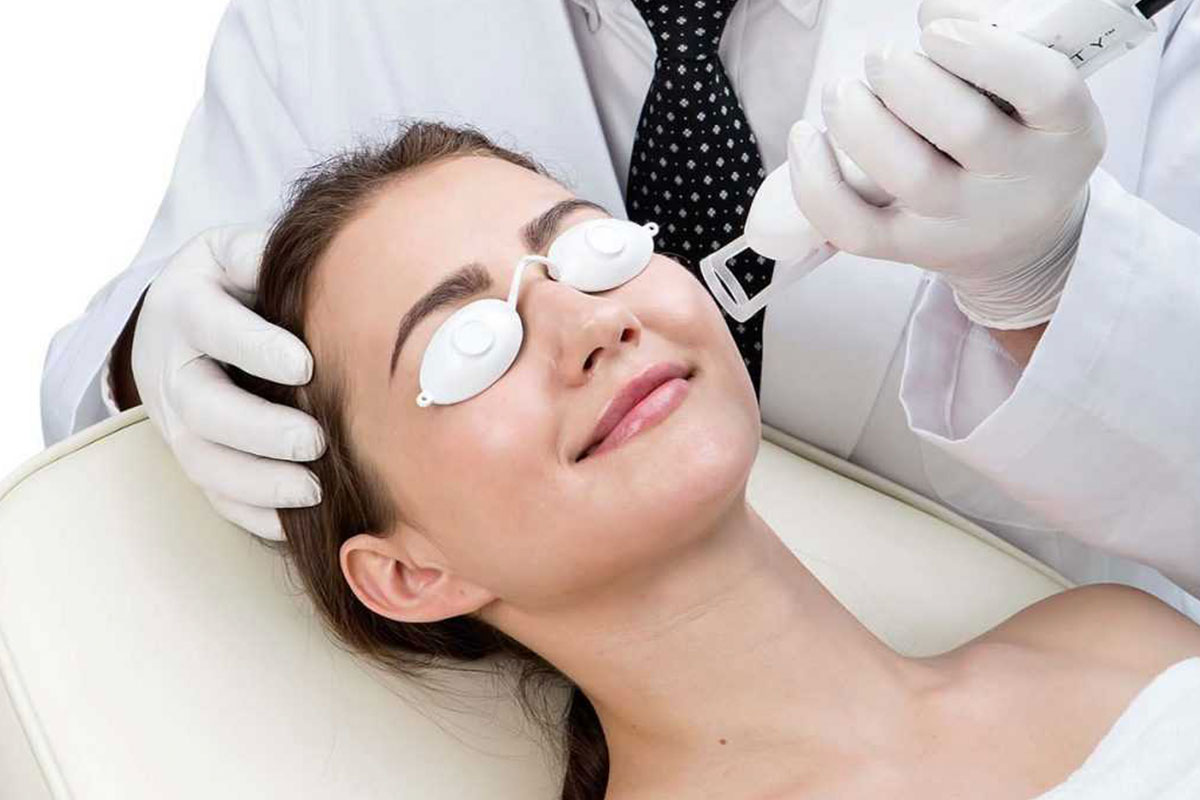
Step 3 — Laser Treatment: The LaseMD Ultra handpiece is passed systematically across the treatment area. The laser creates thousands of microscopic treatment columns simultaneously — the sensation is a mild heat and prickling under the numbing, well-tolerated by most patients. Ampoule application follows immediately: the selected pharmaceutical-grade ampoule (vitamin C, growth factor, or brightening) is applied and massaged into the treated skin where it penetrates the open microchannels at dramatically elevated concentrations. Total treatment time is 20–40 minutes depending on area size and density.
Step 4 — Immediate Post-Treatment: The skin appears pink to red immediately after treatment, and feels warm — like a mild sunburn. Lower-density treatments: redness resolves within 24 hours, no visible skin changes beyond temporary erythema. Higher-density treatments: redness for 2–3 days followed by a bronzed, sandpaper-texture phase as the treated epidermis prepares to shed; the shedding occurs over days 3–5 revealing the refreshed skin beneath. SPF is applied immediately at treatment completion and is mandatory throughout the healing period.
Step 5 — Home Care and Follow-Up: Gentle cleanser, fragrance-free moisturizer, and diligent SPF for the first week. Retinoids and active skincare products resume at week two. Results from lower-density treatment are visible immediately as pigmentation begins to shed and brightness improves; collagen remodeling continues for three to six months. Higher-density treatment produces more dramatic progressive improvement over the same timeline. A series of three sessions spaced four to six weeks apart is standard for patients with established concerns.

Is
Skin Resurfacing
right for me?
LaseMD Ultra fractional resurfacing is appropriate for Fitzpatrick I–IV skin types. Fitzpatrick V–VI patients require individual evaluation — the 1927nm wavelength has strong melanin absorption that increases the risk of post-inflammatory hyperpigmentation in highly melanin-dense skin at standard settings, and if treated, parameters must be adjusted conservatively with careful monitoring. Active skin infections, open wounds, and current use of isotretinoin are contraindications. Pregnancy is a contraindication to laser treatment. Patients with a history of keloid formation require individual discussion.
The treatment is not appropriate for patients who can't or won't avoid sun exposure during the recovery period — UV exposure on freshly resurfaced skin significantly increases hyperpigmentation risk. If your lifestyle doesn't permit adequate sun protection for two weeks post-treatment, a different timing window or a different treatment modality is appropriate.
Laser Skin Resurfacing at Magnolia Functional Wellness — Southlake, TX
The conversation about non-ablative fractional resurfacing in North Texas often centers on the Sciton MOXI — and that makes sense. MOXI has earned its reputation by producing consistent, clinically meaningful skin quality improvement with a downtime profile most patients can accommodate. The Lutronic LaseMD Ultra operates at the same 1927nm thulium wavelength, through the same fractional photothermolysis mechanism, with the same tissue interaction properties that make 1927nm the right wavelength for this treatment category. The clinical difference is adjustability — the LaseMD Ultra's energy range and density settings extend further in both directions, allowing the same platform to deliver a minimal-downtime maintenance treatment for the patient who can't afford visible skin changes this week and a more intensive correction session for the patient who wants to address established sun damage aggressively and is willing to plan around a few days of recovery.
Why 1927nm Is the Right Wavelength for This Category
Not all laser wavelengths interact with skin tissue the same way, and the choice of wavelength determines what gets treated and how efficiently. The 1927nm thulium wavelength has approximately ten times higher water absorption than the 1550nm erbium wavelength used in earlier non-ablative fractional devices — meaning it deposits thermal energy more efficiently in the upper dermis with less scatter, creating precise treatment columns at the tissue depth where pigmentation and early collagen pathology actually reside. This precision matters clinically: more efficient energy deposition at the right depth means less total energy required for equivalent tissue effect, which translates to better tolerability and a more favorable risk profile.
The wavelength also has specific melanin absorption characteristics that make it effective for pigmented lesion treatment simultaneously with the collagen stimulation occurring in the same treatment columns. Patients with both sun damage pigmentation and textural concerns address both in the same session rather than requiring a separate pigmentation-specific treatment and a separate collagen-stimulation treatment on different platforms.
The Ampoule Delivery Advantage
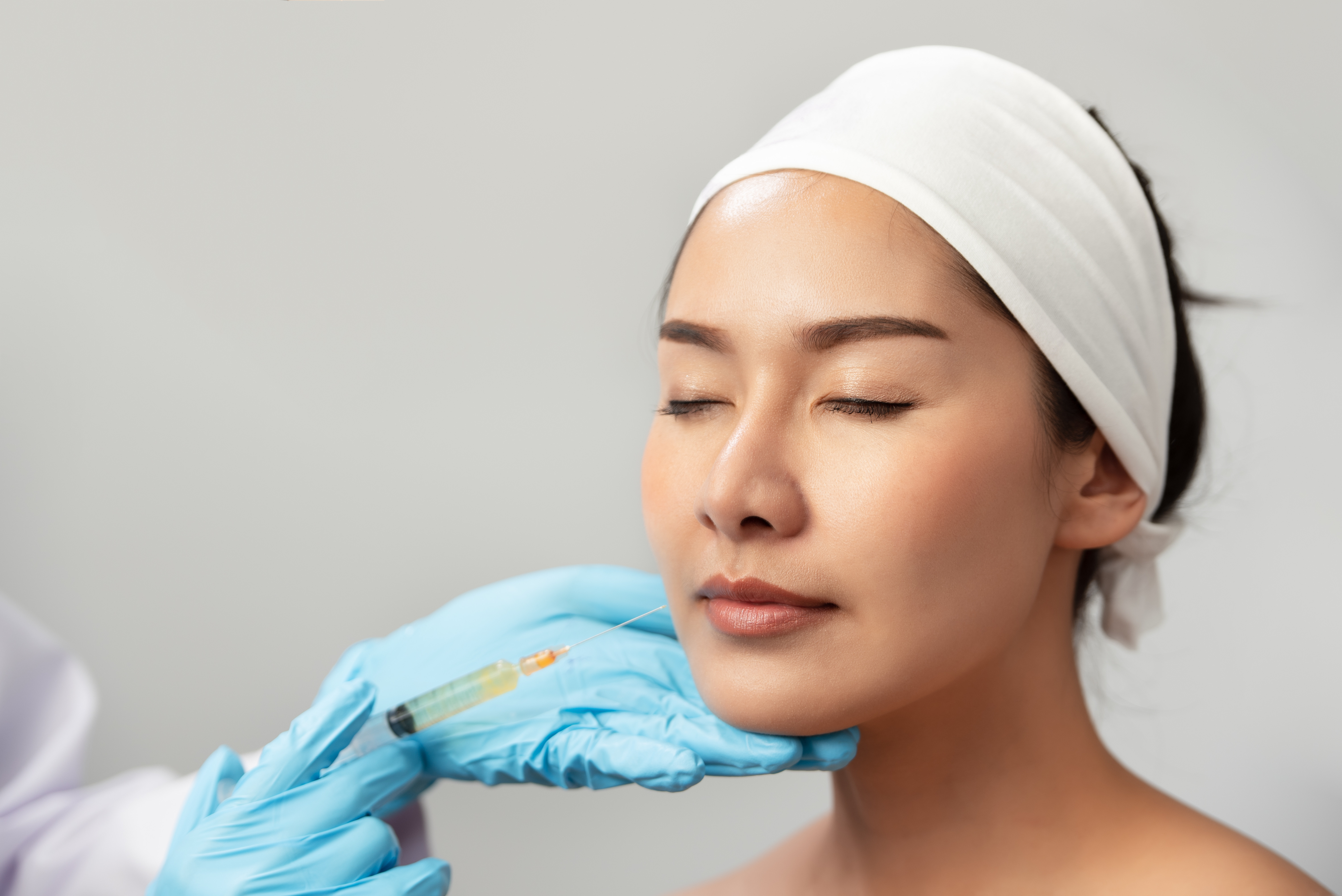
Most laser resurfacing platforms treat the skin and then stop — the treatment column is created, the healing response begins, and any skincare applied afterward penetrates through the still-partially-intact barrier. The LaseMD Ultra's ampoule delivery system changes this. Pharmaceutical-grade topical compounds are applied immediately after the laser pass, when the fractional microchannels are open and the surface barrier is transiently disrupted — dramatically increasing penetration depth into the dermis compared to surface application on intact skin. Vitamin C delivered into open microchannels reaches the melanocyte layer where it inhibits melanogenesis. Growth factors delivered into open channels reach the dermal fibroblasts where they accelerate the collagen synthesis response. Brightening actives reach tissue depths where topical application can't. The treatment columns the laser creates serve as both the mechanism of resurfacing and the pathway for precision active delivery — a clinical efficiency that makes the LaseMD Ultra session more comprehensive than resurfacing alone.
A Program Built for Your Skin and Schedule
Dr. Abdullah's team builds resurfacing programs based on your specific skin findings, your downtime tolerance, and the pace at which you want to reach your outcome. Patients who need to be presentable throughout the program work at lower density settings with monthly sessions — gradual improvement that never requires canceling meetings or plans. Patients who can accommodate more visible recovery and want faster results work at higher density settings with appropriately spaced sessions. The same platform, the same clinical team, calibrated to different schedules and different timelines. The treatment isn't one-size — it's adjusted to how you live and what you're trying to accomplish.
Magnolia serves patients from Southlake, Westlake, Colleyville, Grapevine, Keller, Trophy Club, Flower Mound, and across the DFW Metroplex.
How Process Works at
Magnolia Functional Wellness
Assess
We begin with a comprehensive evaluation of your health, goals, and medical background to understand the root causes, not just the symptoms.
Personalize
Based on your results, we create a tailored functional wellness plan using evidence-based therapies designed specifically for your body and needs.
Optimize
Through ongoing care, monitoring, and adjustments, we help you achieve sustainable improvements in performance, vitality, and long-term health.
Same 1927nm Technology as Sciton MOXI — With Greater Intensity Range
The LaseMD Ultra operates at the same thulium fiber wavelength through the same fractional photothermolysis mechanism as the MOXI benchmark. Where it differs is the ability to scale treatment density and energy further in both directions — minimal-downtime maintenance sessions and more aggressive correction sessions on the same platform. Equivalent technology, greater clinical flexibility.
Integrated Ampoule Delivery — Active Ingredients at Dermal Depth
Pharmaceutical-grade vitamin C, growth factor, and brightening ampoules are applied immediately after the laser pass, penetrating open microchannels into the dermis at concentrations that topical application on intact skin can't achieve. The resurfacing and the active treatment happen in the same session, in the same tissue columns, at the same time.
Simultaneous Pigmentation Correction and Collagen Remodeling
The 1927nm wavelength targets melanin and stimulates collagen in the same treatment pass — addressing the pigmentation changes and the structural quality decline of photodamage simultaneously. Most patients with sun damage have both components; treating both in a single platform session is clinically efficient.
Scalable Treatment Intensity — From Prejuvenation to Significant Correction
Lower-density treatment with minimal schedule disruption for patients who want ongoing maintenance or can't accommodate downtime. Higher-density treatment for patients who want more aggressive correction and can plan around a few days of recovery. The same platform, calibrated to what your skin needs and how you live.
Physician-Supervised Treatment Protocols
Fitzpatrick typing, parameter selection, contraindication screening, and ampoule selection are performed under Dr. Abdullah's protocols before every treatment series. The clinical evaluation that determines whether fractional laser is the appropriate intervention — versus a chemical peel, microneedling, or a different modality — is part of the consultation, not an afterthought.
Structural Skin Quality Improvement That Surface Treatments Can't Produce
Exfoliation, HydraFacial, and chemical peels work at the epidermal surface. Fractional laser resurfacing works in the dermis — where collagen architecture, structural firmness, and the tissue organization that determines lasting skin quality actually reside. For patients who've optimized surface treatments and aren't achieving the improvement they're looking for, this is the level of intervention that addresses the right layer.
Your Questions Answered
Led by trained medical professionals delivering safe, effective, and scientifically backed aesthetic and wellness treatments.
How does the LaseMD Ultra compare to Sciton MOXI?
Both operate at 1927nm — the same thulium fiber wavelength, the same fractional photothermolysis mechanism, the same fundamental tissue interaction that makes this wavelength effective for skin quality improvement and pigmentation correction. The LaseMD Ultra has a broader energy and density range, allowing more adjustability across the spectrum from minimal-downtime maintenance treatments to more aggressive correction sessions. For patients who've seen MOXI results and want the same treatment, the LaseMD Ultra produces equivalent outcomes and additional flexibility.
How much downtime should I expect?
It depends on treatment density. Lower-density settings produce redness for 24–48 hours with no visible skin shedding — minimal schedule disruption. Higher-density settings produce redness for 2–3 days followed by a bronzed, slightly rough skin texture that sheds over days 3–5 revealing improved skin. Most patients at moderate density can return to work in 2–3 days with mineral makeup coverage. Your provider discusses specific downtime expectations based on the settings appropriate for your goals.
How many sessions do I need?
For significant sun damage and textural concerns: a series of three sessions spaced four to six weeks apart, with annual maintenance. For prejuvenation and ongoing maintenance: one to two sessions annually at lower density. For patients with minimal damage wanting to maintain skin quality: lower-density treatment every six to twelve months. The recommendation is based on your specific findings, not a preset protocol.
Is it painful?
Topical numbing can be applied 30–45 minutes before treatment. Under numbing, the sensation is mild heat and prickling during the laser pass — well-tolerated by most patients. The warming sensation from the heating of the skin surface is more noticeable than sharp pain. Post-treatment warmth is similar to mild sunburn and resolves within hours.
Can I combine this with other treatments?
Yes — LaseMD Ultra is frequently combined with the ampoule delivery protocol to maximize the session's impact. It's often sequenced with microneedling (with sufficient healing interval between), and integrates well with ongoing HydraFacial maintenance and chemical peels spaced appropriately. Dr. Abdullah's team builds combination protocols for patients with multiple concurrent concerns.
Can I have this done if I have darker skin?
Fitzpatrick I–IV skin types are treated with standard protocols. Fitzpatrick V–VI patients require individual assessment — the 1927nm wavelength's strong melanin absorption necessitates conservative settings and careful monitoring to manage PIH risk. If you have darker skin and have had difficulty finding providers who can safely treat you, this is a discussion worth having with Dr. Abdullah's team specifically.
Need More Information?
Our team is ready to answer your specific questions and concerns.
Redefine Your Glow. Reimagine Your Life.
Led by trained medical professionals delivering safe, effective, and scientifically backed aesthetic and wellness treatments.
Not what you were looking
for? Explore More.
At Magnolia Functional Wellness, every treatment is guided by medical science, regenerative principles, and individualized care. We focus on restoring physiology at its source, enhancing vitality, and supporting long term health with evidence based interventions that go beyond traditional aesthetics.