
When SSRIs Fail: Ketamine for Treatment-Resistant Depression
For the roughly one-third of people with major depression who don't respond to antidepressants, ketamine therapy offers a completely different mechanism of action -- targeting the glutamate system rather than serotonin -- with response rates of 70% or higher and effects that can appear within hours rather than weeks. Dr. Farhan Abdullah explains why SSRIs fail for so many people, how ketamine works at a neurological level, and what a full treatment series looks like at Magnolia Functional Wellness in Southlake. If you've exhausted conventional options, this article is worth reading.


There's a particular kind of exhaustion that comes with treatment-resistant depression. Not just the exhaustion of the depression itself -- though that's real and heavy -- but the exhaustion of trying. You did what you were supposed to do. You saw a psychiatrist. You tried an antidepressant, then another, then maybe a third. You waited the 6 to 8 weeks each time, hoping this one would be different. And for a lot of people, it just... wasn't.
If that's where you are, ketamine therapy is worth a serious conversation. Not as a last resort you resort to reluctantly, but as a legitimate, fast-acting treatment with a mechanism of action that's completely different from everything you've tried before. I offer IV ketamine therapy in Southlake at Magnolia Functional Wellness, and I want to explain why this works when other treatments don't -- and be honest about what it can and can't do.
Why SSRIs Stop Working for Some People
SSRIs -- selective serotonin reuptake inhibitors -- have been the backbone of depression treatment since the late 1980s. They work by increasing serotonin availability in the brain, and for a significant portion of people with depression, they work well. But "significant portion" isn't everyone. Studies consistently show that about one-third of people with major depressive disorder don't achieve adequate relief even after trying multiple medications.
The reasons are complex. Depression isn't a single disease with a single mechanism -- it's a heterogeneous condition with multiple biological subtypes. Some cases are driven primarily by serotonin dysregulation. Others involve disrupted glutamate signaling, neuroinflammation, HPA axis dysfunction, or structural changes in brain regions like the prefrontal cortex and hippocampus. If your depression has a different underlying mechanism, a serotonin-focused medication isn't going to fix it regardless of how long you wait or how many you try.
This is where ketamine enters the picture with a fundamentally different approach.
How Ketamine Actually Works
Ketamine is an NMDA receptor antagonist -- it works primarily on the glutamate system, which is the brain's primary excitatory neurotransmitter pathway. This is a completely different target than SSRIs, SNRIs, or any other standard antidepressant.
When ketamine blocks NMDA receptors, it triggers a cascade of effects: a rapid increase in BDNF (brain-derived neurotrophic factor, which supports neuronal growth and repair), activation of AMPA receptors that drive synaptic plasticity, and -- critically -- rapid synaptogenesis, meaning the brain starts forming new synaptic connections quickly.
That last part matters enormously. Chronic stress and depression literally shrink certain brain regions and prune synaptic connections over time. Ketamine appears to reverse this process rapidly. In preclinical models, you can see new dendritic spines forming within hours of ketamine administration. In human studies, people report lifting of depressive symptoms sometimes within hours to days of a single infusion.
Compare that to SSRIs, which require 4 to 8 weeks to produce therapeutic effects -- and often don't produce them at all in treatment-resistant cases.
What "Treatment-Resistant" Actually Means
Treatment-resistant depression (TRD) is generally defined as inadequate response to at least two adequate trials of antidepressants -- meaning appropriate dose, appropriate duration (at least 6 weeks), confirmed adherence. Some definitions require failure of three or more medications across different classes.
By that definition, a meaningful portion of people seeking ketamine therapy at our Southlake clinic have already been through years of conventional treatment. Some have tried 5, 6, 7 medications. Some have done ECT. Some have given up entirely and are just living with the depression because they've run out of options they believe in.
Ketamine doesn't just offer another option. It offers an option that works through a completely different biological pathway -- which is exactly why it can succeed where others have failed.
What the Evidence Actually Shows
The research on ketamine for treatment-resistant depression is genuinely compelling. A landmark study in Biological Psychiatry showed response rates of 70% or higher in TRD patients following a standard series of six infusions -- in people who had failed multiple prior treatments. The FDA approved esketamine (Spravato), the nasal spray form of ketamine, specifically for treatment-resistant depression in 2019, which represents a meaningful regulatory acknowledgment of the evidence base.
Response is fast. In multiple studies, significant antidepressant effects appear within 24 to 72 hours of the first infusion. For someone who's been waiting years for relief, that timeline is almost hard to believe -- but it's consistent across the literature.
Suicidal ideation specifically has been shown to reduce rapidly with ketamine, sometimes within hours. This is clinically significant because most standard antidepressants take weeks to affect suicidal thinking, leaving a dangerous window.
What a Ketamine Treatment Series Looks Like
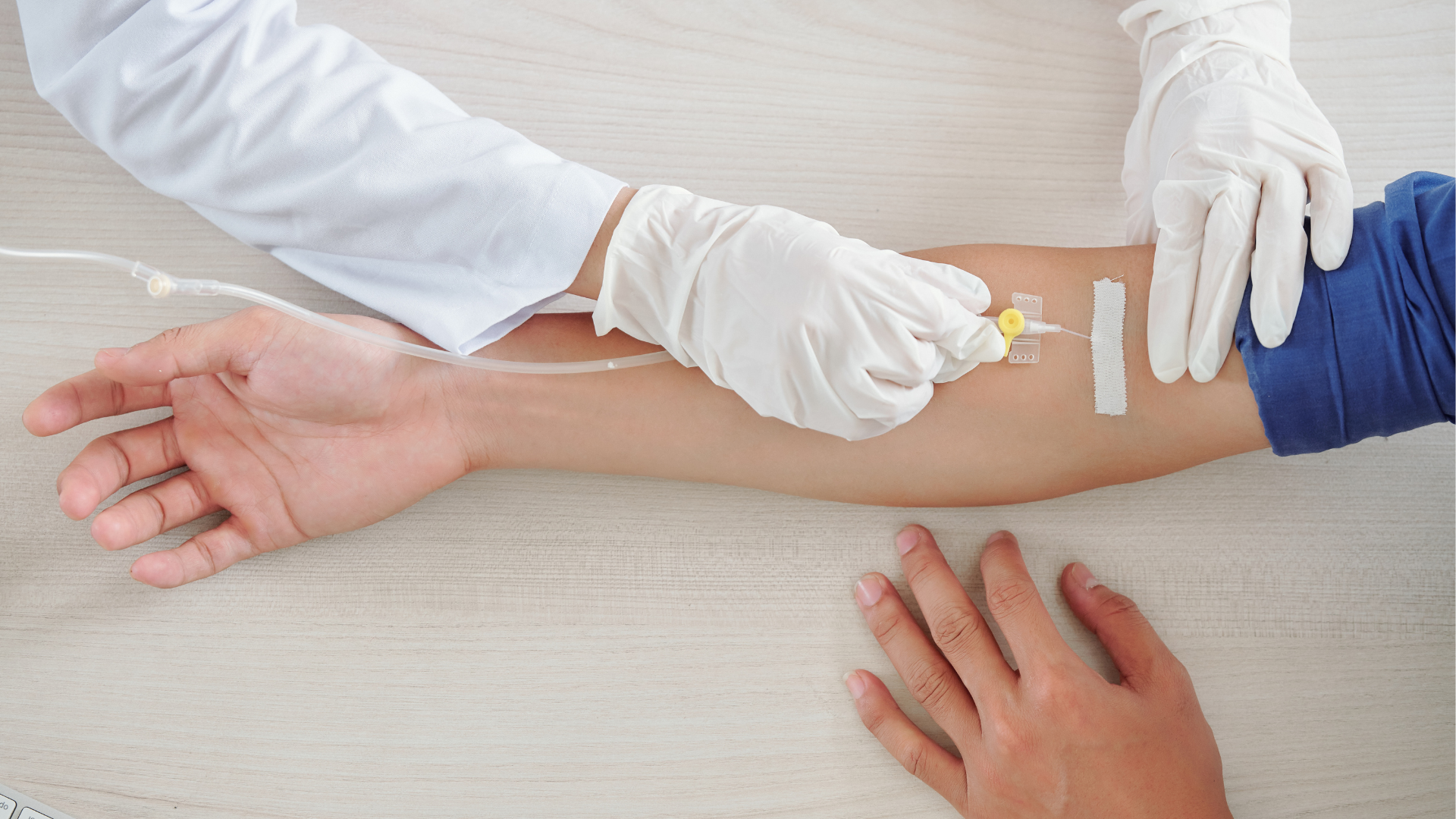
At Magnolia Functional Wellness, our ketamine therapy protocol in Southlake follows the standard evidence-based approach: a series of six IV infusions over two to three weeks for the induction phase, followed by maintenance infusions spaced further apart based on how your response holds.
Each infusion takes about 40 to 60 minutes. You'll be in a comfortable reclining chair in a quiet, controlled environment. Most patients experience dissociative effects during the infusion -- a sense of detachment from normal reality, altered perception of time, sometimes visual or sensory changes. This is expected, temporary, and part of how the treatment works. You're monitored throughout and the effects resolve completely before you leave.
You'll need someone to drive you home. You shouldn't drive or make important decisions for the rest of the day. Beyond that, most people return to normal activities the following day.
Who Is and Isn't a Good Candidate
Ketamine therapy is appropriate for adults with major depressive disorder, bipolar depression, or PTSD who haven't responded adequately to conventional treatments. It's also used for anxiety disorders and OCD in some contexts, though the evidence is strongest for depression.
It's not appropriate for everyone. Active psychosis, uncontrolled hypertension, certain cardiovascular conditions, active substance use disorder (particularly dissociative drugs), and pregnancy are contraindications that require careful evaluation. This is why a thorough intake process matters -- we review your medical history, current medications, and mental health history before recommending a protocol.
I also want to be honest that ketamine is not a permanent cure for everyone. Some people achieve sustained remission after a series. Others need periodic maintenance infusions to maintain their response. And some don't respond at all -- the 70% response rate means 30% don't see adequate benefit. We'll have an honest conversation about realistic expectations before you commit to anything.
A Note on Context
Ketamine works best when it's part of a broader treatment plan -- not a standalone solution. The neuroplasticity it creates opens a window where psychotherapy can be particularly effective. If you're working with a therapist, that relationship becomes more productive during and after a ketamine series. If you're not, it might be worth starting.
Depression is complex. I approach it as a physician who takes the biology seriously and also understands that the biology doesn't exist in a vacuum. Our ketamine program in Southlake is designed to give you the most complete shot at meaningful, lasting relief -- not just a temporary lift.
Your Questions Answered
Led by trained medical professionals delivering safe, effective, and scientifically backed aesthetic and wellness treatments.
Who is a good candidate for ketamine therapy?
Ketamine therapy is most clearly indicated for patients with treatment-resistant depression — typically defined as inadequate response to two or more adequate antidepressant trials. It's also clinically relevant for generalized anxiety disorder, social anxiety, PTSD, OCD, and chronic pain conditions including complex regional pain syndrome, fibromyalgia, and neuropathic pain. Good candidates are medically stable with no active psychotic symptoms, controlled blood pressure, and no active dissociative substance use disorder. Dr. Abdullah conducts a thorough medical and psychiatric screening evaluation before recommending ketamine — not every patient who wants this treatment is an appropriate candidate, and that judgment matters for safety and outcomes.
How many ketamine treatments will I need?
The standard evidence-based protocol for mood disorders is 6 infusions administered over 2–3 weeks — this is what most of the clinical research is based on. Many patients respond within the first 3–4 infusions; completing the full series consolidates and extends the response. After the initial series, some patients maintain their response without further treatment; others benefit from periodic booster infusions, typically spaced weeks to months apart based on how long the benefit lasts. Dr. Abdullah reassesses your response after the initial series and makes protocol recommendations based on your clinical status — not a predetermined maintenance schedule. For chronic pain indications, protocols may differ from mood disorder protocols and are designed individually.
Who is a good candidate for Ketamine Therapy?
Ketamine Therapy at Magnolia Functional Wellness may be right for you if you're seeking medically supervised ketamine sessions for mood, pain, and reset.. Ideal candidates are individuals looking for physician-supervised regenerative medicine treatment with evidence-based protocols. During your consultation at Magnolia Functional Wellness, our physician will assess your individual needs, medical history, and goals to determine if this treatment aligns with your wellness objectives. We provide personalized recommendations based on comprehensive evaluation.
Need More Information?
Our team is ready to answer your specific questions and concerns.