
What Is PRP? How Your Own Blood Can Heal You
Platelet-rich plasma therapy concentrates the healing growth factors naturally found in your blood and delivers them directly to damaged tissue — joints, tendons, scalp, or skin — to trigger an accelerated repair response. Dr. Farhan Abdullah walks through the science of how PRP works, the conditions it treats, and what the procedure actually looks and feels like at Magnolia Functional Wellness. With decades of research behind it and an excellent safety profile, PRP is one of the most evidence-supported tools in regenerative medicine today.
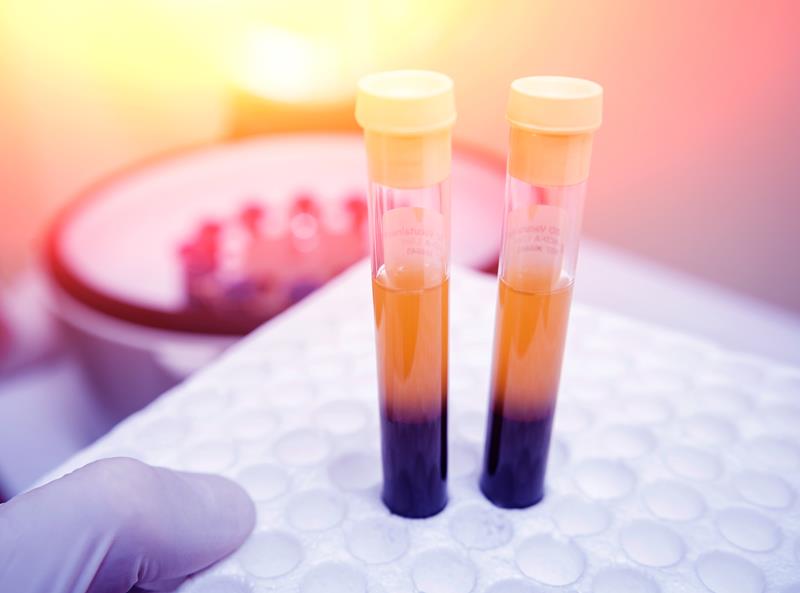


Somewhere along the way, PRP got nicknamed the "vampire treatment" -- probably because it involves drawing your blood and injecting it back into you, which I'll admit sounds a little dramatic when you put it that way. But the science behind it is actually elegant, well-studied, and not remotely gothic.
Platelet-rich plasma therapy is one of the most established tools in regenerative medicine, and it's one I use regularly at Magnolia Functional Wellness. It's been studied in orthopedic surgery, sports medicine, dermatology, and urology for decades. The evidence is strong enough that it's now used by professional athletes, orthopedic surgeons, and dermatologists worldwide -- not as an experimental fringe treatment, but as a legitimate clinical tool.
Let me explain how it actually works and where it genuinely shines.
The Science of Platelets
Most people know platelets as the things that make blood clot when you cut yourself. That's true, but it's a small part of what they do. Platelets are essentially first responders -- they're among the first cells to arrive at a site of injury, and they carry a payload of growth factors and signaling proteins that kick off the entire healing cascade.
When platelets activate at an injury site, they release a range of biologically active molecules including platelet-derived growth factor (PDGF), transforming growth factor-beta (TGF-beta), vascular endothelial growth factor (VEGF), insulin-like growth factor (IGF), and epidermal growth factor (EGF). These aren't just abbreviations on a list -- each one plays a specific role in recruiting repair cells, stimulating collagen production, promoting new blood vessel formation, and reducing damaging inflammation.
Normal blood contains roughly 150,000 to 400,000 platelets per microliter. PRP concentrates that to roughly 1 to 1.5 million per microliter -- a 5 to 10 times increase. The idea is to flood a damaged area with the biological signals it needs to heal, in concentrations higher than your body would naturally deliver on its own.
How a PRP Treatment Actually Works
The process is straightforward and done right here in the office. We draw blood from your arm -- typically about 30 to 60 mL, depending on the application. That blood goes into a specialized centrifuge that spins at a precisely calibrated speed to separate its components. Red blood cells drop to the bottom. Plasma and platelets rise to the top. We harvest the platelet-rich layer and prepare it for injection.
The whole process takes about 15 to 20 minutes from draw to ready-to-inject. For joints, we use anatomical landmarks and sometimes ultrasound guidance to ensure precise placement. Because we're using your own blood, there's no risk of allergic reaction or rejection. The main side effects are temporary soreness and swelling at the injection site -- which is actually expected and indicates the healing response has been triggered.
What PRP Is Used For
Orthopedic and Joint Conditions
This is where PRP has the longest track record and strongest evidence. Knee osteoarthritis is probably the most well-studied application -- multiple randomized controlled trials have shown PRP outperforming hyaluronic acid injections for pain relief and functional improvement. Our PRP injection program in Southlake covers rotator cuff tendinopathy, lateral epicondylitis (tennis elbow), patellar tendinitis, plantar fasciitis, and hip osteoarthritis.
PRP isn't a permanent fix for advanced degenerative joint disease, and I want to be honest about that. But for mild to moderate osteoarthritis and tendon injuries, it can meaningfully reduce pain and improve function -- often for 12 to 18 months or longer -- without the systemic effects of corticosteroids or the risks of surgery.
Hair Loss
PRP for androgenetic alopecia (pattern hair loss) has solid evidence behind it. The growth factors in PRP stimulate dormant hair follicles, extend the hair growth cycle, and increase follicle size. Studies consistently show increased hair density and thickness with a series of treatments. Our PRP hair restoration program in Southlake typically involves a series of three treatments spaced 4 to 6 weeks apart, followed by maintenance every 4 to 6 months. It works best when started before extensive follicle miniaturization has occurred.
Sexual Health and Wellness
The P-Shot (Priapus Shot) in Southlake uses PRP injected into specific areas of penile tissue to improve erectile function, sensitivity, and in some cases size. The O-Shot for women uses PRP injected into vaginal and clitoral tissue to improve arousal, lubrication, and orgasmic response -- and can also help with urinary incontinence. These are areas where the research is growing and patient satisfaction is high.
Skin Rejuvenation
PRP facials -- sometimes combined with microneedling -- stimulate collagen production, improve skin texture, and reduce fine lines. The growth factors in PRP communicate directly with fibroblasts (your skin's collagen-producing cells) to accelerate tissue remodeling. Results develop over weeks to months as new collagen is laid down.
What to Expect: Timeline and Results
PRP is not an instant fix. Healing takes time, and that's actually the point -- we're triggering a biological process, not applying a bandage. Most patients notice initial improvements within 2 to 6 weeks as inflammation decreases and tissue repair progresses. Full results from a treatment or series typically manifest over 3 to 6 months.
For joint conditions, a single treatment can be sufficient for mild cases. More significant degeneration typically benefits from a series of 2 to 3 injections spaced a few weeks apart. For hair loss and skin rejuvenation, a series of treatments is standard. Who responds best? People who have realistic expectations, aren't in the absolute end stage of joint disease, and are otherwise healthy enough to mount an effective healing response.
Why PRP at Magnolia Functional Wellness
Not all PRP is created equal. The concentration of platelets matters, the processing protocol matters, and the skill of injection matters. We use a high-quality processing system that consistently achieves therapeutic platelet concentrations, and every procedure is physician-supervised. This isn't a treatment someone hands off to a medical assistant.
We also combine PRP therapy with other regenerative modalities when appropriate -- pairing it with stem cells via our orthobiologics program for joint conditions can meaningfully enhance outcomes. That layered approach is part of what makes regenerative medicine at a functional medicine clinic different from a quick injection at a sports injury center.
Your Questions Answered
Led by trained medical professionals delivering safe, effective, and scientifically backed aesthetic and wellness treatments.
Need More Information?
Our team is ready to answer your specific questions and concerns.