
The "Normal Range" Trap in Testosterone Therapy
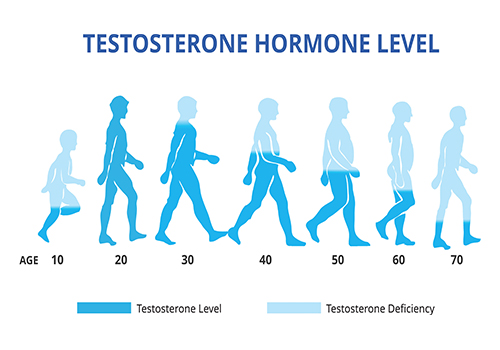



One of the most disheartening experiences for a man in his 40s or 50s is to walk into a doctor’s office feeling crushed by fatigue, low libido, and brain fog, only to get a call two days later: "Good news! Your labs are normal. It must just be stress."
You hang up the phone feeling gaslighted. If everything is "normal," why do you feel like you’re running on empty? Why has your gym progress stalled? Why is your motivation non-existent?
The problem isn't you. The problem is the word "normal." I heard these stories every day from guys that walk into Magnolia.
The Flaw in the Reference Range
To understand why you are being dismissed, you have to understand how the "Reference Range" is calculated.
Lab ranges aren't determined by studying a group of peak-performing, healthy 35, 40, or 45 year-old men. They are determined by taking the statistical average of the entire population of men who get bloodwork done. That pool includes men who are 85 years old, men who are diabetic, men who are obese, and men who are chronically ill.
Currently, the reference range for Total Testosterone is broadly considered 250 ng/dL to 1100 ng/dL. This is a massive spectrum. If you score a 300 ng/dL, you are statistically "in range." But physiologically? You have the hormone profile of an 80-year-old man.
A doctor telling you that 300 ng/dL is "fine" is like a teacher telling you that a D- is a passing grade. Sure, you didn't technically fail, but you certainly aren't succeeding.
The Generational Decline
To make matters worse, the bar is being lowered every year. Studies show that average testosterone levels in men have been dropping for decades. A 40-year-old man today has significantly lower testosterone than a 40-year-old man did in 1980.
So when you compare yourself to the "average" man today, you are comparing yourself to a standard that is already metabolically compromised. We shouldn't be grading your health on a curve against a sick population; we should be grading it against optimal human physiology.
Total vs. Free Testosterone: The Real Story
Even if your Total Testosterone looks decent on paper (say, 550 ng/dL), you may still be suffering from severe Low T symptoms. This is the nuance that general practitioners often miss.
Your "Total T" is the total amount of hormone floating in your blood. But much of that hormone is bound up by a protein called Sex Hormone Binding Globulin (SHBG). Think of SHBG like a magnet. It latches onto your testosterone and renders it biologically useless.
Only the testosterone that escapes this magnet is called Free Testosterone. This is the only fuel your body can actually use to build muscle, burn visceral fat, and power your brain.
If you are aging, or if your insulin levels are high, your SHBG often rises. This means your Total T might look "normal," but your Free T is tanked. You have plenty of fuel in the tank, but the fuel line is clamped shut.
It’s Not Just About Muscles (The Mental Aspect)
When men think of Low T, they think of the gym and the bedroom. But the most insidious symptoms are often mental.
Testosterone is a neurosteroid. It plays a critical role in dopamine regulation and cognitive function. Many of our patients come to us after being prescribed antidepressants for "anxiety" or "depression," when the root cause was hormonal all along.
The symptoms of Low T often look like a loss of "edge." It’s the inability to focus on deep work. It’s the 2:00 PM crash that requires three coffees to survive. It’s a general sense of apathy—the feeling that you just don't care about your hobbies or goals the way you used to. Optimizing your hormones often lifts this "fog," restoring the drive and resilience that make you feel like you.
We Treat Symptoms, Not Spreadsheets
At Magnolia, we don't treat the reference range. We treat the patient.
We look at the full picture—Total T, Free T, SHBG, Estradiol, and most importantly, your quality of life. Our goal is not to get you to "average." Our goal is optimization—getting your levels to a place where you wake up with energy, recover from workouts, and feel like the best version of yourself.
Stop settling for "survival mode" just because a lab report says you're technically within the lines.
📅 Check Your Actual Levels Today: Book Your Free Appointment
Your Questions Answered
Led by trained medical professionals delivering safe, effective, and scientifically backed aesthetic and wellness treatments.
Are there any side effects or risks with Hormone Replacement Injections?
Hormone therapy comes with real side effects, and we'd rather you hear them from us than find out later. Injection-specific problems include soreness, bruising, or swelling at the site, and less commonly bleeding or infection. Hormone-related effects can include acne, fluid retention, mood changes, hair changes, and in men a rise in red blood cell count along with suppression of natural production and fertility. Some patients also notice symptoms fluctuating between doses, which we manage by adjusting the amount or the interval. Dr. Abdullah reviews your labs, your monitoring plan, and the risks before and during treatment.
Are there any side effects or risks with Hormone Replacement Pellets?
Hormone therapy is a real medical treatment with real side effects, and we're upfront about that. Pellet-specific problems include soreness, bruising, and swelling at the insertion site, and less commonly infection or a pellet working its way back out. Hormone-related effects can include acne, fluid retention, hair changes, mood changes, and in men a rise in red blood cell count that we watch with labs. The main tradeoff with pellets is that once they're placed, the dose can't be adjusted or reversed until they wear off. Dr. Abdullah reviews your history, your labs, and the full risk picture before we start.
Which is better: testosterone injections or creams?
It depends on your lifestyle and physiology. Injections are often preferred for ensuring 100% absorption and consistent blood levels. Creams are painless and easy to apply but require daily discipline and care to avoid transferring to others. At Magnolia, we strongly recommend injections for best results but we will help you choose the method that fits your life best.
Need More Information?
Our team is ready to answer your specific questions and concerns.