Stem Cell Therapy 101: What It Is, What It Isn't
Stem cell therapy occupies a confusing space in medicine -- dismissed by some as unproven and oversold by others as a miracle cure -- but the honest reality is that MSC therapy has meaningful evidence for specific musculoskeletal conditions and legitimate limits that should always be disclosed. Dr. Farhan Abdullah explains what stem cells are, why umbilical cord-derived MSCs are the preferred source at Magnolia Functional Wellness, and which conditions have real data behind them versus which claims to be skeptical of. For patients who've been told there are no more options, this article is worth reading.


Stem cell therapy might be the most misunderstood treatment in all of medicine right now. On one end of the spectrum, you've got patients who've been told by reputable doctors that it's all a scam and nothing is proven. On the other end, there are clinics advertising stem cells as a cure for everything from ALS to aging, with price tags to match those claims.
The truth lives somewhere more honest than either of those positions. Stem cell therapy has a real and growing evidence base for specific conditions, genuine limitations that should be acknowledged, and an unfortunate history of bad actors overpromising outcomes that have no scientific basis. Sorting through all of that is exactly what I'm going to do here.
I completed stem cell therapy training through R3 Stem Cell Institute, and it's one of the services I'm most careful to explain accurately at Magnolia Functional Wellness -- because getting this right matters, both for your expectations and for your safety.
What Is a Stem Cell, Actually?
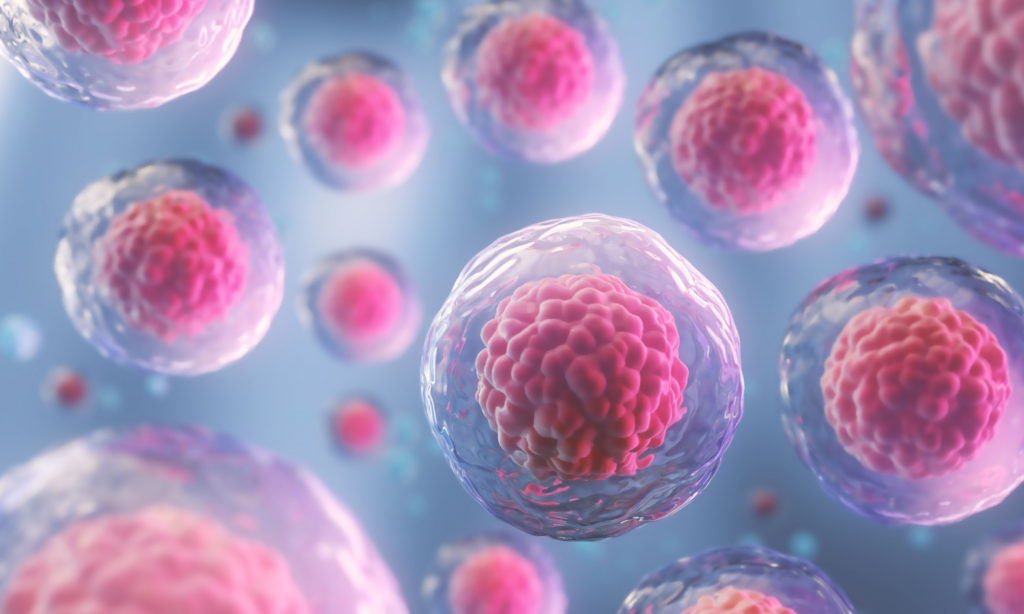
A stem cell is an undifferentiated cell -- meaning it hasn't yet become a specific tissue type. Given the right conditions, a stem cell can differentiate into specialized cells: bone, cartilage, muscle, fat, nerve, skin, and others. They also have another property that makes them clinically valuable: they secrete a rich assortment of growth factors, cytokines, and signaling molecules that support tissue repair and modulate immune responses even before they differentiate into anything.
That second function -- the paracrine effect, as we call it in medicine -- is actually believed to be the primary mechanism behind many of the clinical benefits we see. The stem cells don't necessarily all survive and transform into new tissue. What they do, often more importantly, is communicate with the local environment and trigger a regenerative cascade.
Not All Stem Cells Are the Same
This is where a lot of confusion starts. When people hear "stem cells," they often picture embryonic stem cells -- the controversial ones from fertilized embryos that were the subject of political debate in the early 2000s. That's not what we use in clinical regenerative medicine, and hasn't been for a long time.
The stem cells used in outpatient regenerative medicine are primarily mesenchymal stem cells (MSCs) -- adult stem cells found in multiple tissue sources. Here's a quick breakdown of the main sources:
Bone Marrow (Autologous MSCs)
A patient's own bone marrow, typically harvested from the iliac crest (hip bone). The advantage is that these are your own cells. The disadvantage is a somewhat uncomfortable harvest procedure, and the fact that your stem cells decrease in both quantity and quality as you age. A 65-year-old's bone marrow MSCs are significantly less potent than those from a 25-year-old.
Adipose Tissue (Fat-Derived MSCs)
Fat tissue contains a high concentration of MSCs that can be harvested through a mini-liposuction procedure. Adipose-derived MSCs are more abundant than bone marrow-derived MSCs and easier to harvest. They carry the same autologous advantage but the same age-related quality limitation.
Umbilical Cord / Wharton's Jelly (Allogeneic MSCs)
This is what we primarily use in our orthobiologics and stem cell therapy program in Southlake. Umbilical cord tissue, specifically the gelatinous matrix called Wharton's jelly, is exceptionally rich in young, potent MSCs. These cells are harvested from healthy, consenting donors at the time of scheduled C-section deliveries -- the cord tissue would otherwise be discarded. No harm comes to the mother or baby.
The advantage here is significant: these are neonatal cells at peak potency. They're highly proliferative, strongly anti-inflammatory, and capable of robust signaling. They're also immunologically privileged -- meaning they don't trigger rejection -- which allows them to be used across different patients safely.
What Conditions Have Real Evidence Behind Them?
Osteoarthritis
Knee, hip, and shoulder osteoarthritis have the most robust evidence for MSC therapy among musculoskeletal conditions. Multiple controlled trials show significant improvements in pain scores and function compared to placebo or corticosteroid injections, with effects that persist for 12 months or longer. Our orthobiologics program for joint pain in Southlake works best for mild to moderate arthritis -- end-stage bone-on-bone disease is a different clinical picture.
Tendon and Ligament Injuries
Rotator cuff tears, Achilles tendinopathy, patellar tendinitis, and similar injuries are areas where MSC therapy shows meaningful results -- stimulating tendon cell proliferation and collagen production, and potentially helping patients avoid or delay surgical repair. For many of these conditions, we combine stem cells with PRP injections to amplify the healing response.
Disc Disease
Early research into MSC therapy for intervertebral disc degeneration is promising -- the cells appear to support disc cell regeneration and reduce the inflammatory environment that causes pain. This is still an evolving area, but for patients looking to avoid spinal surgery, it's worth a serious conversation.
Autoimmune and Inflammatory Conditions
MSCs have potent immunomodulatory properties -- they can suppress overactive immune responses, which makes them theoretically interesting for conditions like rheumatoid arthritis, lupus, and Crohn's disease. The clinical evidence here is earlier-stage and more variable, and I'm careful to set expectations accordingly. But for patients who've exhausted conventional options, it's a reasonable conversation to have.
What It Is NOT -- This Part Matters
Stem cell therapy is not a cure for ALS, Parkinson's, Alzheimer's, autism, or most cancers. If a clinic is making those claims, run. Seriously. The research does not support those applications in outpatient settings, and clinics making those promises are putting your health and your wallet at risk.
It's also not FDA-approved for specific indications in the outpatient setting, which is why transparency about this is important. What we do at Magnolia Functional Wellness operates within a physician-supervised, evidence-informed framework that acknowledges both the promise and the limits of where the research currently sits.
The patients who do best with stem cell therapy are those who come in with specific, appropriate conditions, realistic expectations, and a physician who's honest with them from the start. That's the only version of this I'm willing to offer.
What a Treatment Looks Like at Magnolia Functional Wellness
After a consultation where we review your history, imaging, and goals, we'll determine whether you're a good candidate and which protocol makes sense. Most joint injections through our stem cell and orthobiologics program are done in-office in under an hour. We'll prep the site, draw up the cell product, and inject with precise anatomical placement. There's minimal downtime -- most patients go home the same day and return to light activity within 24 to 48 hours.
For systemic conditions, IV administration is sometimes used alongside or instead of local injection. Follow-up is built into the protocol -- we check in at 4 to 6 weeks, 3 months, and 6 months to track your response and adjust as needed.
If you've been told "there's nothing else we can do" about a chronic pain condition or degenerative joint problem, that conversation may be worth revisiting. The field has moved.
Your Questions Answered
Led by trained medical professionals delivering safe, effective, and scientifically backed aesthetic and wellness treatments.
Need More Information?
Our team is ready to answer your specific questions and concerns.