
Using PRP Before Surgery: How Regenerative Medicine Preps Your Body to Heal
Facing a scheduled surgery? Platelet-rich plasma can play a supporting role in how well you recover. Dr. Farhan Abdullah explains where the evidence for pre- and peri-surgical PRP is strong, where it's still uncertain, and how he uses it as an adjunct at Magnolia Functional Wellness in Southlake, TX.
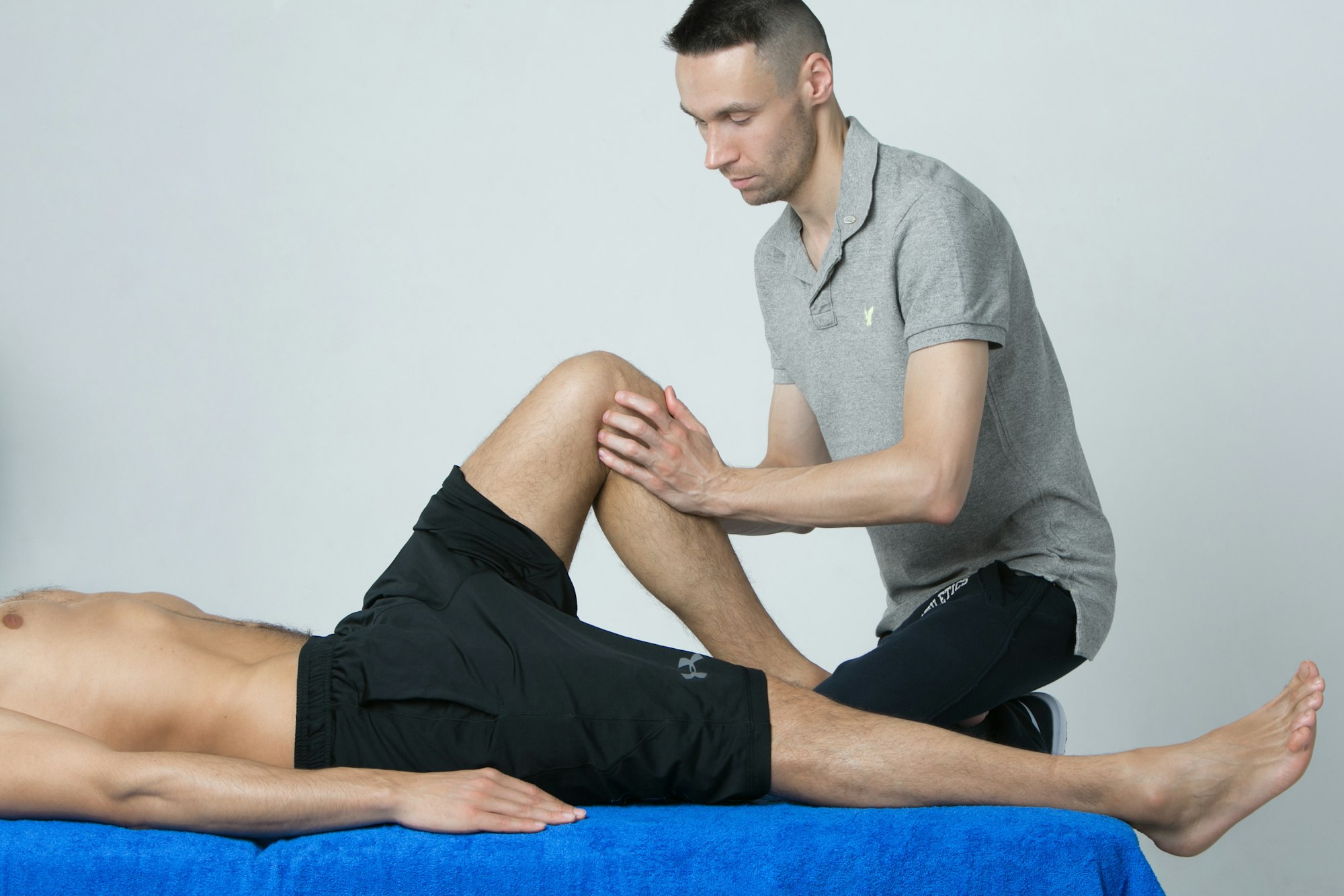


Here's a scenario I run into more than you'd think. A patient sits across from me, MRI on the screen, surgery already on the calendar. Maybe it's a rotator cuff repair, an ACL reconstruction, or a meniscus that finally gave out on the pickleball court. And the question they ask isn't "should I have the surgery?" It's "what can I do right now to make sure I actually heal well afterward?" That's a smarter question than most people realize.
I'm Dr. Farhan Abdullah, and at Magnolia Functional Wellness here in Southlake, a big part of what we do is help people get more out of the medicine they're already committed to. Regenerative therapies like platelet-rich plasma (PRP) don't have to be an either/or choice against surgery. Sometimes the most useful role for PRP is as a supporting player: prepping the tissue, calming inflammation, and stacking the deck in your favor before and around a procedure you've already decided to have.
So let's talk honestly about what "pre-surgical regen" actually means, where the science is strong, where it's still fuzzy, and how I think about it in my own practice.
What "Preparing Your Body for Surgery" Really Means
Surgeons have a word for getting a patient physically ready before an operation: prehabilitation, or "prehab" for short. The idea is simple. A body that goes into surgery stronger, better nourished, and less inflamed tends to come out the other side recovering faster. We already do versions of this all the time. We optimize blood sugar before a procedure. We get people moving and building muscle before a joint replacement. We correct anemia and vitamin deficiencies. Nobody thinks that's controversial.
PRP fits into this same mindset, just at the tissue level. Platelet-rich plasma is made from your own blood. We draw a sample, spin it in a centrifuge to concentrate the platelets, and those platelets are packed with growth factors, the little signaling molecules that tell your body to repair, build new blood vessels, and recruit healing cells to a damaged area. When we inject that concentrate into an injured tendon, ligament, or joint, we're essentially turning up the volume on your own repair machinery.
Now, where does that leave surgery? There are really two windows where PRP comes into play. The first is genuinely pre-operative: using PRP in the weeks leading up to surgery to improve the quality of the tissue the surgeon will be working with, or in some cases to buy enough healing that a patient can delay or reconsider surgery altogether. The second, and honestly the better-studied window, is peri-operative: PRP delivered right at the time of surgery, into the repair site, to support how that tissue knits back together. Both are worth understanding, and I'll be straight with you about which one the evidence backs more firmly.
The Case for PRP Around Surgery: What the Studies Show
Let me start with the peri-operative research, because that's where the strongest data lives. A 2021 review by Everts and colleagues, published in the journal Platelets, laid out the rationale nicely: the growth factors in PRP interact directly with the biology of tissue repair, which is exactly why orthopedic surgeons have been experimenting with adding it to procedures for years. The theory is sound. The concentrated platelets show up at the surgical site and, in principle, accelerate the cascade of healing.
Anterior cruciate ligament reconstruction is one of the more compelling stories. A well-designed 2024 randomized clinical trial by Ye and colleagues out of Shanghai, published in JAMA Network Open, looked at intra-articular PRP injections after ACL reconstruction in patients aged 16 to 45. This was a surgeon-masked, investigator-masked trial with a full year of follow-up, which is the kind of rigor I like to see before I get excited about anything. When a study is built well and still shows a signal, that means something.
Rotator cuff repair is where the picture gets more interesting, and more honest. A 3-arm randomized controlled trial by Yao and colleagues, published in the American Journal of Sports Medicine in December 2024, compared standard rotator cuff repair against repair plus two different PRP formulations. Here's the part I appreciate: at the 12-month mark, they did not find that PRP produced superior function or lower retear rates compared with the control group. But within the first six months, patients who got leukocyte-rich PRP scored better on the ASES shoulder score than those who didn't. So the early recovery looked smoother even if the finish line landed in roughly the same place.
That nuance matters, and it's why I don't oversell this. If you want the long view, a prospective randomized trial by Randelli and colleagues in Arthroscopy followed rotator cuff patients out to ten years. Ten years. That kind of durability data is rare in this field, and it's a reminder that the questions we ask about PRP are being studied seriously, not just marketed.
And it isn't only shoulders and knees. Researchers have applied PRP thinking to meniscus repair, to bone healing around dental and orthopedic implants, and even to stubborn wounds that refuse to close after open-heart surgery. The common thread across all of it is the same biological bet: if you flood a healing site with concentrated growth factors at the right moment, you may nudge the repair in your favor. Some of those applications are better supported than others, but the breadth of research tells you the concept is being taken seriously across surgical specialties, not just in sports medicine clinics.
Where the Evidence Is Strong and Where It Isn't
I'd be doing you a disservice if I painted PRP as a guaranteed upgrade for every surgery. It isn't. The reality is that the data is a mixed bag, and it varies a lot depending on the tissue, the PRP preparation, and what outcome you're measuring.
Here's how I'd summarize it after reading a lot of this literature and treating a lot of patients:
- Early recovery signals are real but modest. Several trials, including the rotator cuff study above, suggest PRP can smooth out the first few months after surgery. Less pain, better early function. For an athlete or an active parent trying to get back to life, that early window genuinely matters, even if the one-year numbers converge.
- Long-term structural benefit is less certain. Whether PRP reliably lowers retear rates or changes the ultimate outcome a year or two out is still being debated. Some studies show it, others don't.
- The preparation is not standardized. Leukocyte-rich versus leukocyte-poor PRP, platelet concentration, how many injections, and timing all vary between studies. That's a huge reason results are inconsistent. Not all PRP is the same, and a clinic that treats it like a one-size-fits-all product is missing the point.
What I tell my patients is this: PRP around surgery is a reasonable, low-risk way to support your recovery, not a magic wand that changes whether you needed the operation. Because it's made from your own blood, the safety profile is excellent, and serious complications are rare. That favorable risk-to-benefit ratio is a big part of why I'm comfortable offering it as an adjunct.
How I Actually Use Pre-Surgical Regen in My Practice
Every case is its own conversation, but there's a general framework I walk through. First, I want to know what the surgery is and what the surgeon expects. PRP is not a substitute for a competent orthopedic surgeon, and I coordinate rather than compete with them. If you've got a full-thickness tear that needs fixing, get it fixed.
Second, I look at the runway. If you have several weeks before surgery, there may be room to use PRP to improve tissue quality and quiet down inflammation ahead of time, and to build a stronger baseline going in. I pair that with the boring but essential stuff: protein intake, sleep, blood sugar control, and appropriate movement. Regenerative medicine works better in a body that's already being taken care of. You can't out-inject a diet of gas station snacks and four hours of sleep.
Third, we talk about whether PRP even belongs in your plan. For some milder injuries, PRP earlier in the game can help a patient heal enough to avoid surgery entirely, which is a different conversation than pre-surgical prep but comes from the same toolbox. For others, the surgery is clearly the right call, and PRP is there to support the aftermath. If you want to dig into the orthopedic side of what we offer, our PRP injections page walks through how we approach joint and tendon issues, and our orthobiologics page covers the broader regenerative options.
One thing I won't do is promise you'll skip surgery or heal in half the time. I've seen PRP help people bounce back with less pain and more confidence. I've also seen cases where it made no dramatic difference and the surgery did the heavy lifting, exactly as expected. Managing expectations honestly is part of practicing good medicine, and it's the only way I know how to run a clinic.
Is Pre-Surgical PRP Right for You?
If you're staring down a scheduled procedure and wondering whether there's something proactive you can do, the answer is usually yes, and PRP might be part of it. But it should fit into a bigger plan that includes your surgeon, your overall health, and a realistic picture of what the evidence supports. The best candidates tend to be people with tendon, ligament, or joint injuries who are motivated to do the prep work and who understand that regenerative medicine is a support system, not a replacement for surgical judgment.
Think about it like getting your body into training camp before the big game. You're not guaranteeing the outcome, but you're showing up in the best shape you can, giving your tissue every advantage to heal. In a place like DFW, where I see everyone from weekend warriors at Bob Jones Park to folks who just want to keep up with their grandkids, that mindset shift alone changes how people recover.
At Magnolia Functional Wellness in Southlake, my goal is to help you make an informed decision, not to sell you on a trend. If you're facing surgery and want to understand whether regenerative therapies fit your situation, that's a conversation worth having before you're already in a sling. Prepare the body, respect the science, and give yourself the best shot at a strong recovery.
By Dr. Farhan Abdullah, DO | Medical Director, Magnolia Functional Wellness | Southlake, TX
Your Questions Answered
Led by trained medical professionals delivering safe, effective, and scientifically backed aesthetic and wellness treatments.
Can I get PRP before surgery to help me heal better?
Sometimes, yes. If you have several weeks before a scheduled procedure, PRP can be used to improve tissue quality and calm inflammation so you go into surgery with a stronger baseline. The stronger evidence is actually for PRP delivered right at the time of surgery to support how the repair heals. At Magnolia Functional Wellness in Southlake, we coordinate with your surgeon rather than work around them, and we're honest that PRP is a supporting tool, not a replacement for the operation you need.
Does PRP mean I can avoid surgery altogether?
For some milder tendon, ligament, or joint injuries, PRP earlier in the process can help you heal enough to delay or reconsider surgery. But for a full-thickness tear or a joint that clearly needs repair, surgery is still the right call, and PRP is there to support your recovery. Dr. Abdullah won't promise you'll skip an operation you genuinely need. We'd rather give you an honest assessment of where PRP fits in your specific situation.
How soon should I expect results after PRP or stem cell therapy?
Regenerative treatments don't work like a switch, so most people don't feel much in the first few weeks. The first real signals usually show up around months two and three, and the fuller effect tends to land between months four and six as your tissue finishes remodeling. At Magnolia Functional Wellness in Southlake, we build in a six-month check-in specifically because that's when we can honestly judge your trajectory.
Can PRP be combined with other treatments?
Yes — and in many cases, combining PRP with complementary treatments produces significantly better results than PRP alone. For joint and musculoskeletal applications, PRP pairs well with stem cell therapy and exosome therapy along with shockwave therapy. PRP provides the initial inflammatory environment that recruits stem cells to the area; MSCs and exosomes provide the deeper regenerative signals. The combination addresses tissue repair through multiple mechanisms simultaneously. For hair restoration, PRP is commonly combined with minoxidil and/or finasteride for a more comprehensive approach — medications that reduce DHT-driven follicle miniaturization while PRP stimulates follicle activity directly. For aesthetic applications, PRP combined with microneedling consistently outperforms either treatment alone. The microchannels created by needling allow deeper PRP penetration while the PRP amplifies the collagen remodeling response. Dr. Abdullah designs combination protocols based on your specific goals and budget — always with the goal of maximizing clinical outcome rather than maximizing the number of treatments.
What's the difference between PRP, stem cells, and exosomes?
PRP delivers concentrated growth factors from your own blood to stimulate repair signaling at a treatment site. MSCs are living cells that can signal tissue repair, modulate immune responses, and differentiate into various tissue types. Exosomes are the nanoscale vesicles MSCs secrete — carrying the signaling molecules that drive much of their biological activity, in a cell-free format that offers different delivery characteristics. Each has distinct mechanisms, evidence bases, and appropriate applications. Dr. Abdullah helps you understand which is most relevant for your goals.
Need More Information?
Our team is ready to answer your specific questions and concerns.