
PRP Facials Explained: The Science Behind the Vampire Facial
The 'vampire facial' looks dramatic, but the medicine underneath it is quietly impressive. Dr. Farhan Abdullah explains how PRP facials stimulate collagen, what a 2025 split-face trial confirmed on actual tissue biopsy, and who gets the best results at Magnolia Functional Wellness in Southlake, TX.
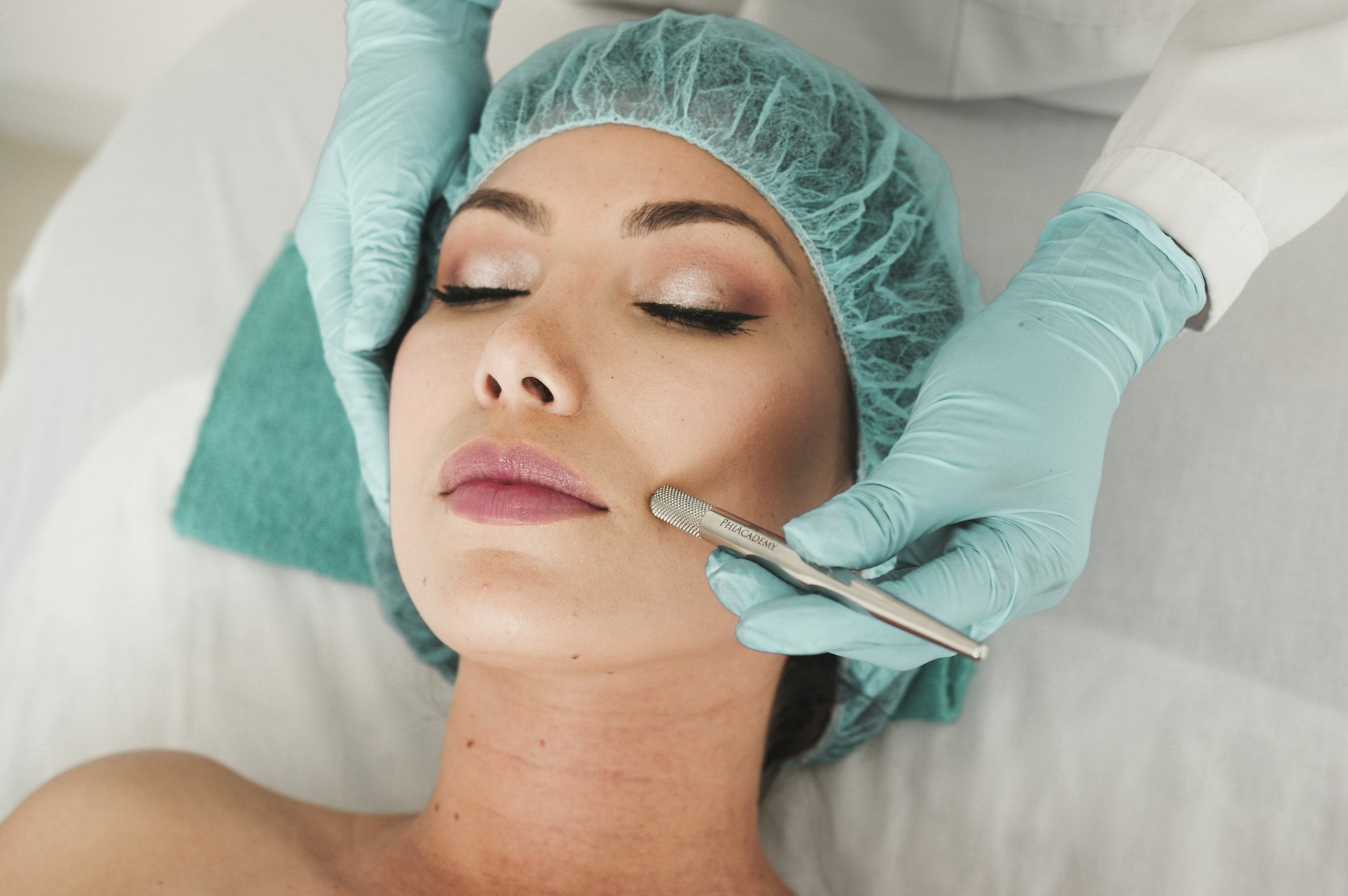


A patient sat down in my office last month, pulled up a photo on her phone of a celebrity with red streaks all over her face, and asked me point blank: "Is that what you're going to do to me?" She'd seen the "vampire facial" splashed across her feed, and honestly, she looked a little terrified. I get it. The images are dramatic. The nickname is worse. But once I walked her through what's actually happening under that red mask, her whole posture changed. She booked a series that afternoon.
That's usually how this goes. PRP for the face has a lurid nickname attached to a genuinely elegant piece of regenerative medicine, and the nickname does the treatment a disservice. I'm Dr. Farhan Abdullah, and at Magnolia Functional Wellness in Southlake, PRP is one of the treatments I'm most comfortable recommending, precisely because of what it is: your own biology, concentrated and redirected.
By Dr. Farhan Abdullah, DO | Medical Director, Magnolia Functional Wellness | Southlake, TX
What a PRP Facial Actually Is (and What That Red Mask Really Means)
PRP stands for platelet-rich plasma. The process starts the same way a routine blood draw does. We take a small sample of your blood, usually from your arm, and spin it in a centrifuge. That spinning separates the blood into layers. What we're after is the golden layer packed with platelets and plasma, concentrated several times above what's floating around in your bloodstream normally. That concentrate is your PRP.
Now, why platelets? Most people think of platelets as the cells that help you stop bleeding when you nick yourself shaving. That's true, but it's only half the story. Platelets are also little factories for growth factors. Molecules with names like PDGF, TGF-beta, VEGF, and EGF. These are the signaling proteins your body uses to kickstart tissue repair. When you concentrate them and put them where you want healing to happen, you're amplifying your skin's own regenerative instructions.
Here's where the "facial" part comes in. We first run a microneedling device across your skin, creating thousands of microscopic channels in the surface. Then we apply the PRP so it can seep into those channels and reach the deeper layers where it can actually do something. The red appearance in those viral photos is just pinpoint bleeding from the microneedling combined with PRP sitting on the surface. It looks alarming in a photo. In person it's mild, and it fades within a day or two for most people.
There's also a version where we inject PRP directly, sometimes called a "vampire facelift" when combined with dermal fillers. Two different procedures, often confused, and worth sorting out in a consultation.
The Science: What Platelets Actually Do to Your Skin
This is where the treatment earns its keep. When you damage skin in a controlled way, you trigger the wound-healing cascade. Your body doesn't distinguish between an accidental scrape and a purposeful cosmetic micro-injury. It just gets to work. Fibroblasts, the cells responsible for producing collagen and elastin, ramp up their activity. New collagen means firmer, thicker, more resilient skin over time.
The growth factors in PRP pour fuel on that fire. A 2023 review in Clinical Plastic Surgery by Spataro and colleagues laid out how microneedling on its own stimulates collagen through percutaneous collagen induction while preserving the outer epidermis and keeping downtime low. The same review notes that microneedling improves absorption of topically applied growth factors precisely because those channels are open. The two techniques were practically built for each other.
What draws me to PRP as a functional medicine physician is that it's autologous, meaning it comes from you. No synthetic filler, no donor material, no foreign compound your immune system has to negotiate with. A 2022 review in the Journal of Applied Oral Science by Buzalaf and Levy described autologous platelet concentrates as safe, well tolerated, and low cost, with minimal adverse effects specifically because the material originates from the patient. When I'm choosing between an aggressive intervention and one that works with your own biology, I lean toward your biology nearly every time.
If you want to see how this fits into our broader approach, our microneedling service page walks through how we combine collagen induction with these techniques.
What the Evidence Shows
The most convincing recent data comes from a 2025 investigator-blinded, split-face trial published in the Journal of Cosmetic Dermatology by Estupiñan, Ly, and Goldberg. Participants received radiofrequency microneedling on both sides of the face, with PRP applied to one half and topical exosomes to the other. Both treatments meaningfully improved wrinkling, dyschromia, redness, and skin texture.
The part that matters most is what they found on histology. Researchers confirmed increased collagen I and glycosaminoglycans in the treated tissue. That means they looked at actual skin under a microscope and saw the structural changes. Not before-and-after photos that depend on lighting and angle. Not patient satisfaction surveys. Measured collagen, in tissue.
A split-face design is also about as clean as aesthetic research gets, because each patient serves as her own control. Same person, same sun exposure, same skincare routine, same genetics, different treatment on each side.
The broader picture comes from a 2019 review in Skin Therapy Letter by Jason Emer, which described PRP as an effective tool across skin rejuvenation, acne scars, and hair restoration, with synergistic effects when paired with microneedling and lasers. That synergy is exactly how we use it.
PRP Facial vs. Everything Else: Where It Fits
One question I get constantly is whether PRP is better than exosomes, or better than fillers, or better than a good laser. Wrong framing, honestly. These aren't competitors so much as different tools for different jobs. Fillers add volume. PRP and exosomes stimulate your own tissue to regenerate. Lasers resurface. The best results usually come from combining them thoughtfully.
The exosome comparison is worth dwelling on, because it's the hot topic right now. In that 2025 split-face trial, PRP and exosomes performed comparably. Exosomes appeal to needle-averse patients and shorten the office visit since there's no blood draw. PRP has the advantage of being unquestionably your own material, with a much longer clinical track record. For patients curious about where these regenerative options fit, our regenerative medicine page covers the landscape in more detail.
The right choice depends on your goals, your skin, your budget, and your tolerance for a little needle time. That's a conversation, not a formula.
Who Gets the Best Results, and What to Expect
PRP facials work beautifully for early signs of aging, dull or uneven texture, fine lines, mild acne scarring, and that general loss of glow that creeps in through your late thirties and forties. If your goal is softening deep folds or replacing a surgical facelift, we'd talk about different tools, and I'd tell you that in the consultation rather than after you'd paid for a series.
A few practical notes. Because we're relying on your body to build new collagen, results accumulate over a series of sessions, usually three spaced several weeks apart, with improvement that continues to build for months afterward. That's a feature, not a drawback. You're still getting better long after you've stopped coming in.
Aftercare is simpler than most people expect. For the first day or so your skin will feel a bit like a mild sunburn, maybe tight, maybe a little pink. I ask patients to skip makeup, harsh actives like retinoids and acid exfoliants, and strenuous sweaty workouts for about 24 to 48 hours while those microchannels close. Gentle cleanser, a bland moisturizer, diligent sunscreen. That's really it. The Texas sun is not your friend during the healing window, so if you're heading out around Southlake Town Square the next morning, a hat and SPF are non-negotiable. Most people are back to their normal routine within two or three days, which is part of why this treatment fits so neatly into a busy life.
A word on safety, because it's worth stating plainly. PRP performed in a proper medical setting, with single-use supplies and your own blood handled correctly, has an excellent safety record. That's one of its genuine advantages over foreign-material treatments. We do screen for a few conditions beforehand, including certain blood disorders, active skin infections, and platelet abnormalities, which is exactly why a physician should be evaluating you rather than a technician.
The vampire facial went viral for its shock value, but the actual value is quieter and far more clinical than any photo suggests. Done properly, by someone who understands both the regenerative science and your individual physiology, PRP for the face is one of the most reliable ways to get your skin repairing itself. At Magnolia Functional Wellness in Southlake, we treat it like what it is: a well-supported medical procedure that happens to have a catchy nickname. If you're curious whether it's a fit for your skin, that's an easy conversation to have.
Your Questions Answered
Led by trained medical professionals delivering safe, effective, and scientifically backed aesthetic and wellness treatments.
Is the vampire facial the same thing as a PRP facial?
Basically, yes. The "vampire facial" is just the catchy nickname for a PRP facial, where we microneedle the skin and then apply your own platelet-rich plasma. The red look in those viral photos is where the name comes from. Don't let it scare you off. At Magnolia Functional Wellness in Southlake, we treat it as the medical procedure it actually is.
Is a PRP facial safe?
In a proper medical setting, it's very safe. Because we're using your own blood, there's no risk of an allergic reaction to a foreign material. The infection stories you may have read almost always trace back to unlicensed operators reusing equipment. When it's done with single-use supplies and clean technique, like we do at Magnolia in Southlake, PRP has an excellent safety record.
Who is a good candidate for a PRP facial?
PRP facials work best for people dealing with early aging, dull or uneven texture, fine lines, or mild acne scarring. If you're hoping to erase deep folds or replace a facelift, this isn't that. Some people with blood disorders or platelet issues shouldn't do it, which is why I evaluate every patient first. That's the whole point of seeing a physician rather than a walk-in spa.
How soon should I expect results after PRP or stem cell therapy?
Regenerative treatments don't work like a switch, so most people don't feel much in the first few weeks. The first real signals usually show up around months two and three, and the fuller effect tends to land between months four and six as your tissue finishes remodeling. At Magnolia Functional Wellness in Southlake, we build in a six-month check-in specifically because that's when we can honestly judge your trajectory.
Do exosomes work better when combined with microneedling?
They often do. Your skin barrier is great at keeping things out, so microneedling creates tiny channels that let exosomes reach the living layers underneath instead of just sitting on the surface. Research on split-face treatments has shown bigger improvements when exosomes are paired with microneedling or laser, which is how we typically use them at Magnolia Functional Wellness in Southlake.
Need More Information?
Our team is ready to answer your specific questions and concerns.