
PRP for Hair Loss: What the Evidence Actually Shows
PRP for androgenetic alopecia has matured from experimental to evidence-supported, with multiple randomized controlled trials showing consistent improvements in hair density and thickness in men and women with early to moderate pattern hair loss. Dr. Farhan Abdullah explains why timing matters (miniaturized follicles respond, absent ones don't), how PRP growth factors stimulate follicle regeneration, what the systematic review and head-to-head minoxidil trial data shows, what a clinical protocol looks like at Magnolia Functional Wellness, and how PRP combines with topical DHT inhibitors for patients concerned about TRT-related hair loss.
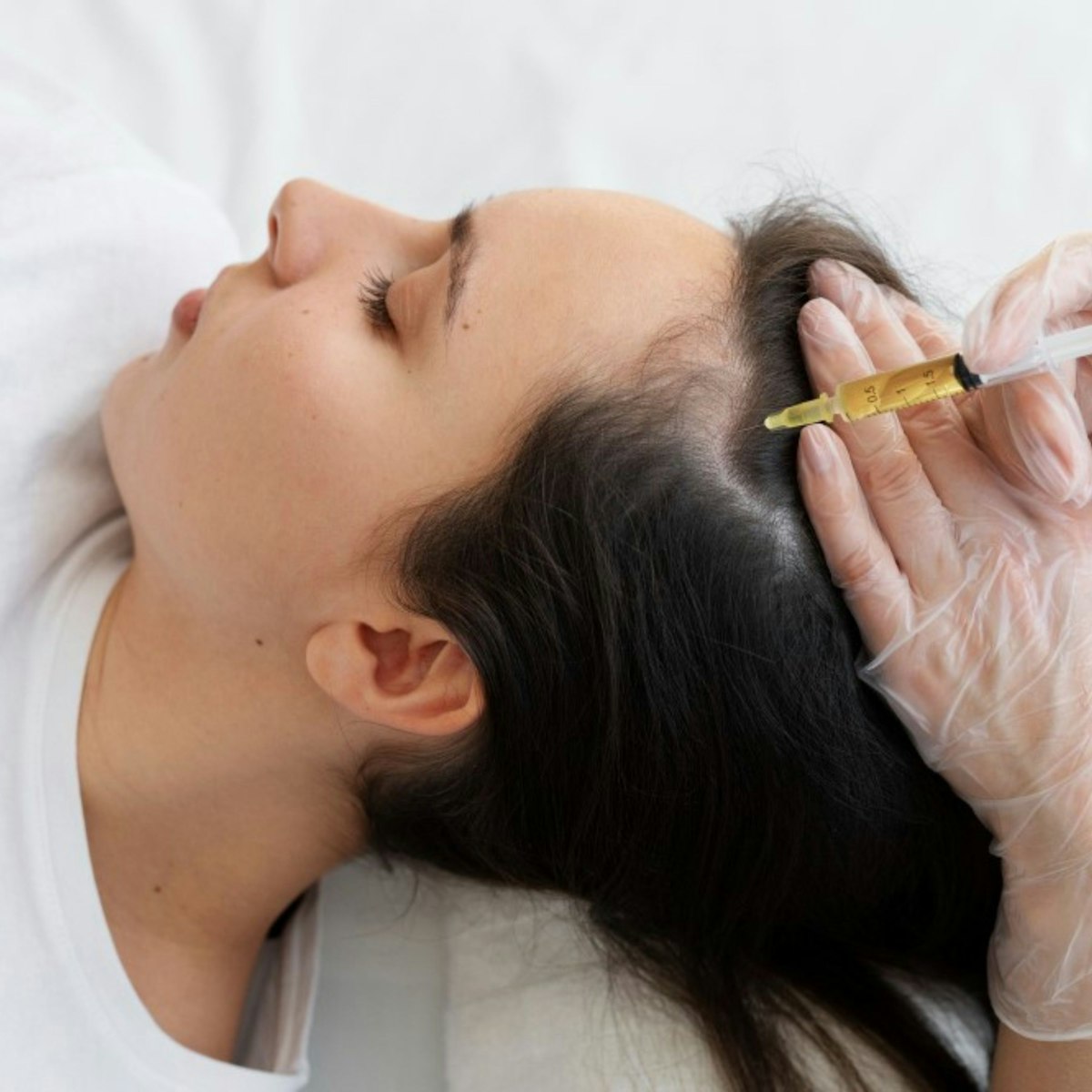


PRP for hair loss has graduated from experimental status to a widely used clinical procedure -- but the quality of evidence behind it varies considerably depending on which type of hair loss you're treating, how many sessions are involved, and how the PRP is prepared. Given that the calendar already covered PRP for orthopedic applications and PRP for the scalp (in the context of combined protocols), this article focuses specifically on androgenetic alopecia and what the clinical literature actually demonstrates.
I'm Dr. Farhan Abdullah at Magnolia Functional Wellness in Southlake.
How Androgenetic Alopecia Works
Male and female pattern hair loss (androgenetic alopecia) is driven by DHT-mediated miniaturization of genetically susceptible hair follicles. Follicles don't die immediately -- they gradually produce thinner, shorter, less pigmented hairs over successive growth cycles until they become functionally dormant. The window for intervention is while follicles are still present but miniaturized, not after they've been replaced by scar tissue. This is a key point: PRP can stimulate and revitalize miniaturized follicles that still have regenerative capacity. It cannot resurrect follicles that are gone.
What PRP Does in the Scalp
When injected into the scalp, PRP delivers growth factors -- particularly PDGF, VEGF, EGF, and IGF-1 -- directly to the dermal papilla cells at the base of hair follicles. These growth factors stimulate follicle cell proliferation, extend the anagen (growth) phase of the hair cycle, and promote vascularization of the perifollicular blood supply. The net effect is that miniaturized follicles receive a stronger growth stimulus and better blood supply, producing thicker, longer hairs over successive growth cycles.
What the Clinical Evidence Shows
The PRP for androgenetic alopecia literature has grown substantially. A 2019 systematic review in the Journal of Cosmetic Dermatology evaluated multiple randomized controlled trials and found consistent improvements in hair density, hair thickness, and hair count following PRP treatment series -- with most positive trials using three to four sessions spaced four to six weeks apart.
A well-designed 2017 RCT comparing PRP to minoxidil found that PRP produced superior improvements in hair density and thickness, with effects sustained at six-month follow-up. Importantly, the PRP effect and the minoxidil effect are additive -- they work through different mechanisms and combining them produces better outcomes than either alone.
Results are more consistent in men and women with early to moderate pattern hair loss than in advanced cases. Patients with long-standing extensive baldness where follicles have been absent for years see limited benefit. The best candidates are those who've noticed progressive thinning over the past one to five years and still have visible, albeit miniaturized, follicles in the affected areas.
Protocol and What to Expect
Our PRP program at Magnolia Functional Wellness for hair restoration typically involves an initial series of three sessions spaced four to six weeks apart, followed by maintenance treatments every six to twelve months. The EmCyte system we use produces high-concentration PRP -- approximately 11 billion platelets per treatment -- which is consistent with the protocols used in positive clinical trials.
Results develop gradually. Most patients see measurable improvement in hair density and thickness at three to six months after completing the initial series. The improvement isn't the dramatic overnight change that hair transplant surgery produces -- it's a biological restoration of follicle function that unfolds over months. Managing those expectations upfront is essential.
For patients concerned about hair loss on TRT, PRP can be combined with topical finasteride or dutasteride to address both the DHT-driven miniaturization mechanism and provide a positive growth stimulus simultaneously -- a more comprehensive approach than either intervention alone.
Your Questions Answered
Led by trained medical professionals delivering safe, effective, and scientifically backed aesthetic and wellness treatments.
Can PRP regrow hair I've already lost?
PRP can revive dormant follicles that are still biologically viable — follicles in the miniaturization process that have reduced their output but haven't been permanently lost. Follicles that have been completely gone for years, where the follicular unit is no longer present, cannot be regenerated by any currently available non-surgical intervention. The assessment of which follicles are still viable in your case is part of the consultation evaluation.
How many PRP sessions will I need?
An initial series of three sessions spaced four to six weeks apart is the standard starting protocol. Following the initial series, maintenance sessions every four to six months sustain the growth factor environment and the follicle stimulation it produces. Some patients — particularly those with more advanced loss or those starting without concurrent medical therapy — may benefit from additional sessions in the initial series. Dr. Abdullah determines the appropriate protocol during consultation based on your clinical picture.
How is your PRP different from what other clinics offer?
The primary difference is the EmCyte PurePRP SP processing system. Most medspas and many hair restoration clinics use single-spin tabletop centrifuges that produce platelet concentrations in the 2–3x range. The EmCyte double-spin protocol achieves 8–16x concentration with approximately 90% platelet recovery from the draw. Growth factor delivery at the injection site is meaningfully higher with a higher-quality preparation. This isn't marketing language — it's a clinical variable with documented impact on outcomes in the PRP literature. The procedure is also performed by Dr. Abdullah directly rather than delegated to a nurse or aesthetician.
Can I combine PRP with my finasteride or dutasteride?
Yes — and this is actually the recommended approach. The combination of DHT management through medication and growth factor stimulation through PRP addresses androgenetic alopecia from two distinct and complementary mechanisms. The clinical evidence for combination therapy is more robust than for either modality alone.
What's the difference between PRP, stem cells, and exosomes?
PRP delivers concentrated growth factors from your own blood to stimulate repair signaling at a treatment site. MSCs are living cells that can signal tissue repair, modulate immune responses, and differentiate into various tissue types. Exosomes are the nanoscale vesicles MSCs secrete — carrying the signaling molecules that drive much of their biological activity, in a cell-free format that offers different delivery characteristics. Each has distinct mechanisms, evidence bases, and appropriate applications. Dr. Abdullah helps you understand which is most relevant for your goals.
Need More Information?
Our team is ready to answer your specific questions and concerns.