
Exosomes for Brain Health: Cognitive Support and Neuroinflammation
Neuroinflammation drives much of the brain fog and memory decline we see with age. Dr. Farhan Abdullah breaks down what stem cell exosomes are, what the preclinical research shows about their effect on cognition and brain inflammation, and where the honest limits of that evidence sit today.
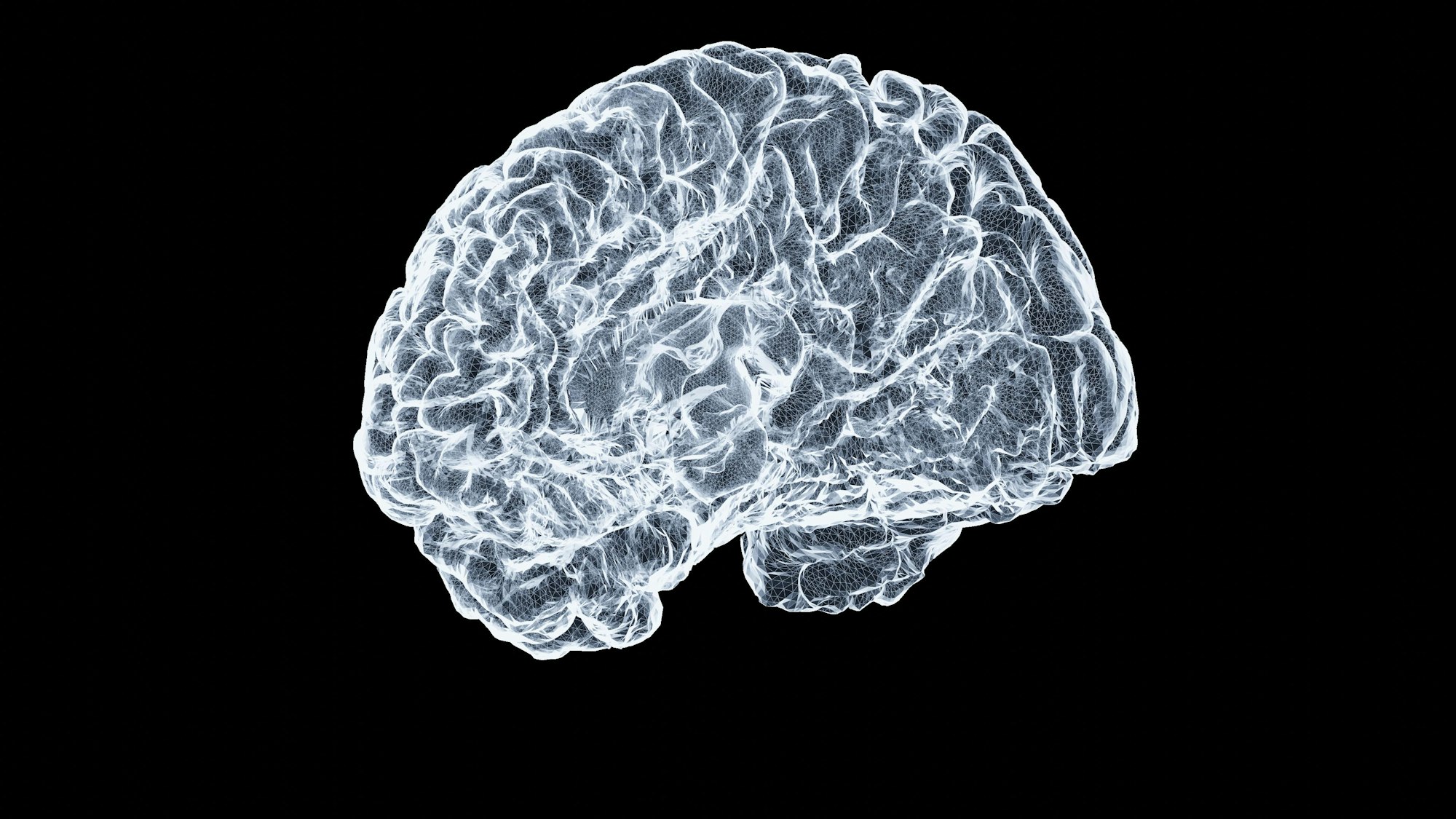


Brain fog is one of those complaints that doesn't show up on a standard lab panel, yet I hear about it almost every week. A 52-year-old patient sits across from me and says she walks into rooms and forgets why. A retired engineer tells me he can't hold a phone number in his head long enough to dial it anymore. Their bloodwork looks fine. Their MRIs look fine. And still, something feels off. So what's actually going on up there?
More and more, the answer points back to inflammation. Not the kind you feel after a hard workout, but a low, smoldering inflammation inside the brain itself. We call it neuroinflammation, and it's quietly involved in everything from age-related memory decline to depression to the early stages of neurodegenerative disease. I'm Dr. Farhan Abdullah, and at Magnolia Functional Wellness in Southlake, one of the questions I spend a lot of time on is whether regenerative tools can do anything about it. Exosomes are right at the center of that conversation.
I want to walk you through what exosomes are, what the research actually shows for the brain, and where the honest limits of that research sit today. No hype. Just the picture as I understand it from training at the R3 Stem Cell Institute and from staying close to the literature.
What Exosomes Actually Are (And Why the Brain Cares)
Picture your cells holding a conversation. They don't shout across the body. They send tiny packages. Exosomes are those packages, nano-sized vesicles, roughly 30 to 150 nanometers across, that nearly every cell in your body releases. Inside each one is a payload: messenger RNA, microRNA, proteins, growth factors, lipids. When an exosome reaches another cell and gets absorbed, it delivers that cargo and changes how the recipient cell behaves.
The exosomes we use in regenerative medicine are typically harvested from mesenchymal stem cells. That matters because stem cell exosomes carry a particularly useful set of instructions. They're loaded with anti-inflammatory cytokines, neuroprotective microRNAs, and growth factors that tell stressed tissue to calm down and repair. In a 2021 review published in the International Journal of Molecular Sciences, Harrell, Volarevic and colleagues laid this out clearly: mesenchymal stem cell exosomes are enriched with cargo that attenuates neuroinflammation, promotes new blood vessel growth, encourages the birth of new neurons, and reduces the apoptotic loss of brain cells. You can read their summary of the mechanisms here.
Here's the part that surprises people. One of the biggest obstacles in brain medicine is the blood-brain barrier, the security checkpoint that keeps most drugs out. Exosomes are small enough and lipid-friendly enough that they can slip across it. That's a genuine advantage, and it's a big reason researchers got excited about them as a delivery system for the central nervous system in the first place.
The Neuroinflammation Problem Nobody Warned You About
Let me explain why I keep circling back to inflammation. Your brain has its own immune cells, called microglia. When they're working well, they're the cleanup crew. They clear debris, prune unhealthy connections, and keep the neighborhood tidy. But microglia have two modes, and the second one is the problem.
When microglia get stuck in an activated, pro-inflammatory state, they stop cleaning and start damaging. They pump out inflammatory signals like IL-1β, IL-6, and TNF-α. Astrocytes, another type of brain cell, join the fire. Over months and years, this chronic activation chips away at the connections between neurons, slows the production of new brain cells, and contributes to exactly the kind of cognitive decline my patients describe. Aging accelerates it. So do poor sleep, chronic stress, metabolic dysfunction, and a Western diet. (And yes, the relentless Texas heat and a packed Southlake schedule of work and kids' activities don't make sleep any easier, which is part of why so many people feel mentally foggy by Thursday.)
This is where exosomes get interesting, because their primary trick isn't replacing brain cells. It's recalibrating that inflammatory environment. They appear to nudge microglia out of the angry, destructive M1 state and back toward the helpful, reparative M2 state. Think of it less like rebuilding a house and more like turning off the alarm that's been blaring for years so the residents can finally function again.
What the Preclinical Research Shows
I'll be direct with you, because you deserve it. Most of the compelling brain research on exosomes is still in animal models. That doesn't make it worthless. It makes it early. And what's coming out of those models is hard to ignore.
Take a 2022 study published in the Journal of Neuroinflammation by Liu, Fan and colleagues. They induced an Alzheimer's-like condition in mice and then treated them with exosomes derived from bone-marrow mesenchymal stem cells. The treated animals performed better on memory and recognition tasks. When the researchers looked at the brain tissue, they found reduced activation of microglia and astrocytes, lower levels of those inflammatory cytokines I mentioned, less amyloid and tau pathology, and higher levels of BDNF, brain-derived neurotrophic factor, which is essentially fertilizer for neurons. You can see the full study here. One detail worth noting: the benefit showed up when the exosomes were delivered directly into the brain's ventricles, not when injected into a tail vein. Route of administration matters, and that's the kind of nuance that gets lost in the marketing.
Then there's a 2022 paper in Experimental Neurology from a group at Henry Ford Health and Boston University. Zhang and colleagues used two different mouse models of demyelination, the process where the protective coating around nerve fibers breaks down, which happens in multiple sclerosis and shows up alongside cognitive impairment in other conditions too. They gave the mice exosomes from mesenchymal stem cells, this time delivered intravenously. The exosomes crossed the blood-brain barrier, improved both neurological and cognitive function, promoted remyelination, and shifted microglia toward that anti-inflammatory M2 phenotype. Their findings are documented here. So we have at least one solid signal that systemic delivery can reach the brain and do something measurable.
It's worth understanding why the cargo matters so much. A lot of the heavy lifting seems to come from the microRNAs packed inside these vesicles. MicroRNAs are tiny regulatory molecules that can switch genes on or off, and stem cell exosomes carry ones that specifically quiet inflammatory pathways and protect neurons. So when an exosome crosses into the brain and gets taken up by a microglial cell, it isn't just delivering a vague anti-inflammatory effect. It's handing over precise instructions that reprogram how that cell behaves. That specificity is part of what separates exosome therapy from simply taking an anti-inflammatory pill, and it's why the delivery vehicle itself, not just the active ingredient, has become such a focus of research.
What I take from all of this is a consistent theme rather than a guarantee. Across different labs, different models, and different delivery methods, stem cell exosomes keep doing the same handful of things: dialing down neuroinflammation, supporting the survival and birth of neurons, and improving performance on cognitive tasks. When independent groups keep landing on the same mechanism, I pay attention. I also keep my expectations honest.
Where Exosomes Fit Into a Real Brain-Health Plan
So does this mean you should run out and get an exosome infusion to fix your memory? No. And any clinic promising that is selling you something I wouldn't buy myself.
Here's how I actually think about it in practice. Exosomes are a tool, not a cure, and they work best inside a larger strategy. Before I'd ever consider regenerative options like exosomes or other orthobiologic and regenerative therapies, I want the foundation handled. That means:
- Sleep. Deep sleep is when your brain physically flushes out metabolic waste. No exosome compensates for chronic short sleep.
- Metabolic health. Insulin resistance is brutal on the brain. Some researchers have nicknamed Alzheimer's "type 3 diabetes" for a reason.
- Inflammation at the source. Gut health, diet, dental health, and chronic infections all feed neuroinflammation upstream.
- Hormones. Estrogen, testosterone, and thyroid hormones are deeply tied to cognition, and I see brain fog resolve all the time once these are optimized.
For patients who want to support cellular energy and brain metabolism more directly, I sometimes discuss options like NAD+ therapy, which targets the mitochondrial side of the equation. The point is that the brain responds to a coordinated approach. Exosomes might be one piece of that puzzle for the right person, layered on top of a solid foundation, not a shortcut around it.
The Honest Caveats You Need to Hear
I'd be doing you a disservice if I stopped at the optimistic part. A few things you absolutely need to understand before considering exosome therapy for anything, brain-related or otherwise.
First, regulatory status. Exosome products are not FDA-approved for treating any disease. The FDA has issued warnings about unapproved exosome products, and there have been real safety incidents tied to poorly manufactured ones. This is a field where the quality of the product and the integrity of the provider matter enormously. Where the exosomes come from, how they're processed, and whether the lab follows rigorous standards is not a detail. It's the whole game.
Second, the human evidence for cognitive benefit specifically is still thin. We have promising mechanisms and strong animal data. We do not yet have large, randomized human trials proving that exosomes reverse memory loss or prevent dementia. Anyone who tells you otherwise is ahead of the science. When I talk this through with patients, I frame exosomes as an emerging, investigational option, and I make sure they understand exactly what we know and what we're still waiting on.
Third, individual response varies. Biology isn't a vending machine. Two people with similar symptoms can respond very differently, which is why I'm wary of one-size-fits-all protocols.
The Takeaway
Exosomes represent one of the more exciting directions in regenerative medicine for the brain, precisely because they go after the root mechanism so much cognitive decline shares: chronic neuroinflammation. The preclinical research is consistent and encouraging. The human research is early. Both of those things can be true at the same time, and a good physician holds them together rather than picking whichever one sells better.
If you're dealing with brain fog, memory changes, or you're simply thinking ahead about protecting your cognitive future, the smartest first move isn't chasing the newest infusion. It's getting a real workup, sorting out the foundational drivers, and then having a clear-eyed conversation about whether emerging options like exosomes make sense for your situation. That's the kind of conversation we have every day at Magnolia Functional Wellness here in Southlake, and it's one I think every patient deserves to have honestly.
By Dr. Farhan Abdullah, DO | Medical Director, Magnolia Functional Wellness | Southlake, TX
Your Questions Answered
Led by trained medical professionals delivering safe, effective, and scientifically backed aesthetic and wellness treatments.
Are exosomes the same thing as stem cells?
No, and it's a common mix-up. Exosomes are the tiny signaling packages that stem cells release to communicate with other cells, but they don't contain any living cells themselves. At Magnolia Functional Wellness in Southlake, we use exosomes for the signals they carry, the ones that tell your skin cells to build collagen and calm inflammation, without needing a living cell to survive the procedure.
What's the difference between PRP, stem cells, and exosomes?
PRP delivers concentrated growth factors from your own blood to stimulate repair signaling at a treatment site. MSCs are living cells that can signal tissue repair, modulate immune responses, and differentiate into various tissue types. Exosomes are the nanoscale vesicles MSCs secrete — carrying the signaling molecules that drive much of their biological activity, in a cell-free format that offers different delivery characteristics. Each has distinct mechanisms, evidence bases, and appropriate applications. Dr. Abdullah helps you understand which is most relevant for your goals.
What's the regulatory status of stem cell and exosome therapies?
The FDA has been explicit on this: the only FDA-approved stem cell products in the United States are cord blood-derived hematopoietic cells for specific blood disorders. There are currently no FDA-approved exosome products. MSC and exosome preparations used in regenerative health contexts are sourced from FDA-registered labs but are not FDA-approved treatments for the applications discussed in regenerative medicine. Dr. Abdullah discloses this accurately with every patient — because honest informed consent isn't optional, it's foundational.
The honest answer is that we don't have large human trials proving exosomes fix brain fog or memory yet. What we do have is consistent animal research showing they calm neuroinflammation and support neurons, which are big drivers of cognitive symptoms. At Magnolia Functional Wellness in Southlake, I treat exosomes as an emerging option, not a cure, and I always start by sorting out sleep, hormones, and metabolic health first.
Exosomes are tiny, lipid-friendly vesicles, which means they're small enough to cross the blood-brain barrier that blocks most medications. In animal studies, exosomes given intravenously have been shown to enter the brain and act on inflammatory cells there. That ability to get past the barrier is a big part of why researchers are so interested in them for brain health.
Need More Information?
Our team is ready to answer your specific questions and concerns.