
Pain After 60: Why SoftWave Is Ideal for Older Adults Avoiding Surgery
After 60, too many people with an aching knee or hip get offered only two options: daily anti-inflammatories or a joint replacement. Dr. Farhan Abdullah makes the case for the underused middle, and explains why SoftWave shockwave therapy fits older adults so well, backed by the randomized trial evidence. A non-surgical path to hurting less and moving more, from Magnolia Functional Wellness in Southlake, TX.
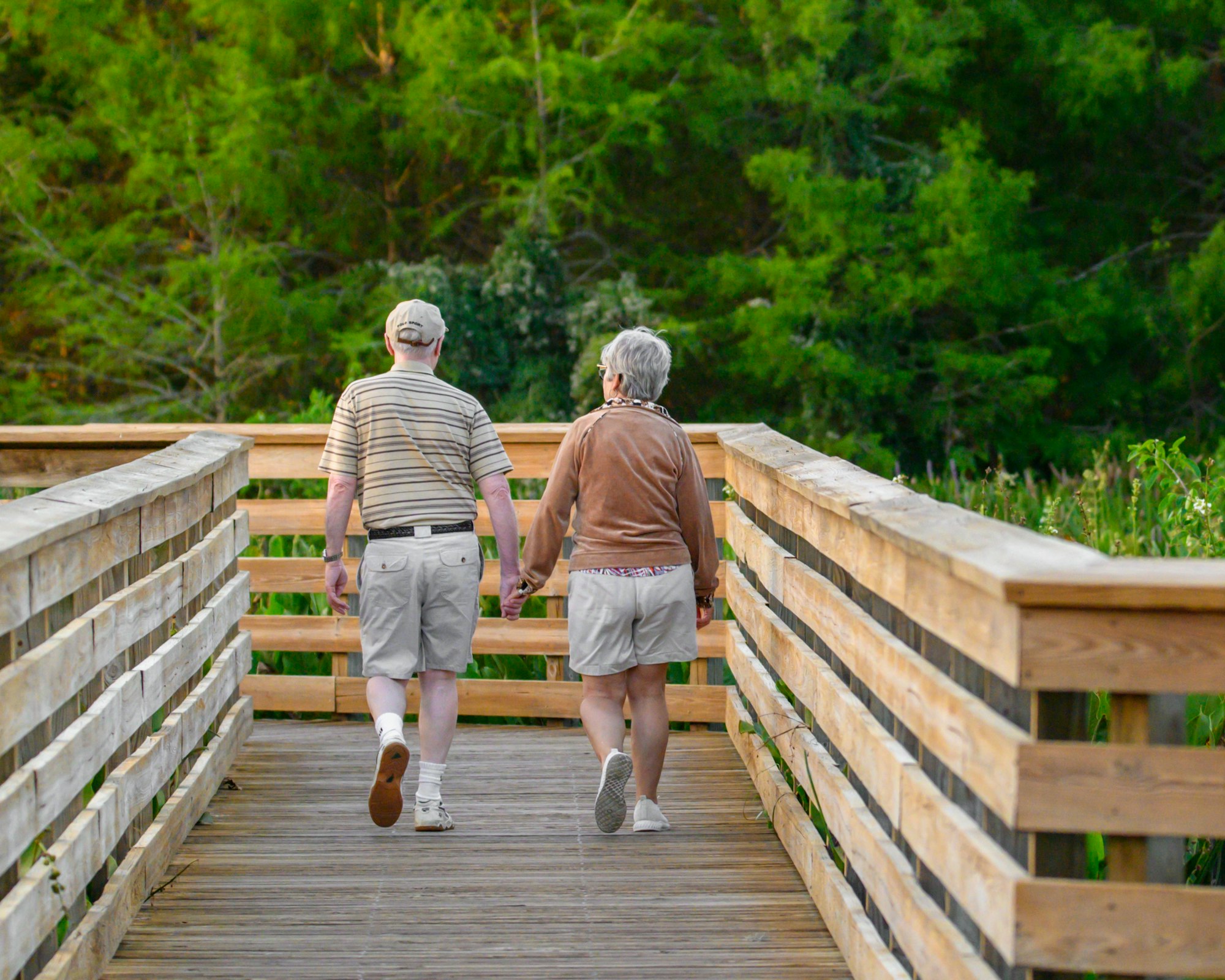


A patient in her late sixties told me recently that her orthopedist had given her two options for her aching knee: keep taking ibuprofen, or schedule a replacement. She wasn't ready for surgery, and she was worried about what a lifetime of daily anti-inflammatories was doing to her stomach and kidneys. "Is there really nothing in between?" she asked. It's one of the most common questions I hear, and the honest answer is that yes, there's quite a bit in between. We just don't talk about it enough.
By Dr. Farhan Abdullah, DO | Medical Director, Magnolia Functional Wellness | Southlake, TX
I'm Dr. Farhan Abdullah, and at Magnolia Functional Wellness in Southlake I spend a lot of my week with adults over 60 who are stuck in exactly that gray zone. The joint hurts, the pills are wearing out their welcome, but surgery feels like a big leap they're not ready to take. For a lot of these patients, SoftWave shockwave therapy has become one of the more useful tools we reach for. Let me explain why, and where it fits.
The Problem With "Pills or Surgery"
Osteoarthritis is the wear-and-repair imbalance that shows up in most of us eventually. Cartilage thins, the joint gets inflamed, and the pain nudges you into moving less, which weakens the muscles that protect the joint, which makes everything worse. It's a slow spiral, and after 60 it tends to pick up speed.
The standard playbook has two main tools. Anti-inflammatory medication takes the edge off, and joint replacement handles the end stage. Both have their place. But there's a wide middle where a lot of older adults live for years, and the tools for that middle get underused.
The medication problem is real, and it's not hypothetical. Daily NSAIDs like ibuprofen and naproxen carry meaningful risks in older adults: stomach bleeding, kidney strain, blood pressure elevation, and interactions with the heart and blood pressure medications that many people over 60 are already taking. I'm not against these drugs. I prescribe them. But leaning on them every single day for a decade is not a plan I love for a 68-year-old, and most thoughtful physicians feel the same.
Surgery has its own calculus. A knee or hip replacement can be genuinely life-changing for the right person, and I refer patients for it when the joint is truly done. But it's a major operation with a real recovery, real risks, and a device that doesn't last forever. For someone who's on the earlier end of the disease, or who has heart or lung issues that make anesthesia riskier, it makes sense to exhaust the non-surgical options first. That's not avoidance. That's good sequencing.
Why SoftWave Fits the Older Adult So Well
SoftWave is extracorporeal shockwave therapy, a treatment that sends acoustic pressure waves through the skin into the joint and surrounding tissue. What makes it a good fit for this age group comes down to a few practical realities.
First, it's noninvasive. No needle into the joint, no incision, no anesthesia. For a patient on blood thinners, or one who's wary of injections, that removes a whole category of worry. Second, there's no downtime. You come in, spend a few minutes getting treated, and drive yourself home. For someone who's caring for a spouse or still working, that matters. Third, it doesn't add another pill to a medication list that's often already long. In my experience, older patients are frequently more relieved by what a therapy doesn't require than impressed by what it does.
The mechanism is worth understanding too. Shockwaves create a controlled mechanical stress that stimulates local blood flow, prompts the growth of small new blood vessels, and appears to calm the inflammatory signaling that keeps an arthritic joint angry. It's not lubricating the joint or regrowing a full layer of cartilage. What it seems to do is shift the local environment toward repair and away from the low-grade inflammation that drives so much of the day-to-day pain.
None of this means SoftWave replaces the fundamentals. I still push strength training, weight management where it applies, and sleep, because those move the needle more than any single treatment. SoftWave works best as part of that larger picture, and it pairs naturally with the other regenerative options we offer for joints and soft tissue.
What the Research Actually Shows
This is where I want to be careful, because the marketing around regenerative therapies often runs way ahead of the science. So let me give you the real picture for shockwave and knee arthritis, which is the joint with the most data.
A 2019 systematic review and meta-regression by Liao and colleagues in Clinical Rehabilitation pooled multiple randomized controlled trials and found that shockwave therapy produced significant improvements in pain and physical function for knee osteoarthritis, while also identifying which treatment parameters predicted better results (Liao et al., 2019). Meta-analyses like this are the strongest form of evidence we have, because they combine many trials rather than resting on a single study.
The placebo-controlled trials underneath that conclusion are reassuring. A randomized controlled trial by Zhong and colleagues in Archives of Physical Medicine and Rehabilitation compared low-dose shockwave against sham treatment in patients with knee osteoarthritis and found the real treatment improved pain and lower-limb function, with some signal of cartilage benefit on imaging (Zhong et al., 2019). The sham comparison matters, because it helps separate genuine biological effect from the powerful placebo response that plagues pain research.
Even in advanced disease, there's a signal. A 2024 randomized controlled trial by Cp and colleagues in Scientific Reports looked at grade IV knee osteoarthritis, the most severe radiographic category, and found shockwave added to conventional physiotherapy improved functional ability more than physiotherapy alone (Cp et al., 2024). I read that not as "skip the surgery you need," but as "even later-stage joints can get symptomatic relief," which buys time and quality of life for people who aren't ready or able to operate.
Here's my honest read of all this. Shockwave for knee arthritis has solid, replicated evidence for reducing pain and improving function, most reliably in mild to moderate disease. It's not a cure, it doesn't reverse the arthritis, and it won't rescue a bone-on-bone joint that genuinely needs a new one. What it does is give many older adults a real, non-surgical way to hurt less and move more. For the gray zone I described earlier, that's exactly the tool that's been missing.
What to Expect From a Course of Treatment
Older adults tend to appreciate knowing exactly what they're signing up for, so here's the shape of it. SoftWave is delivered as a series rather than a single visit, because it works by nudging your body's repair process along over time. For an arthritic knee, we typically plan on a course of sessions spread over several weeks, then step back and measure what's changed in your pain and your walking.
A single session takes only a few minutes of actual treatment. You sit or lie down, we run the applicator over the knee and the tissues around it, and you feel a firm tapping sensation. There's no numbing needed and nothing to recover from afterward. Plenty of my patients come in on their way to lunch or an errand and don't rearrange their day around it at all.
Improvement usually shows up gradually. Some people feel a difference after the first two or three sessions, but the fuller effect tends to build over the weeks that follow as circulation improves and the local inflammation settles. I ask patients to ease off daily anti-inflammatories around their sessions, since those medications can dampen the healing response we're trying to encourage. And I'm candid about the fact that results vary. When someone pairs the treatment with steady strength work and, where it applies, some weight management, they tend to get the most out of it and hold onto the gains longer.
We also don't treat SoftWave as an island. Depending on the joint and the person, it can sit alongside other regenerative options, and for the right patient we'll talk through how those fit together. The goal is always the same: the least invasive path that actually gets you moving again.
Who Is, and Isn't, a Good Candidate
Not everyone over 60 with a sore joint should get SoftWave, and part of my job is telling people when they're not the right candidate. The patients who tend to do best have mild to moderate arthritis, still have some cartilage to work with, and are willing to do the strengthening and lifestyle work alongside treatment. Those folks often get meaningful, durable relief.
The ones I'm more cautious with are the truly end-stage joints, where the cartilage is essentially gone and the X-ray shows bone grinding on bone. SoftWave can still take the edge off for those patients, and sometimes that's worth it while they decide about surgery, but I won't pretend it's going to rebuild what isn't there. There are also specific situations, certain clotting disorders, active infection or malignancy in the treatment area, where we hold off. That's why a real exam and a look at your imaging come first, every time.
I also want to coordinate, not compete, with the rest of your care. If you've got an orthopedic surgeon, a rheumatologist, or a primary care doctor already in the picture, that's a good thing, and I'd rather fit SoftWave into a shared plan than work around it. Sometimes the right answer is a course of shockwave now to keep you active while a joint replacement waits for a better season of your life. Sometimes it's the thing that lets you postpone surgery for years. And occasionally, after an honest look, it's a nudge to go ahead and have the operation you've been putting off. I'd rather tell you which of those you are than sell you a package you don't need.
I think a lot about the fact that pain after 60 isn't just about comfort. When a knee or hip hurts, people stop walking, stop exercising, stop doing the things that keep them strong and independent. That inactivity quietly accelerates almost everything we worry about with aging, from muscle loss to cardiovascular risk to falls. So keeping an older adult moving isn't a small win. It's one of the highest-leverage things we do in this clinic.
If you're in that pills-or-surgery gray zone, you owe it to yourself to find out what your options in the middle actually look like. At Magnolia Functional Wellness in Southlake, we'll give you a straight assessment of where your joint stands and whether SoftWave, or one of the other tools we have, is a reasonable next step before anyone reaches for the scalpel.
Your Questions Answered
Led by trained medical professionals delivering safe, effective, and scientifically backed aesthetic and wellness treatments.
Is SoftWave safe if I'm over 70 or on blood thinners?
For most older adults, it's one of the gentler options we have. SoftWave is noninvasive, needs no anesthesia, and doesn't add another pill to your list, which makes it appealing when daily anti-inflammatories are getting risky. Blood thinners and a few other conditions do call for extra caution, so at Magnolia Functional Wellness in Southlake we review your full history and medications before we ever start.
Will SoftWave help me avoid knee replacement surgery?
It can buy you meaningful time, especially if your osteoarthritis is mild to moderate and you're motivated to do the surrounding work like strength training, weight management, and inflammation control. SoftWave isn't a substitute for joint replacement when the joint is truly bone-on-bone, but for patients who aren't surgical candidates yet, it's one of the better non-surgical tools we have. We'll be honest with you in clinic about where you fall on that spectrum.
Can SoftWave therapy actually help knee osteoarthritis?
Yes, with realistic expectations. Multiple meta-analyses of randomized clinical trials have shown that extracorporeal shockwave therapy improves both pain and function in knee osteoarthritis compared to sham treatment. The effect is most reliable for mild to moderate disease, and it works best when paired with strength training and weight management. At Magnolia Functional Wellness in Southlake, we screen patients carefully so the right candidates are the ones getting treatment.
Can SoftWave actually help my sciatica, or do I need surgery?
It depends entirely on what's irritating the nerve. If your pain is coming from a tight piriformis, an inflamed facet joint, or myofascial tissue in the deep gluteal region, SoftWave often works very well. If you've got a true disc fragment compressing a nerve root with progressive weakness or foot drop, that's a surgical conversation and I'll tell you so directly. At Magnolia Functional Wellness in Southlake we examine you first and figure out which one you are before recommending anything.
Is SoftWave covered by insurance?
Shockwave therapy is not typically covered by commercial insurance for most indications, though coverage policies vary. Out-of-pocket pricing at Magnolia Functional Wellness is transparent — Dr. Abdullah discusses costs during your consultation. CareCredit or Cherry financing is available for patients who prefer to spread treatment costs across a series.
Need More Information?
Our team is ready to answer your specific questions and concerns.