
How GLP-1s Affect Sleep Quality and Dreams
GLP-1 medications change sleep in ways most patients never hear about beforehand. Dr. Farhan Abdullah breaks down the randomized trial data showing tirzepatide and liraglutide reduce obstructive sleep apnea severity, explains why vivid dreams show up a few weeks in, and covers the sleep problems that can appear during dose escalation. Practical guidance on meal timing, electrolytes, and when to repeat a sleep study.
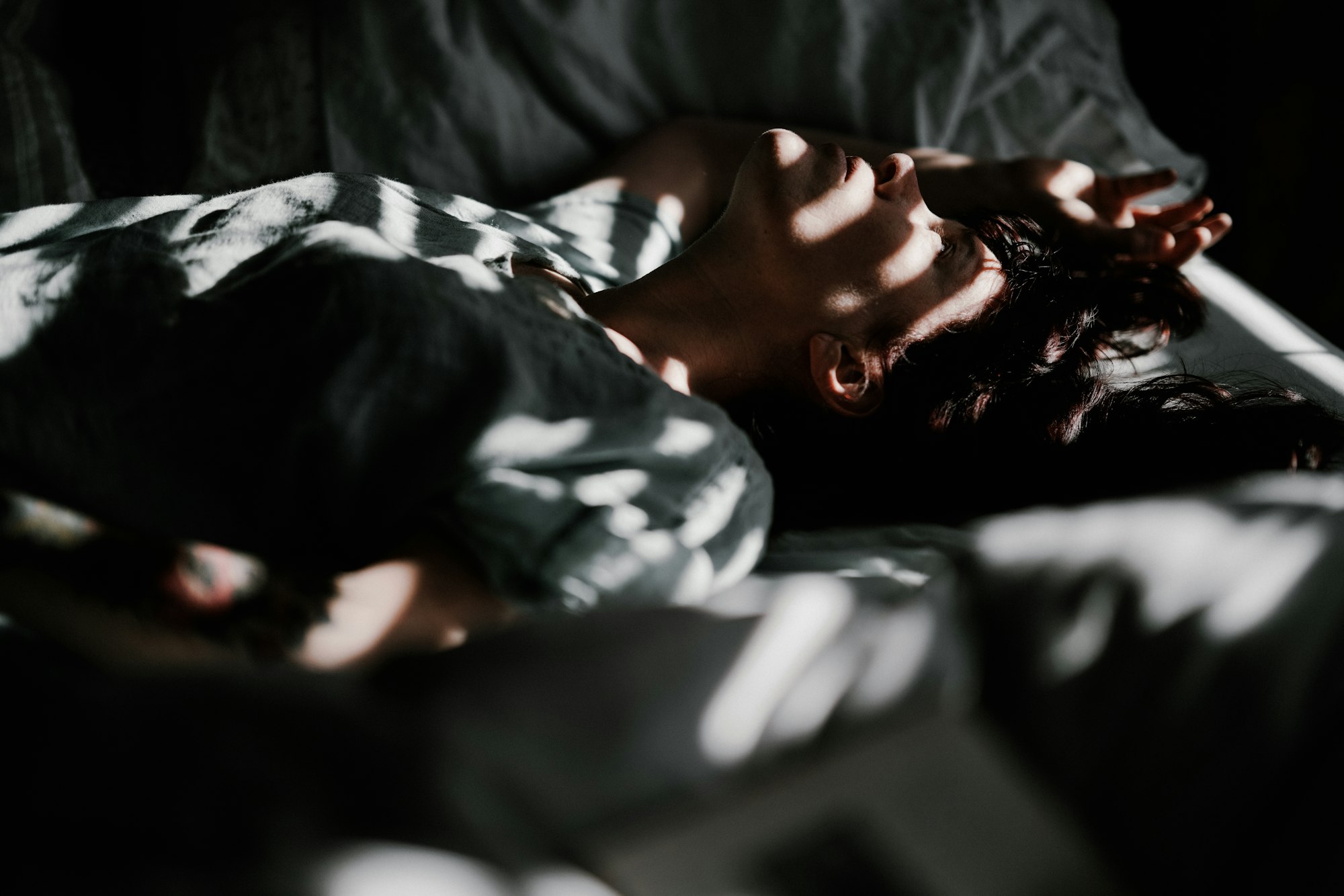


A patient sat down in my office a few weeks into her semaglutide protocol and said something I've now heard dozens of times. "The weight's coming off, my clothes fit, all good. But my dreams have gotten completely bizarre." She wasn't upset about it. She was curious. And she wanted to know whether the medication was doing something to her brain that nobody had bothered to mention.
Fair question. Sleep is the thing patients rarely ask about before starting a GLP-1 and almost always bring up after. Sometimes it's better sleep, deeper and less interrupted. Sometimes it's fragmented nights and vivid, cinematic dreams that feel more real than they should. I'm Dr. Farhan Abdullah, an internal medicine physician and the medical director at Magnolia Functional Wellness in Southlake, and I still round in a Dallas hospital most weeks. So I see both sides of this: the patients losing weight in our clinic and the patients whose sleep problems land them in a hospital bed.
What follows is what the evidence actually supports, what I've observed clinically, and where we're still guessing.
Why Sleep Changes at All on a GLP-1
Start with the obvious mechanism. GLP-1 receptor agonists slow gastric emptying, blunt appetite signaling, and shift how your body handles glucose. All three of those touch sleep.
Slowed gastric emptying means food sits longer. If you eat dinner at eight and go to bed at ten, you may be lying down with a stomach that's still working. Reflux gets worse. Some patients describe a heavy, uncomfortable fullness that keeps them tossing. That's not a mysterious neurological effect, that's mechanics, and it usually improves when we move dinner earlier and shrink the portion.
Glucose stability matters more than people realize. A lot of poor sleep in overweight and insulin-resistant patients comes from nocturnal glucose swings. You eat a carbohydrate-heavy dinner, insulin spikes, blood sugar drops in the small hours, and your adrenals push out cortisol and adrenaline to correct it. That's the 3 a.m. wide-awake-with-a-pounding-heart phenomenon. When a GLP-1 flattens those swings, that particular wake-up often disappears. I've had patients tell me the 3 a.m. thing stopped before they'd lost ten pounds.
Then there's the weight itself. Fat around the neck and upper airway is a mechanical problem. Visceral fat is an inflammatory one. Lose enough of both and breathing at night changes. That's where the strongest data lives.
The Sleep Apnea Evidence Is Genuinely Strong
If you want a single study that reframed how I think about GLP-1s and sleep, it's the SURMOUNT-OSA program. Malhotra and colleagues published two phase 3 randomized controlled trials in the New England Journal of Medicine in 2024, one in patients with moderate-to-severe obstructive sleep apnea who weren't on CPAP and one in patients who were. Participants got either the maximum tolerated dose of tirzepatide or placebo for 52 weeks.
The numbers were not subtle. Baseline apnea-hypopnea index averaged around 50 events per hour, which is severe. In the trial of patients not using positive airway pressure, tirzepatide dropped the AHI by about 25 events per hour compared with roughly 5 on placebo. In the CPAP-using group, the reduction was close to 29 events per hour versus about 5. On top of that, hypoxic burden dropped, high-sensitivity CRP came down, systolic blood pressure improved, and patient-reported sleep disturbance and impairment scores got better.
That last part is what I want patients to hear. It wasn't just a number on a sleep study. People felt the difference.
This wasn't the first signal, either. Back in 2016, Blackman and colleagues ran the SCALE Sleep Apnea trial, published in the International Journal of Obesity, testing liraglutide 3.0 mg in patients with obesity and moderate or severe OSA. It showed greater AHI reduction with the drug than with placebo. Weaker medication, smaller effect, same direction. The dual GIP/GLP-1 agonists simply produce more weight loss, and the sleep apnea benefit tracks with that.
Here's the caveat I give every patient: this does not mean you should stop your CPAP because you started tirzepatide. It means you and your sleep physician should repeat the study after meaningful weight loss and see where you actually stand. Untreated apnea raises cardiovascular risk in ways that no amount of optimism fixes.
So What's Going On With the Dreams?
This is the part where I have to be honest about the limits of the literature. There's no large randomized trial measuring dream intensity on semaglutide. What we have is a very consistent pattern of patient reports and a set of plausible mechanisms.
The most likely explanation is REM rebound. Obesity and untreated sleep apnea suppress REM sleep. Every apnea event pulls you out of deeper stages, and REM is where your muscles go most atonic, which makes airway collapse more likely, which means your brain protects you by cutting REM short. Fix the breathing and REM comes flooding back. More REM means more dreaming, and more dreaming means more dream recall. To the patient, this feels like the medication is generating strange dreams. What's really happening is that you're finally getting the sleep stage you'd been quietly short-changed on for years.
Alcohol reduction plays a role too. A lot of my GLP-1 patients drink noticeably less without trying, which is a well-documented effect of these medications on reward signaling. Alcohol is a REM suppressant. Take it out and REM rebounds the same way. If you had two glasses of wine most nights for a decade and now you have one on the weekend, your dream life is going to change.
Add in nocturnal glucose stability, less fragmentation, and in some patients a shift in sleep timing, and you get a very different subjective night. Vivid dreams aren't a warning sign in most cases. They're often a sign that your sleep architecture is reorganizing.
That said, I don't wave off every report. If a patient describes nightmares that are distressing, night sweats, or dreams tangled up with new anxiety and low mood, we look at the whole picture. Thyroid, cortisol, sex hormones, medications, sleep apnea status, alcohol, caffeine timing. Sometimes the GLP-1 has nothing to do with it and we just found the problem while looking.
When Sleep Gets Worse Instead of Better
Not everyone improves. Roughly one in four or five of my patients has at least a few rough weeks, usually during dose escalation. The patterns I see most:
- Nausea and reflux at night. Almost always tied to dinner timing, dinner size, or fat content. Moving the last meal three hours before bed and elevating the head of the bed fixes most of it.
- Early morning waking with a racing heart. Often under-eating during the day. When appetite drops to nearly nothing and someone runs on 700 calories, the body eventually protests at 4 a.m.
- Leg cramps and restless legs. Usually electrolytes. Rapid weight loss plus reduced intake plus a Texas summer where you're sweating through August is a reliable way to run low on magnesium, potassium, and sodium.
- New insomnia at higher doses. Less common, but real. Sometimes the answer is holding the dose longer before escalating rather than pushing through.
None of these are reasons to abandon the medication. They're reasons to have a physician actually managing it instead of a website mailing you vials. This is exactly why I run our GLP-1 weight loss program with physician supervision rather than a checkbox intake form.
The Relationship Runs Both Directions
Most of this article has been about what the medication does to your sleep. Flip it around, because the reverse matters just as much for anyone trying to lose weight.
Short or fragmented sleep raises ghrelin, lowers leptin, and pushes you toward higher-calorie, higher-carbohydrate food the next day. It worsens insulin sensitivity measurably after only a few nights. It raises evening cortisol, which favors visceral fat storage, the exact fat we're trying to strip off. And it wrecks the willpower reserves people are counting on when they're trying to change how they eat.
So a patient sleeping five and a half hours a night is fighting the medication. Not enough to make it fail, but enough that they'll plateau earlier and lose more lean mass than someone sleeping seven and a half. In my practice, when someone stalls at month four and their food log and activity look reasonable, sleep is one of the first places I go looking. Frequently we find undiagnosed apnea, a bedroom that's too warm, a phone on the nightstand, or a nightly alcohol habit that nobody mentioned during intake because nobody asked directly.
There's a nice feedback loop available here, and it's worth pointing out to patients who are discouraged. Weight comes off, breathing improves, sleep deepens, appetite regulation gets easier, and the next stretch of weight loss comes with less effort. That loop can spin the other way too, which is why I don't treat sleep as a soft, optional part of a weight loss plan. It's a lever, and it's one of the few that's free.
What I Actually Tell Patients to Do
First, treat the last meal of the day as a clinical variable. Earlier and smaller beats later and bigger, every time. Protein-forward, not fat-heavy, since fat slows gastric emptying even further on top of what the medication is already doing.
Second, hydrate and salt appropriately. I know that runs against everything you've been told, but a patient losing weight quickly in July in North Texas needs electrolytes, not just water.
Third, get an actual sleep study if you snore, if your partner has ever elbowed you for stopping breathing, or if you wake up unrefreshed no matter how long you were in bed. Do it before you've lost the weight so you have a baseline, then repeat it after. I've had patients come off CPAP entirely and others who still needed it at a lower pressure. You can't guess which one you are.
Fourth, track something. Even a cheap wearable gives you a trend line for sleep duration and disruption. I don't put much stock in consumer-grade sleep staging, but total sleep time and awakenings are useful.
Fifth, tell your physician about the dreams. Not because they're usually dangerous, but because they're a window into what your sleep is doing. A patient who suddenly remembers dreams after fifteen years of remembering none is telling me something meaningful about their REM.
The bigger point is this. We tend to talk about GLP-1 medications purely in terms of pounds, and that's a narrow way to measure what these drugs do. Better breathing at night, steadier glucose, lower inflammation, and deeper sleep are all part of the same package, and for a lot of patients the sleep improvement is what they notice first and value most. If your sleep has changed since starting a GLP-1, for better or worse, that's worth a real conversation with the physician managing your care. At Magnolia Functional Wellness in Southlake, that conversation is part of the visit, not an afterthought.
By Dr. Farhan Abdullah, DO | Medical Director, Magnolia Functional Wellness | Southlake, TX
Your Questions Answered
Led by trained medical professionals delivering safe, effective, and scientifically backed aesthetic and wellness treatments.
Why am I having such vivid dreams since starting semaglutide?
This is one of the most common things patients bring up, and it's usually a good sign rather than a bad one. Extra weight and untreated sleep apnea suppress REM sleep, so when your breathing and glucose stabilize, REM comes rushing back and you start remembering dreams again. Drinking less alcohol, which happens naturally for a lot of GLP-1 patients, does the same thing. If the dreams are distressing rather than just strange, tell us at Magnolia Functional Wellness in Southlake so we can look at the whole picture.
Can a GLP-1 improve my sleep apnea enough to stop using CPAP?
Sometimes, but you don't get to guess. Randomized trial data on tirzepatide showed large reductions in apnea severity after a year, and I've had patients come off CPAP entirely while others still needed it at a lower pressure. The right move is a baseline sleep study before you lose the weight and a repeat study after, then a decision made with your sleep physician. Stopping CPAP on your own because the scale is moving isn't worth the cardiovascular risk.
Why do I wake up at 3 a.m., and will a GLP-1 help with that?
That early-morning wake-up with a racing heart is frequently a blood sugar swing. Your glucose drops in the small hours and your body releases cortisol and adrenaline to correct it, which pulls you straight out of sleep. GLP-1 medications flatten those swings, and a lot of my patients notice the 3 a.m. waking stops well before they've lost much weight. If it doesn't improve, we'll look at hormones, cortisol, and sleep apnea instead of assuming it's just stress.
Is it normal to hit a weight loss plateau a few months into semaglutide or tirzepatide?
Yes, and it's one of the most common things I reassure patients about. A flat stretch of two or three weeks in month four or five usually means your body is recalibrating, not that the medication quit working. It's also worth remembering you may still be climbing toward your full dose during those early months. If a true plateau holds after you've reached a full dose, that's when we look at dosing, consistency, sleep, and other drivers.
Can I drink alcohol at a wedding while on semaglutide?
Yes, but with caveats. Most of my patients at Magnolia Functional Wellness in Southlake find that alcohol hits harder on semaglutide or tirzepatide, because gastric emptying is slowed and tolerance drops with weight loss. I usually recommend sticking to one or two drinks, alternating each one with a full glass of water, and avoiding sugary cocktails. You'll feel dramatically better the next morning if you pace yourself.
Need More Information?
Our team is ready to answer your specific questions and concerns.